Part Four
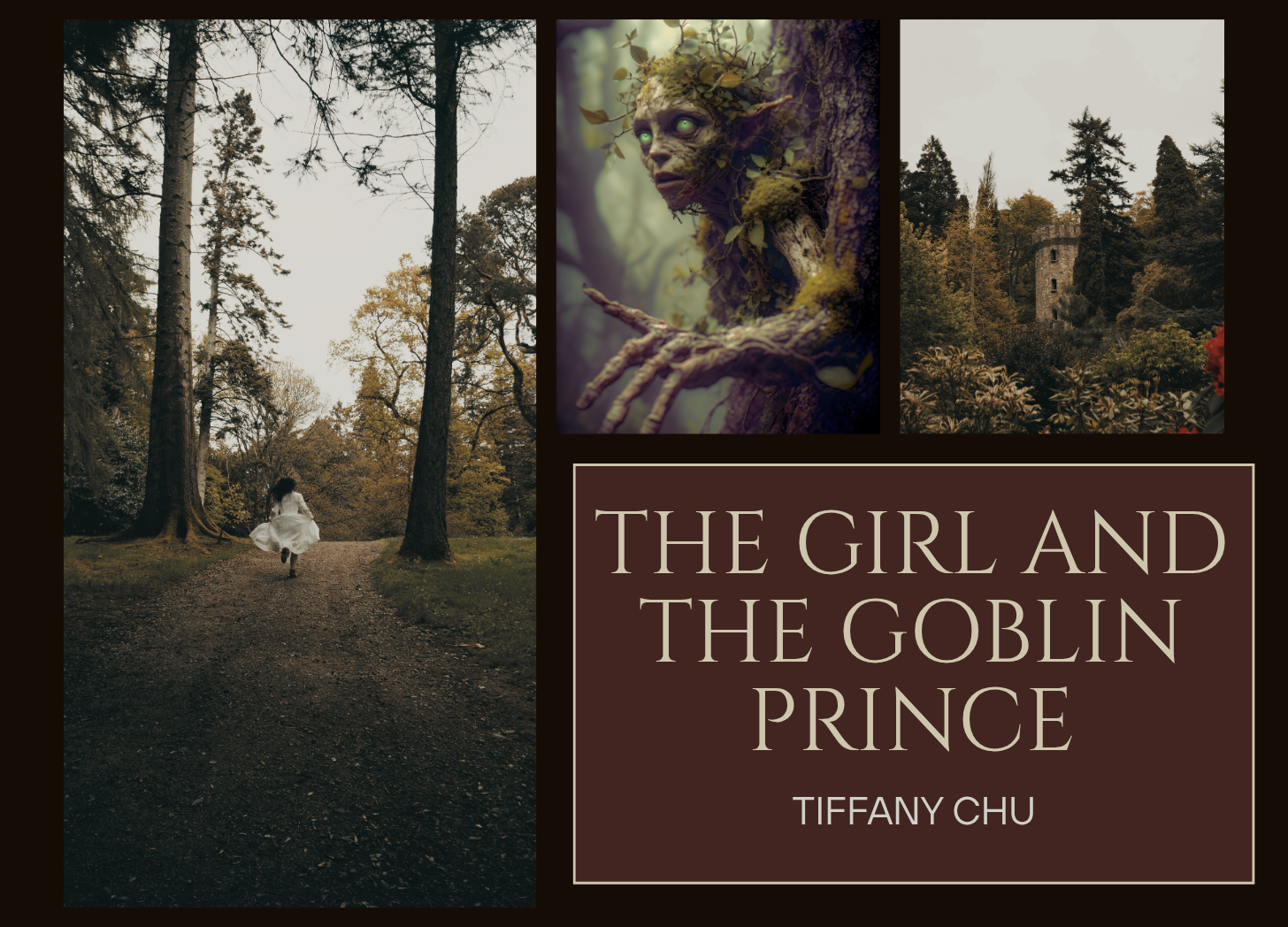
Of a moment, Aletta felt a light hand upon her shoulder. The touch was warm compared to the chill of the ground, and it trembled. Her cries intensified at the touch. She pulled herself to a kneeling position and grasped at the hand, recognising it as Grubhurst’s. There was a slight tension, a drawing back, before she felt Grubhurst lean toward her, wrap his other arm around her shoulders. She clung to his arm, so like to the trees she used to climb outside her beloved home. He smelled like earth and damp leaves and almost-home. The now-familiar scent of him filled her nose—mushrooms after rain, soil rich with decay and growth, the mineral tang of deep places.
When her sobs subsided, Grubhurst said tentatively, “Aletta?”
She looked up, her eyes swollen beyond anything she could remember.
“You’re back.”
Such simple words.
“I’m here. My father and mother are here. They can explain.”
Aletta scrambled to her feet, knocking Grubhurst to him back in her haste. Then only did she notice the two figures standing to the side of her—like to Grubhurst, yet not like. Their skin had deeper grooves, like weathered bark. They stood with the stillness of ancient trees, and their eyes held depths that suggested they had seen far too much. Prismilla had finally emerged, her mouth agape. Her breath came in quick pants from climbing the stairs, and her eyes darted between the figures with wonder and fear.
“Aletta, wait.”
She looked back at Grubhurst, her expression a bloom of hope and a fear to hope.
“Your mother—she’s not here.”
Aletta shot a look at the goblin queen and king through her puffy eyes. She must have been a frightful sight, yet her beseeching look was of utmost authenticity.
“Little human child,” the king said, “it is true your mother tried to enter our domain. In such times, we used ancient magic such as is available to us to protect our land.” His voice was deep and resonant, like wind through a canyon, and when he spoke, she felt the words vibrate in her chest. “Though she somehow knew our secrets, we were able to block her entrance after two attempts, and she did not attempt a third.”
There was a pause, in which quiet, choking whimpers punctuated the stillness.
The goblin queen sighed—a wind blowing through bamboo leaves. The sound carried with it the smell of earth turned for planting, of things buried and things growing. Aletta remembered the sound to be like that of light applause. “We do not know where your mother went after.”

Aletta regained composure, yet Grubhurst’s heart ached for her grief. His and Her Majesty Goblin explained the magic gone awry, how it trapped them in a pocket of time and cast a barrier around the island—until Aletta, blood of the woman with knowledge of goblin secrets, passed through. And when Grubhurst and Aletta together touched the mist, they broke the time bubble and set Grubhurst’s parents free.
A woman and a goblin had entered the lighthouse. A woman and three goblins came out. The evening air hit them like a shock after the timeless space of the lighthouse—cool and real, scented with pine and the distant salt of the sea.
Prismilla had raced ahead to spread the news of their parents’ return and free Aletta’s family. Aletta still clung to Grubhurst. He did not mind. The emotions of the day must have drained her of strength, and goblin though he was, he knew enough to not look overly joyful at his own fortune.
In the distance, orange light of a bonfire could be seen. The distant crackle of a fire. The flames sent sparks spiraling up into the darkening sky, and smoke carried the smell of burning wood—sweet and acrid at once.

“Oh my goodness gracious, Aletta!” Aunt Jolande cried. Her second aunt grabbed her by the shoulders and patted up and down her body. Her hands were rough from ship work, and they moved frantically, checking for broken bones, for wounds. From the force of her aunt’s touch, it wasn’t clear to Aletta whether she was checking for injuries or trying to cause a few herself. Her expression was that in-between sort that usually mean Aletta was about to be clung to about the neck with hysterical sobbing, or scolded within an inch of her life—neither of which felt particularly welcome at the moment.
“Aunt—yes—alright—you don’t have to—Aunt Jolande, let go. I’m fine.”
But, of course, her aunt didn’t let go. Youngest Aunt Jantine joined the fray with an all-consuming hug. Aunt Jantine wasn’t the physically affectionate type, but Aletta supposed this counted as a special incident. Even Uncle Lars ambled up to give her an awkward clap on the shoulder. His hand was heavy, and he cleared his throat several times without managing words. Then, her father.
Her father approached her with a slow and steady gait. His boots made soft sounds on the earth, deliberate and measured. If not for her aunts still clinging to her limbs, Aletta might have believed they were back in their former house, that they had not been stranded on a magical island, that she had not met goblins and befriended one. But for one thing.
He was looking directly into her eyes. His pupils moved from left to right, up and down—not in the way he used to, as though trying to avoid her gaze, but as though scanning her. “Aletta,” he said at last.
She hung her head.
“Lettie.”
She met his eyes again—saw specks of stars amidst forest green eyes, and, a sea he crossed for the promise of a future he could not hold. His eyes glistened with unshed tears, and his face—always so controlled—trembled at the edges. He was closer now—so close she caught the scent of brine and a hint of damp wood. The sea spilled over. “Lettie,” he said again—a name she had not heard in his voice, thought she had never heard, would never hear. It awakened a a faint memory of running toward the water at Qixingtan Beach, her father’s voice chasing her along the breeze—“Lettie! Lettie!”—before he caught her and swung her around, all dignity forgotten. She remembered the feeling of flying, of strong hands that wouldn’t let her fall, of laughter that rang out over the waves.
Aletta took a step toward him. She could almost feel her aunts’ drawn breath. The air itself seemed to still. Her father pulled her in, his arms wrapping around her completely. His embrace was solid and warm, and she felt his heart beating against her ear—steady, reliable, present.
“Why didn’t she want me?” Aletta didn’t expect an answer. Perhaps there wasn’t one. Perhaps it wasn’t even fair for her to think that way. But the ache she locked up seeped throughout her chest, growing and spreading. It filled her lungs until breathing hurt, pressed against her ribs like something trying to break free. She’d uttered the words out loud, and there was no turning back.
“Why didn’t she want me?” Her voice came out higher, more unsteady. And still, her father held her, stroked her hair. His hand moved through her tangled, salt-stiff hair with infinite gentleness. How long she had yearned for this very thing, yet now that she melded into his arms, she felt only a swirling wind in her that built and built. The steadiness of his embrace held her as the ache escaped its twenty-two year-old confines and broke into a wail.
“Why didn’t she want me?!”
Her father only held her. Held her as he never had done—except—Aletta remembered his tender gaze when he held her as a babe. The memory was vivid now, no longer just glimpsed in mist but settled into her bones as truth. She took gasping, shuddering breaths, each rattling in chest while her nose ran freely and mixing with her tears. Her body melted into her father’s, and she felt him stroking her hair.
“I’m sorry,” he whispered. “I’m sorry,” he whispered. Again and again. “I’m sorry. I’m sorry.” His voice broke on the words, and she felt wetness atop her head—his own tears falling into her hair.
No spam, no sharing to third party. Only you and me.
Member discussion