Prologue
This is the first of four parts to a novelette I started writing over a year ago. 😭 I'd
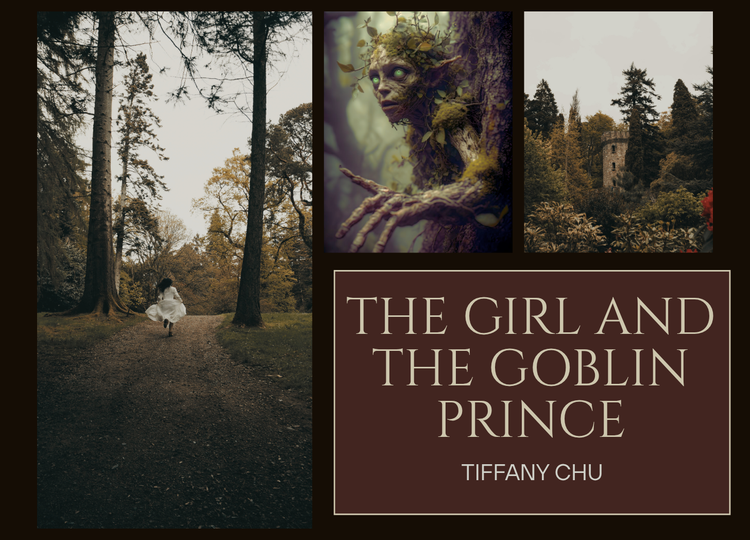
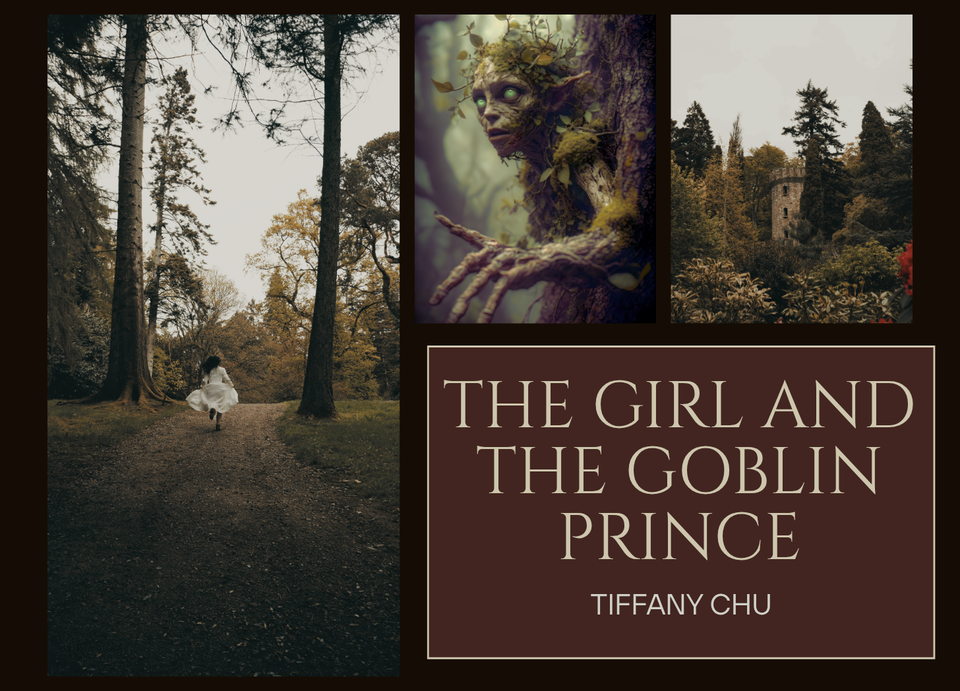
A forgotten island. A hundred-year silence. A girl who swam ashore looking for answers and found a goblin prince who needed the same ones.
This is the first of four parts to a novelette I started writing over a year ago. 😭 I'd say that a year is a significant improvement to the 4-5 years I spent on A Girl Made of Time, for those familiar with that back story.
Tonally, The Girl and the Goblin Prince is similar to A Girl Made of Time. It's more straightforward and happier, though (see? I can write happy-ish stories!).
Fun fact: the story emerged after a cruise last year, during which the ship passed by a tiny island with a lighthouse. I asked my son, "What do you think is on that island?"
"Goblins," he said.
"What would they eat? There's nothing there."
"Maybe they live underground and they come out and eat people from ships who stop there."
And so...here we are.
I hope you enjoy!

When Aletta was two months old, her mother walked into the thick mist of the dawn-not-quite-morning without stockings or shoes, and never returned.
She thought of that day now, as she stood on the ship’s deck, where she could hardly see two feet before her. She imagined her mother disappearing into such a fog, imagined her setting her face to the mountains and never turning back to look at the husband and child she was leaving behind.
Aletta shivered and rubbed the goosebumps on her arms. Aunt Jolande would scold for certain if she didn’t return belowdecks before the breakfast bell woke everyone, yet Aletta did not at once turn toward the narrow staircase to descend, but cast her gaze to the distance. She tried to imagine what her mother might have seen when she’d walked away that morn, whether she had felt a tug pulling her back toward the babe in the house she was leaving, or if the call of the mountains was too strong to resist. Such magic was, after all, well known in their hometown.
These thoughts had not been voiced aloud for many years. Aletta’s father scoffed at the superstitions she had picked up from the villagers.
“Your mother left because she was too selfish to stay with us. It’s as simple as that,” he said to Aletta, early and often.
But in the village, the woman who sold Aletta eggs and snuck green onion crisps into her basket whispered of ancient goblin magic long known in those parts.
“Everyone knows.” she’d say under her breath, “The wise don’t go to the Taipingshan. The spirits there whisk the unsuspecting to other worlds. We’ll never see your mother again, I fear. She dabbled in things she didn’t understand.”
Other whispers were less kind. The same children who laughed at Aletta’s strange green eyes also called her the daughter of a witch. “You’ll get eaten by the mountain spirits, just like your witchy mama,” they laughed, dancing circles around her.
The rumors and her father’s dismissive air did little to dispel Aletta’s imagination, alas. Even at two and twenty years old, she looked at mountains with a kind of reverence her relatives raised their eyebrows at, wondering if she might one day climb the same mountain and find traces of her mother where others failed.
Heavy footsteps interrupted Aletta’s thoughts. She recognized her father’s gait without turning, but kept her gaze on the horizon until he came to stand beside her.
“Come inside, Aletta,” her father said.
She did not answer him at first, but forced her hands to unclench before he could notice. Forced her voice to steady despite the chill.
“The air refreshes me.”
From her peripheral vision, she saw him stiffen in the way she knew well that told her of his displeasure. She wanted him to argue, wanted him to scold her for her folly—anything except the distance he held between them.
She wanted to ask him why he let her mother go.
Aletta’s father said, “As you will,” before the plod of his departing footsteps sounded in her ears.
Once, there was a young goblin prince who lived under the earth on a long-forgotten island. Forgotten by the rest of the world, I mean, but not by its inhabitants. After all, the young goblin was surrounded by his sixteen brothers and sisters—some as ancient as the bushes outside, others younger than he—mere toddlers.
They lived quiet lives—when they weren’t bickering over choice earth creatures to eat (now dwindling since The Great Fight of ’45 when the older siblings finished off all the sheep on the island, somehow forgetting that man-helmed ships had not passed their way for many a year by then. Where would they get new food supply without those ships?
The young goblin—I suppose it’s time to tell you his name is Grubhurst—didn’t remember what happened to his parents beyond some vague images that pressed against his memory. The tunnels beneath the island held echoes of their voices, reverberating against stone walls worn smooth by countless goblin hands. Not even his favorite sister, Prismilla could, or would, tell him, if she remembered. No one spoke of them anymore, or explained why since they disappeared, time had frozen on their island, such that the youngest gobs still looked as if they’d been born mere years ago.
Grubhurst felt certain it had to be at least a century since he last saw His and Her Majesty Goblin (okay, so he wasn’t actually so young, but he was young when time seemed to freeze over at the moment of his parents’ disappearance).
No matter; he took care of the island while his brothers squabbled over moles, and the island took care of him—so far.
And he wasn’t lonely—not really.
Everything changed the day the ship came.
The day had dawned like any other. Grubhurst woke with one of his siblings’ toes in the corner of his mouth (at least he hadn’t been chewing it in his sleep this time—that had been awkward). The air in their sleeping chamber tasted of damp earth and the particular musk of too many goblins in one burrow. She kicked him awake when his drool dribbled down the side of her foot, and this set off the usual chain reaction that sent everyone scrambling for the surface in search of the first meal.
“Foggy, this,” Prismilla said, when they had settled on a couple squirrels for their breakfast at their usual spot. They liked to hunt on their own (less sharing that way) and eat in a small clearing among the ruins of an old lighthouse. The stones smelled of salt and time, and lichen crept across them in patterns like ancient script. No one knew who’d built it—certainly not the goblins, who never built anything above ground. It had to have been humans from long before their time, but who knew? Goblins had no head for history and kept no books.
Grubhurst looked up and grunted in response. It was still early enough that the sun hadn’t quite peeked over the tallest hill on their island yet, and the fog gave the land an eerie glow he couldn’t name—something like an in-between feeling like stepping through a waterfall and finding the world on the other side wasn’t the same as the one behind.
A fleeting image flashed across his mind; dark brown robes disappearing through a misty veil, hurried whispers promising a swift return. Goosebumps rose on his moss-green skin. The last time he had this feeling, time had stopped for a hundred years.
Prismilla had finished off the last squirrel tail when a little brother, Bubhurst, charged through the ferns into their hiding spot.
“People! A Ship! Come see!”
“That’s not possible,” Grubhurst said, shaking his head.
“Not possible,” Prismilla echoed.
But they sprang to their feet and scrambled after Bubhurst to the cliffs, where their fourteen other siblings stood near the edge, craning their necks as far as they could go. Grubhurst heard the hubbub long before he saw a single goblin.
“Where is it?” Hubszilla yelled.
“I don’t see it,” Brimsilla said.
“Man pies, man pies!” shrieked littlest Rimlurst.
The oldest of them all, Tribthurst, roared for attention, and the lot of them quieted. “Now, now,” he said in his gravelly voice, “we don’t know how many humans are on that ship, and I may as well tell you now that it’s been marooned on the rocks in the shallows, but we know we want this meal to last between all of us, so let’s not be too hasty.”
At once, protests drowned out Tribthurst’s next words, so he had to roar once more.
Grubhurst didn’t hear what his eldest brother said next, though. He was sneaking away.
Goblins aren’t known for their stealth, but those on this island have had to learn a bit, thanks to the dwindling food supply. Grubhurst prided himself on being the quietest among his siblings—his steps almost as undetectable as Hobbits—but he didn’t need such skill in the midst of the clamour. And it wouldn’t help him out on the open beach when he approached the ship.
The sight of it out on the shoals surprised him. It was smaller than he expected, and seemed devoid of life. The wood creaked and groaned against the rocks, a slow death song accompanied by the hiss of waves withdrawing over barnacled stone. The stillness of the morning could have deceived him into thinking it was one like any other, except for the foreign sight of the vessel near the island’s shore. He wondered if any of his siblings were looking toward the sea, or if they were still squabbling about how best to ambush the unsuspecting humans. He hoped it was the latter, as he steeled himself to spring out from the shelter of the trees.
Just before he had made up his mind to head toward the ship, however, he saw a small figure fighting against the current and swimming toward the beach.

When Aletta was two months old, her mother walked into the thick mist of the dawn-not-quite-morning without stockings or shoes, and never returned.
Two and twenty years after her mother walked into the mist, Aletta didn’t know what she was thinking when she lowered herself by a rope into the ocean—only that it had to be better than staying on board with her histrionic second aunt, Jolande, who was still sleeping off her last hysterical night of weeping and wailing about their plight, and her equally frantic youngest aunt, Jantine, and Uncle Lars. Below deck, the air had grown thick with the smell of unwashed bodies, stale biscuit, and the sour tang of fear-sweat. At the very least, they couldn’t stay stranded on their ship forever. Her father’s stoic reaction to the ship wandering off course and venturing into this unknown shouldn’t have surprised her. But she’d always mistaken it for equanimity, not indifference, as it now seemed. Odd, how a crisis revealed people for who they were.
For example: Aletta wasn’t a risk-taker. Not really.
Or rather, she didn’t know if she was one. She’d never had the chance to test it. She knew only that she had to get out from under her aunt’s smothering protectiveness for once in her life.
And so, here she was, rowing a boat she barely knew how to row and had no business taking, toward a landmass she was sure could only feature all her aunt’s worst fears: deadly creatures, savages, and the like.
After seven months at sea, however, Aletta could not quite allow herself to fear the unknown more than the suffocating known. Yet.
It didn’t take long for her to realise her rowing skills were nonexistent. Before she had time to think of all the reasons she shouldn’t, she dropped the oars into the boat and flung herself into the sea toward land. The shock of cold water drove the breath from her lungs. Salt stung her eyes and filled her mouth with the metallic taste of the deep. Her aunt’s overprotectiveness had at least given her a strong stroke with which she now utilised to its fullest extent. Of course, that same overprotective voice was now screaming all kinds of obscenities in Aletta’s mind. Common sense chided her, too: one should not swim in unfamiliar waters. But rather than shrinking into herself as she would have if faced with her mother in the flesh, Aletta smiled as the briny water washed over her, blurring her vision and filling her mouth with salt. Nothing was before her. Nothing was behind. It was just her. And the sea. The water held her with cold hands, buoyant and indifferent. Though she kept her eyes trained on beach so she wouldn’t stray from her path, she relished the feel of the ocean all around her; the power of her limbs propelling her forward after so many months of inertia filled her chest with an expanse that she felt could contain a universe.
When Aletta’s feet touched sand, she startled. Her head burst through the water’s surface, and she gulped lungfuls of fresh air, the scent of sea still clinging to her every fiber. The sand beneath her toes felt coarse and cool, each grain distinct against waterlogged skin. Only belatedly did she realise she had brought no change of clothes.
Wringing out her hair, she slopped her way onto the shore, her eyes scanning the foggy land. The fog moved like something alive, curling around her ankles with fingers of mist that left her skin damp and prickling. Except for the crash of waves on the boulders to her left and the faraway cliff on her right, birdsong, and the chirping of crickets yet to sleep, she heard nothing else.
And then. Just above the murmur of nature sounds, so dim she might have mistaken it for one of them—a hiss, low and urgent. She froze. The hiss came again, and with attuned ears, Aletta heard words in it: “Get out of the open; come into the trees. Quickly, quickly. Run. Run!”
Sparing but a single thought that this could be the death of her at last, Aletta’s tight muscles clenched to action once more. Her wet clothes clung to her legs, the fabric heavy as chains. She stumbled and tripped over sand and rocks—her limbs a wobbly tangle after the swim—toward the thicket, where the siren or friendly warning seemed to come from. Perhaps it was a mere imagination, but she felt eyes as if from above peering down and fixing on her—not the solicitous sort, but a sharp yet wary sort of gaze. The feeling sparked fresh strength into her legs; she sprang forward. The earthy scent of pine and coconut of gorse filled her nostrils as she crashed in among the trees. Branches caught at her hair and dress, leaving scratches that stung with sap. She had no time to think of where to hide before a hand pulled her down behind a large moss-covered boulder, and another—knobbly, weathered like an old tree branch—covered her mouth.
Aletta struggled against her attacker with flailing limbs, not helped by the scant offerings on board the ship. Her muscles trembled from cold and exhaustion. She freed her mouth and bit the hand, drawing a sharp yelp from its owner. The taste was like biting into bark—woody, bitter, with an undertone of mushroom.
“Stop. Stop! If you don’t want to be a goblin’s dinner, stop!”
Aletta did not stop. After all, she had not survived corsets, and familial scoldings, and rigid rules made for boxing in wayward girls by obeying commands she deemed nonsensical. She instead spat to expel the revolting earthen taste of the hand from her mouth, saying as she did so, “And who are you? A troll also waiting to eat me—are goblins your relatives? A wight, dragging me into the earth?” Aletta said such things with irony, not truly believing the speaker’s words about goblins and other eldritch creatures. Yet as she wearied and looked down, she saw dark green skin as gnarled as it felt.
“Heaven on earth!” she exclaimed, followed by a number of choice expletives picked up from her “good-for-nothing” uncle (second-aunt’s words, not Aletta’s), and she suddenly jumped up to kick the thing square in the chest.
The violence of the girl’s reaction flung Grubhurst away from her. He put up his hands in surrender. “I’m trying to help you.”
She stared at him. Grubhurst tried to imagine how he appeared to a human who had never encountered a goblin before. Moss-green skin—not smooth, but like lichen growing over logs in an ancient forest that hadn’t been touched by any living soul for a thousand years. The texture of it caught light unevenly, rough as tree bark in some places, smooth as river stone in others. Round eyes, seemingly too large for his face. If he smiled, the girl would see pointed sharp teeth—not just two or four canines like humans, but each and every one. His body was hunched from walking the tunnels, his ears long and pointed. When he moved, his joints made small clicking sounds, like twigs settling.
The girl gasped. “What are you?”
“A goblin.”
“Goblins don’t exist.”
Grubhurst gestured to his face and body. The girl’s burst of hysterical laughter surprised a laugh out of him. The sound echoed strangely in the close space between trees—not quite human, with an undertone like wind through hollow logs. For a moment, they could do nothing else in the face of the absurdity of the situation.
The snap of a branch returned Grubhurst’s senses to him, and he gestured for the girl to follow him. “It’s not safe. Come quickly. Get to higher ground.”
Together, they dipped beneath the arch of many low-hanging branches, tracing familiar paths Grubhurst knew well. The forest floor gave beneath their feet—soft loam and decomposing leaves that released the smell of rot and growth with each step. With every crackle of the dead leaves beneath the girl’s feet, and rustle of bushes, he cursed inwardly at the noisiness of people. Like a herd of wild oxen, he thought to himself. He tried to signal to her to quiet her movements, but the need for speed warred with the one for stealth, and he hoped the fog would be enough to hide them from immediate sight at least.
It was not for nothing Grubhurst had earned the nickname of “Most Likely to have been a Hobbit in a Former Life” amongst his siblings, however. He knew secret ways throughout the island his siblings didn’t—not even Prismilla. His odd desire for solitude (“Quite un-goblin-like behavior,” tsked Tribthurst) propelled him to search for hiding places. He led the thundering buffalo of a girl to one such place: a boulder beside a river, hollowed out just enough for a smallish goblin secrete oneself in, a tree growing atop it with long roots spreading bizarrely over it like a curtain until they reconnected with the earth below. The roots smelled of damp and mineral, and water dripped from them in a steady rhythm. Some were as thick as Grubhurst’s arm, others thin as ivy.
“There?” the girl hissed, looking doubtfully at the small space.
And no wonder. It must look like a perfect place for Grubhurst to have lured her to in order to break her bones and munch on her young, supple meat. He raised his eyes to the sky in frustration. “Okay. Okay. I get it. I’m a goblin. You’re a human. Goblins eat humans. Pointy teeth don’t do me any favors. But right now, my sixteen brothers and sisters are coming down the mountain looking for people from that ship, they’re very hungry, and I’m your only chance for survival. Squeeze in.”
The girl’s eyes widened, and she raised no further objections.
It was a wonder the two of them fit into the hollow, though it was undoubtedly tight. Though small compared to his siblings, Grubhurst still had the build of a goblin—you know, stocky, wide arms and legs—imagine a being with all muscle and little give. The space smelled of wet stone and the particular mustiness of places where sunlight never reached. There was really not much to hold in to get into snug places. And the girl was no small thing either, Grubhurst thought ruefully. It would have been easier if it had been a little human, but of course it had to be one of those fully fledged ones with their limbs all grown out already. What a strange day he was having.
After settling into very uncomfortable positions, with much grumbling from aforementioned girl, Grubhurst shushed her. Their breathing filled the small space, humid and too close. He turned his ears this way and that, trying to catch a sound of padded footsteps on the forest floor. He hoped his siblings’ excitement about new food might cause them to dispense with some of their caution moving through the woods, but he couldn’t depend on that. Some of the little ones could traverse their hidden paths quite silently indeed. His brothers and sisters would be moving to the beach, though, while he and the girl had ran the other way. If they hadn’t been caught by now, perhaps they were safe for a time.
Sighing, Grubhurst released some of the tension in his body before he turned to the girl at last and looked at her properly.
She was staring back at him intently, as though studying him. The air of disbelief had somewhat dissipated, though she still looked at him like he had popped out of her storybook and started talking without permission.
“So…” he started, just as she said, “What do you mean you’re a goblin?”
He stared.
“I mean,” she began again, “how?”
“I don’t know where you’re from, but goblins have always lived on this island. I’ve been a prince here for more than a hundred years. Unless…those fairy tales about magical portals…” Grubhurst shook his head. He leaned back and fought the desire to laugh again at her stunned expression. “But why are you here? No ships have come for a century, no people. It’s just been us. Why are you here?”

At the goblin’s question, Aletta’s head began throbbing. Her temples pulsed with a pain that sat behind her eyes like pressure before a storm. It often did when something reminded her of her mother. Her hands twitched; they itched for some colorful square paper to fold into lotuses, cranes, or butterflies. No chance of finding paper here.
She could tell him that she and her family had been journeying from the island of Formosa back to her grandparents’ home in Amsterdam because of the violent riots. They had only been there to trade, her father said; it was time, now that the Chinese military leader, Koxinga, had determined to take Formosa for his own. That she had not wished to leave Formosa, because she still nursed lingering hope for her mother’s return. That she’d been born and raised in Formosa, that that was her home, not Amsterdam. She could still smell the market stalls—star anise and ginger, the sweetness of longan, the mineral scent of fresh fish on ice. That her grandfather had also demanded their homecoming in a sternly written letter to her father. That there had been talks of the need to “get Aletta settled.” That everything had been fixed without so much as a by-your-leave.
And as she thought these thoughts that had been bubbling up for so many months of preparation before, then many more months on the sea, she felt the tears burning her eyes, and realized she had been saying the words out loud. Her voice came out hoarse, roughened by salt water and crying.
She looked up at the goblin, a curious expression on its strange face—a mixture of pity and…could it be…understanding?
“Where did your mother go?”
And Aletta didn’t know why—except perhaps that there was still a part of her straddling the threshold between belief and disbelief that the situation she now found herself in was quite, quite real—but she told the goblin about her mother disappearing into the mist when she was a mere babe, about her father never really looking at Aletta, but above and around her, about her aunts’ constant fussing over her safety but mostly over her turning out a proper lady and “not a wild, savage thing” like her mother had been,” about the children who’d laughed at her almond-shaped eyes and “stubby nose” and called her an alien, and about her family never, absolutely never, talking about Aletta’s mother.
The words cascaded from her lips, almost as though she could not stop their flow. On they went, like the current thundering outside the hollow. The sound of rushing water accompanied her confession, a constant backdrop to grief.
When at last she had exhausted herself with speech and her breath escaped her in quiet but heaving pants, the goblin said only, “My mother and father disappeared into the mist, too.”
Aletta hiccuped. “They did?”
It nodded. “I don’t know where they went either.” After a pause, it said, “I’m called Grubhurst.”
“Aletta.”
Thus was something of tenuous friendship wrought between the two.
“What about your hungry brothers and sisters, then?” Aletta asked, releasing a shaky laugh as she adjusted her position on the rather unforgiving stone ground. The rock beneath her was cold enough to leach warmth through her wet clothes, and she shivered.
“I’ve been listening for them. I don’t know if they saw you come on the island; they were still bickering when I left them. Hopefully their attention was elsewhere.” Grubhurst leaned out, against the roots enclosing them, and she mirrored his movement, drawing closer to him.
Aletta had the sudden and unwelcome thought that should one of his siblings come upon them, they would be utterly doomed. Or rather, she would be. Then, she wondered what Grubhurst’s relationship with his siblings was. Why did he not savor her flesh, after all, when they did? The notion arrested her motion. She slowly backed away again.
Grubhurst did not seem to notice at first, but sat back with a small grunt. “It’s not that I’m a vegetarian,” he said with an odd twist of his mouth. “But, we haven’t seen humans for a hundred years. My brothers and sisters may not find that something worth thinking about before trying to have a nice meal, but I do.”
“If there haven’t been any humans, what have you been doing all this time?”
“Bickering over the sheep and other animals, trying not to eat them faster than they can reproduce, which they did to the sheep. You know, goblin stuff.”
The out-of-place response dragged a guffaw from Aletta’s core that doubled her over. Her laughter rang too loud in the enclosed space, and she clapped a hand over her mouth. Oh, she could have been proper friends with this goblin under less dire circumstances. The situation was far too absurd. No one would ever believe her. Well, perhaps her mother would have—that mysterious woman who ran into the mountains with the mist. The thought sobered Aletta like water from a frigid river.
A wry smile painted itself over Grubhurst’s face. “Can’t be a coincidence. Your mother and my parents vanishing into thin air, your ship passing my island and getting through whatever barrier kept it hidden all this time.” He looked at her with an expression of—hope?
She swallowed. A dangerous thought began to take root in her mind—the kind that was sure to fester if left in the damp recesses of her father’s dim library, but here where magic and goblins exist, might just take wing. “What if,” she said, “my mother found a portal to your island somehow?” The other kids called her a witch, after all. What if she really was?
“And what if my parents noticed and tried to keep her out? There’s an old lighthouse on the island. No one knows where it came from, but goblins don’t build.”
“Maybe she tried to come through there. And then their magic clashed.”
“They all got transported somewhere else.”
“Yes, but where?”
“And how do we get them back?”
The two faltered into silence. Aletta looked around the small cave, and noticed with some surprise that the sun was making its descent into late afternoon. The light filtering through the root curtain had turned golden, painting everything in warm amber. She wondered how big the island was, how long Grubhurst’s siblings would take to scour the land, then jumped up with a tiny scream, forgetting in her excitement the cramped space she was in, and colliding her head with rock. Pain bloomed across her skull, bright and immediate. With watering eyes and ringing ears, she crouched back down. She ignored Grubhurst’s inquiries after her well-being, saying instead in a sort of choked voice, “Do goblins swim?”
It was as though Aletta had plunged Grubhurst into the ocean itself with her words. “Yes,” he answered.
They looked at each other, girl and goblin, for a span of time that stretched longer than an incense stick. Then, they both sprang from their hiding place without another word, Grubhurst with much more ease. Grubhurst saw the tangled roots catch Aletta’s hair and clothes like monstrous fingers trying to prevent her escape. The roots held her fast, wrapping around fabric and tangling in her damp hair until she had to tear herself free with small ripping sounds. He couldn’t stop himself from wondering why humans bothered with the silly adornments as Aletta struggled through. Bare skin suited him just fine.
“Why on earth didn’t you mention this before?” she snarled as she ripped holes in her sleeves, pulling them free and shaking her ankle. Her dress was now in tatters, the hem muddy and torn. She made a preposterous picture, lying belly-down on the dirt. In the light, Grubhurst could see her face smeared with dirt and sap. Leaves stuck to her hair, and a smudge of green moss marked her cheek.
He glared at her and bared his teeth. “I was preoccupied with other concerns, in case you didn’t notice.”
“And now my family will be eaten by your family while I’ve been sitting here doing god knows what!” she cried. She imagined a monstrous horde of goblins crawling up the side of the beaten ship with the same stealth Grubhurst possessed, stealing into the cabins, and taking bites out of her father’s calf.
“Calm down! They might come for us after all if they hear you.”
Aletta scrambled to her feet with little grace, pulling with her a long tree branch. “Take me to the beach. I can fight off some goblins.”
Grubhurst groaned so loudly, he saw Aletta flinch. “You know I’m one of the smallest of my brothers and sisters, right? And there are seventeen of us, right?” He watched the branch in Aletta’s hand falter. “This is not the time to be fighting goblins. We need to get to the lighthouse figure out the magic.”
“You don’t even know if that’s where it happened! You don’t know magic! I don’t know magic! What are we going to do, put our fingers in the wall cracks and hope there’s a secret portal?”
“What do you propose? You can’t fight off sixteen goblins by yourself. This is our best chance.”
“Oh dear lord, oh dear lord, oh dear lord.” Aletta paced back and forth, and wrung her hands.
Grubhurst stared at her. He didn’t know what that meant, but he was hungry, tired, and growing less and less disposed to put up with Aletta’s histrionics, as he deemed them. His stomach growled, a low rumble that reminded him he'd only had squirrel for breakfast. He huffed and headed up toward the lighthouse. Behind him, he heard Aletta’s pacing stop, and imagined her trying to make up her mind. Her thunderous footsteps soon came as she fell in step beside him.
“Alright,” she said. “Only because we’re unlikely allies now. You want the barrier broken so your family doesn’t starve. I want my family to stay uneaten.”
Now that she had decided, she made no further mention of Grubhurst’s siblings possibly making their way to eat her family. Such a strange, single-minded girl, he thought.
It had been a strange day, Grubhurst continued with his thought. He led Aletta through winding paths up the hill toward the worn lighthouse he had just been that very morning with Prismilla. The path grew steeper, and roots crossed it like gnarled fingers. The smell of the forest changed as they climbed—less loam, more stone and wind. After a hundred years, he daren’t have hoped for any rupture to the mundane ennui that had settled over his life on the island. It was a quietness worn smooth by time. The early years of questioning where his parents had gone, turning over every stone in his mind of gaps he may have missed, had faded. Goblins could live several millennia, but their memories dissipated with the plodding of the years, just as humans’ did; they did not remain evergreen. Until the first cry of “People! A Ship!” Grubhurst had learned to cover dwindling hope with dried leaves, sorrow with stoic perceptiveness. Every day looked the same: emerging from the tunnels to cloudless skies, dispersing across the island to search for an ever-diminishing food supply, no answers.
Now, Aletta, with her story of a mother vanishing into the mist. The timelines didn’t match up, but they wouldn’t, would they, if the old stories were true?
Grubhurst’s glance flashed behind him. He was selfish, he knew. No goblins ever learned to swim. It was why he hadn’t dared to jump into the waves to drag Aletta to shore in the first place. Oh, they stood on the shore at times to catch fish in whatever ways they could manage, but as you may know by now, goblins weren’t the most inventive of creatures either. Grubhursts’ siblings made rough fishing rods with bits of bait, then often ended by squabbling over the bait—an amuse-bouche, if you will. He knew his brothers and sisters would perhaps still be watching greedily from the copse edge at that floundered ship with those delectable humans inside, licking their lips and hissing to each other how best to get there.
The installation of urgency had worked, however. Aletta’s face of determination steeled Grubhurst’s own, and he set his face toward the lighthouse. It stood dim in the distance, and the dark gray of the stone peeked out above the deep green leaves. Now a human walked with him, Grubhurst swore he could hear a murmur ripple in the earth beneath his feet, spread like a slow wave from the lighthouse to them, tilting them toward it. The ground seemed to pulse with each step, a vibration he felt in his bones rather than heard. Whether it was his imagination or not, delirious hope or not, he plodded ever upward. Even Aletta’s loud, panting breaths and clamorous footfalls faded away.

Behind Grubhurst, Aletta was lost in her own thoughts and hopes. The sun was waning now. It cast a bright orange sheen across everything. The light turned the leaves to copper and made the moss glow like embers. She’d never seen sky like this before. As the pair made their way up the mountain, the island’s pervasive damp scent of leaves and tree branches whipped her senses. It was so like Formosa, but also unlike. Formosa’s air clung to people with an oppressive heat. There, the humidity sat heavy on the skin like a second garment, inescapable. On especially hot days, the sounds of buzzing mosquitos and croaking animals could be heard, even above city clamor and street markets. She missed the noisy bustle of her home. Here, the air chilled her skin, and caused it to prickle with discomfort. Gooseflesh rose on her arms, and her wet clothes grew colder as the sun descended. Only in the winter months did Aletta experience such wet coldness, but never with the hush that seemed to smother all natural sound on this land. Even normal animal noises came as though muffled by thick layers of cloth. She wondered that Grubhurst did not notice.
Thinking of Formosa drew stinging tears to her eyes; they pooled until she was soon stumbling along, into Grubhurst’s back.
“Aletta?” The goblin’s voice sounded uncertain. She felt uncertain. She had never wept so much before her family, who expected her to pretend as they did, that her mother never existed, that there was no void where a mother’s nurture should have brought Aletta to womanhood. She had lived twenty-two years, but still felt much like a child.
“Aletta, we’re here.”
She raised her head to take in the sight of a tall, circular building built of stones the color of foggy mornings and stormy seas. The stones fit together without mortar, each one perfectly shaped to its neighbor as though grown rather than built. From their spot, she could now hear the sound of the waves below. The crash and hiss of water on rock carried up to them, rhythmic as breathing. Remembering jolted her back to the present urgency. She realized she was clutching Grubhurst’s arm; the texture of tree bark on her arms and hands soothed her. A giggle escaped her. It’s like hugging a tree, she thought to herself, and pulled it closer to herself.
Grubhurst looked nonplussed. He must think her mad, but he awkwardly maneuvered them through the underbrush to a door half hidden behind ivy. The ivy leaves were thick and waxy, cool to the touch, and they rustled with a papery sound as Grubhurst pushed them aside.
“I’ve never tried to open this door,” he said in a hushed tone.
They stared at it together. The wood was ancient, silvered with age, and carved with symbols neither of them could read—spirals and circles that seemed to shift when looked at directly. Aletta thought she knew why. As she reached a trembling hand toward it, something seemed to suck away the air around them. The pressure changed, making her ears pop as though she'd descended into deep water. An eerie calm settled over their surroundings, and Aletta pulled her hand back, as if struck. She looked at Grubhurst, whose eyes were as wide as hers must be. In the dimming light, she thought he did look an awful like what she once pictured goblins to be: saucer-like eyes with slits for pupils. She shuddered.
“You feel it too?”
Aletta nodded. “It must be here.”
Above them, a stunning white light streaked with purple lit up the darkening sky. The light pulsed like a heartbeat, and the air around them hummed with a frequency she felt in her teeth.
Grubhurst gasped in awe and horror. “That’s never happened. Never.”
Aletta set her jaw. “Let’s go.” She inhaled, pushed down the butterflies dancing around in her stomach, and shoved against the door.
Any doubt about the magic in the lighthouse vanished when they crossed the threshold. Here, the quiet deepened. It was a silence that pressed against her eardrums, heavy as water, so complete she could hear the blood moving through her own veins. Aletta felt as though they had walked into another world entirely, for though the sun had thrown its last rays over the earth, here a glow lingered that was neither sunlight nor moonlight. The light seemed to emanate from the walls themselves, or perhaps from the air, sourceless and constant. She could not describe it if someone were to ask her what the light was like. She could make out Grubhurst’s silhouette beside her, a spiral staircase before her, yet there was no light source.
Now Grubhurst led the way, treading with care up the steps. The lighthouse groaned as though weary with carrying the weight of many burdens of countless years. Each step they took echoed strangely, as if the sound traveled both up and down all at once. Aletta heard each creak of metal as the two maneuvered their way upward. The air grew thicker as they climbed, harder to breathe, tasting of old magic and salt.
“Remind me why you goblins never came in here?” Aletta whispered. Her voice came out thin and reedy, swallowed by the oppressive quiet. She tried not to think of the glow illuminating their steps as they ascended, as though following them.
Grubhurst didn’t answer at once. When he did, his voice matched her muted tone. “I don’t rightly know. My sister and me like to sit near this place, but never went in. Maybe we distrusted the strangeness of a human made thing.”
“But weren’t you curious? I’d have been curious.” Now that she’d started talking again, her voice steadied. “Now I think of it, I think I’d have liked siblings. Maybe not sixteen. Maybe a brother. Like you, maybe. A sister would have been nice, too.”
There was no answer from Grubhurst. His ears had pricked forward in alarm.
Before too many seconds had passed, Aletta knew why. A humming sound was drifting down from the top of the stairs. As they crept closer, the noise grew louder and louder until it was more akin to the sound of the angry buzzing of a horde of insects. But seemingly from outside, she also heard a strange voice calling, though she couldn’t determine the words.
“Grubhurst?”
He shook his head in response, but gestured for her to stay while he poked his head through the opening to the top. His form disappeared into brightness above, leaving her in shadow. Agonizing moments passed before he said at last, “There’s nothing, but I see runes. Can you read human runes?”
She scoffed. “Do I look like a shaman? Or an archeologist, or whoever does that?”
“It was worth an ask.”
Together, they at last climbed the last step.

Here’s something you must know about goblins. They don’t climb stairs (burrow-diggers, remember?). They don’t engage with humans (except to steal food from their ships when they foolishly dock on the goblin island). If they do encounter a human, they must never, never speak to it, lest they threaten the goblins’ way of life.
Yet there they stood at the highest point of Grubhurst’s island: a girl and a goblin prince, hand in hand.
Grubhurst led Aletta toward the wall of runes. The symbols glowed faintly, carved deep into stone that felt warm to the touch. There, a wall of mist shimmered against it, casting the runes in a veil of blurred symbols. The mist moved like water, flowing upward instead of down, defying nature with each impossible curl. The goblin could not quite discern what they looked like beyond the veil. He was not even certain Aletta was seeing the same thing he was seeing, so eerie and out-of-place did the entire atmosphere appear to him.
“Should we touch it?”
Grubhurst looked at this human girl, who looked back at him with trepidation, but also trust. A warmth bloomed in his chest. Yes, he would have liked her as a sister, too.
Hand still in hers, he reached their fingers toward the mist.
A crash below made them jump apart. Aletta looked at Grubhurst in alarm as thundering steps slowly approached.
“Grubhurst? Grubhurst! Are you up there?”
The goblin in question gasped—a strange sound if you have not heard it before—like gravel passing through a throat.
“It’s Prismilla.”
“Your sister? What do we do? Will she help?”
The steps quickened. Each footfall rang against stone, growing louder, closer. “Answer me, Grubhurst, ungrateful goblette that you are to one who raised you like a mother! I can hear you! Don’t make me come all the way up there! Your brothers and sisters are waiting.” Then, more pleadingly, “This contraption scares me, brother. Come down, will you?”
Grubhurst could not but reply, “I will, Pris. Give me a moment.”
Prismilla’s steps did not stop. “Oh, how high up I am! Let’s be down and have some man pies, Grubs. Doesn’t that sound good?”
Girl and goblin threw alarmed looks at each other. Grubhurst saw the rapid rise and fall of Aletta’s chest as she fought to control her panic.
“M-man pies?”
“Yes! Tribthurst and Hubszilla and Pudshurst and oh, I don’t remember who else, managed it, and now the creatures lie tied up and ready for cooking. What good luck we finally have after all these years, eh, Grubs?”
Aletta gave a little shriek. The sound escaped before she could stop it, high and thin. Grubhurst flung a hand over her mouth. A pause in Prismilla’s footfalls.
“Is there someone there with you?”
Grubhurst shook his head with some violence, forgetting Prismilla could not see him. At any rate, his thoughts turned to other matters. Aletta evidently was not one to be muffled, and bit his hand. He let out a shriek of his own, which spurred Prismilla’s steps to fresh urgency.
“Again?!” Grubhurst yelled at the same time Aletta screamed the same word at him.
“I’m trying to help you, crazy little—”
Aletta did not allow Grubhurst to complete his sentence, having preferred to punch him in the nose instead. Her knuckles connected with cartilage, and pain shot up her arm.
Just as he tumbled backwards, grabbing a handful of Aletta’s black hair as he went, he caught a glimpse of Prismilla, her mouth open wide in shock, before falling backward toward the wall of mist and runes.
No wall came to meet his body, nor any solid form to shatter his head upon like watermelon on rocks. Grubhurst instead found himself suspended in a cloud of white, his hand empty. The mist surrounded him completely, cool and damp against his skin, pressing in from all sides yet supporting nothing.
“Aletta!”
No answer came, but Grubhurst heard thin whispers from far off, drifting in and out of his hearing as though upon a wave that came and went. The voices spoke in languages he didn't know, some sounding like wind through reeds, others like water over stones. Aletta’s voice was not among them, this he knew. He grasped at empty air and his legs kicked out, but could find no purchase. The mist yielded to his touch like water, flowing around his fingers without resistance. He cried out for Aletta once more. Hearing nothing, his efforts to find solid ground intensified. A strange thundering sensation came from his chest. Was this fear? Goblins did not know fear, you see. What cause would they have for it?
Gulping deep droughts of air, Grubhurst observed the mist about him to be not of one form as it had seemed when he first fell through, but swirling in different shapes, as though a breeze drifted in the air. If he looked more closely, he might have seen traces of pale color amidst the white. His hand grasped at the mist—for what, he didn’t know, only that it was better than floating in this helpless nothingness.
It was then, a darkening form took shape in the distance. At first it seemed like smoke, then solidified into something more substantial, shadows coalescing into recognizable shapes. It drew closer and froze Grubhurst’s frantic movements as he observed it.
Grubhurst turned his ears forward and squinted at the form. Like a knobbed and bulky, yet truncated tree stump it appeared. But no, as it approached, he discerned two heads. No, two figures, rather than one.
A new thumping resounded in his chest, this time interjected with the impression of a thousand moths beating against his stomach—an uncomfortable light, floating sensation filled his body. He shook with its intensity. Still, he didn’t dare speak a word out loud—not his hope, nor his fear. The remote voices had not ceased, but Grubhurst could hardly hear them now, his ears now filled with a high-pitched ringing that seemed to originate from his own head.
Then, one voice penetrated the noise in Grubhurst’s ears, not because it was much louder than the others, but because it stirred in him a yearning he had all but forgotten. A voice he had not heard since he was fifteen years, truly.
“But the magic went wrong,” it was saying. “They were all meant to have frozen along with time, gone to sleep; all growing things were.”
And Grubhurst was flailing in the mist, swimming toward the voice, his own crying out a word his mouth had not shaped for all that century.
For the voice belonged to his mother.

To an outside observer, Aletta would have appeared the very picture of equanimity in her own cloud. Once she realized herself separated from Grubhurst, her first feeling was that of relief. If you’ve ever had a chunk of your hair caught in a tangle of branches, you might understand. Her scalp still throbbed where he'd grabbed her, individual spots of pain marking where hair had torn free. Finding herself suspended in mist with no ability to move did not alarm her as much as you might think. After all, it had been a day of carnivorous goblins and magic lighthouses. She did not, however, wish to remain in such a state while said goblins were presumably preparing to devour her family members.
“Hello?” Aletta called. Her voice echoed as though in a wide cavernous space, though she could see nothing but the fog.
Before panic could set in, the mist changed. Rather than insubstantial shapes, they began to morph into recognisable ones: a building? No, a house; no, her house. The familiar architecture emerged from white like a memory becoming solid—first the outline, then details: roof tiles she knew, columns she’d touched a thousand times. There, the familiar columns forming an outdoor corridor that surrounded the entire home, unadorned. There, the sloping tiled roof she once tried to climb from outside her window, to Aunt Jolande’s dismay. She could smell it now—the particular scent of their home, wood smoke and the jasmine that grew near the door, the damp of monsoon season still clinging to stone. Imagination could fill in the green maples and figs that she loved to climb, to touch.
Aletta gasped. The vision had shifted. The doors flung open to give her a view of the parlor. The hinges made their familiar squeak, the sound that had marked comings and goings her whole life. Her breath hitched. Her eyes blurred.
Aletta’s mother walked the room, her fingertips brushing the wallpapered walls. The wallpaper was faded where sunlight hit it, darker in corners—patterns Aletta knew by heart. Over her shoulder slung a small rucksack. No other soul was there. Was this the moment? Aletta’s heart pounded. How she longed to know her mother’s thoughts, to call out—to stop her.
Another figure materialised from the mist—one Aletta knew to be her father. He held—oh, heavens, he held a babe in his arms—and this time she did not bother stifling the sob that rose from the pit of her stomach. The baby—herself—wore a white cloth, and her father held her with infinite care, one hand supporting her head. Her fingers reached for this illusion—this moment her family was still whole was her whole world—but, too far still.
But now she must hush, for her father’s lips were moving. He gestured his head toward baby Aletta, his face twisted into an expression so far removed from the stoic man Aletta knew. Lines of worry creased his forehead, and his eyes—when had she ever seen his eyes so desperate? Like a distant echo, his voice reached her ears.
“Look at her, Yi-Hsuan. She needs her mother.”
Aletta’s sobs deepened, clawed at her throat until they escaped into the open, and echoed around her. The sound bounced back from every direction, surrounding her with her own grief.
Her mother shook her head. Aletta saw only a fleeting look of anguish before her mother turned away from her father—from her.
“You took me from my people. Now you would tie me down with a child? Let me go.”
“But where will you go?”
Her mother gave a fleeting glance over her shoulder before answering. “I told you the myth of Taipingshan. Freedom may be there, since I couldn’t find it here.”
He approached with tentative steps. Aletta watched her baby self squirm and open her mouth to whimper at the movement. The baby's cry was thin and reedy, the sound of need.
“Don’t go.”
Aletta whispered the words with her father, a clenching in her chest.
The woman called Yi-hsuan shook her head once more, then all but ran out the door. Her footsteps echoed on the wooden floor, quick and desperate, fading into silence.
Through the haze of her tears, Aletta watched Yi-hsuan walk into the mist, just as she always imagined, watched Yi-hsuan make the trek to and up Taipingshan, grope for something unseen in a moss-covered rock wall before her. The moss was thick and springy beneath Yi-Hsuan's fingers, and water seeped from it, trickling down the stone. A white light streaked with purple—the same the lighthouse emitted.
Yet at so pivotal a moment, the light enveloped Yi-hsuan. When it dissipated, Yi-hsuan had been cast several feet from the wall, trembling and pale. She landed hard on rock, and Aletta heard the impact, bone against stone. She stood, approached once more, was repelled again—this time even further. Aletta watched Yi-hsuan clutch her arms to her chest as though burned, heard a careening wail fracture the mountain air and pierce Aletta’s own body like a physical shaft.
The screams echoed in Aletta’s ears, even as the mist and vision both ebbed away, leaving Aletta’s broken sobs the only sound as she lay shaking upon the ground.
Of a moment, Aletta felt a light hand upon her shoulder. The touch was warm compared to the chill of the ground, and it trembled. Her cries intensified at the touch. She pulled herself to a kneeling position and grasped at the hand, recognising it as Grubhurst’s. There was a slight tension, a drawing back, before she felt Grubhurst lean toward her, wrap his other arm around her shoulders. She clung to his arm, so like to the trees she used to climb outside her beloved home. He smelled like earth and damp leaves and almost-home. The now-familiar scent of him filled her nose—mushrooms after rain, soil rich with decay and growth, the mineral tang of deep places.
When her sobs subsided, Grubhurst said tentatively, “Aletta?”
She looked up, her eyes swollen beyond anything she could remember.
“You’re back.”
Such simple words.
“I’m here. My father and mother are here. They can explain.”
Aletta scrambled to her feet, knocking Grubhurst to him back in her haste. Then only did she notice the two figures standing to the side of her—like to Grubhurst, yet not like. Their skin had deeper grooves, like weathered bark. They stood with the stillness of ancient trees, and their eyes held depths that suggested they had seen far too much. Prismilla had finally emerged, her mouth agape. Her breath came in quick pants from climbing the stairs, and her eyes darted between the figures with wonder and fear.
“Aletta, wait.”
She looked back at Grubhurst, her expression a bloom of hope and a fear to hope.
“Your mother—she’s not here.”
Aletta shot a look at the goblin queen and king through her puffy eyes. She must have been a frightful sight, yet her beseeching look was of utmost authenticity.
“Little human child,” the king said, “it is true your mother tried to enter our domain. In such times, we used ancient magic such as is available to us to protect our land.” His voice was deep and resonant, like wind through a canyon, and when he spoke, she felt the words vibrate in her chest. “Though she somehow knew our secrets, we were able to block her entrance after two attempts, and she did not attempt a third.”
There was a pause, in which quiet, choking whimpers punctuated the stillness.
The goblin queen sighed—a wind blowing through bamboo leaves. The sound carried with it the smell of earth turned for planting, of things buried and things growing. Aletta remembered the sound to be like that of light applause. “We do not know where your mother went after.”

Aletta regained composure, yet Grubhurst’s heart ached for her grief. His and Her Majesty Goblin explained the magic gone awry, how it trapped them in a pocket of time and cast a barrier around the island—until Aletta, blood of the woman with knowledge of goblin secrets, passed through. And when Grubhurst and Aletta together touched the mist, they broke the time bubble and set Grubhurst’s parents free.
A woman and a goblin had entered the lighthouse. A woman and three goblins came out. The evening air hit them like a shock after the timeless space of the lighthouse—cool and real, scented with pine and the distant salt of the sea.
Prismilla had raced ahead to spread the news of their parents’ return and free Aletta’s family. Aletta still clung to Grubhurst. He did not mind. The emotions of the day must have drained her of strength, and goblin though he was, he knew enough to not look overly joyful at his own fortune.
In the distance, orange light of a bonfire could be seen. The distant crackle of a fire. The flames sent sparks spiraling up into the darkening sky, and smoke carried the smell of burning wood—sweet and acrid at once.

“Oh my goodness gracious, Aletta!” Aunt Jolande cried. Her second aunt grabbed her by the shoulders and patted up and down her body. Her hands were rough from ship work, and they moved frantically, checking for broken bones, for wounds. From the force of her aunt’s touch, it wasn’t clear to Aletta whether she was checking for injuries or trying to cause a few herself. Her expression was that in-between sort that usually mean Aletta was about to be clung to about the neck with hysterical sobbing, or scolded within an inch of her life—neither of which felt particularly welcome at the moment.
“Aunt—yes—alright—you don’t have to—Aunt Jolande, let go. I’m fine.”
But, of course, her aunt didn’t let go. Youngest Aunt Jantine joined the fray with an all-consuming hug. Aunt Jantine wasn’t the physically affectionate type, but Aletta supposed this counted as a special incident. Even Uncle Lars ambled up to give her an awkward clap on the shoulder. His hand was heavy, and he cleared his throat several times without managing words. Then, her father.
Her father approached her with a slow and steady gait. His boots made soft sounds on the earth, deliberate and measured. If not for her aunts still clinging to her limbs, Aletta might have believed they were back in their former house, that they had not been stranded on a magical island, that she had not met goblins and befriended one. But for one thing.
He was looking directly into her eyes. His pupils moved from left to right, up and down—not in the way he used to, as though trying to avoid her gaze, but as though scanning her. “Aletta,” he said at last.
She hung her head.
“Lettie.”
She met his eyes again—saw specks of stars amidst forest green eyes, and, a sea he crossed for the promise of a future he could not hold. His eyes glistened with unshed tears, and his face—always so controlled—trembled at the edges. He was closer now—so close she caught the scent of brine and a hint of damp wood. The sea spilled over. “Lettie,” he said again—a name she had not heard in his voice, thought she had never heard, would never hear. It awakened a a faint memory of running toward the water at Qixingtan Beach, her father’s voice chasing her along the breeze—“Lettie! Lettie!”—before he caught her and swung her around, all dignity forgotten. She remembered the feeling of flying, of strong hands that wouldn’t let her fall, of laughter that rang out over the waves.
Aletta took a step toward him. She could almost feel her aunts’ drawn breath. The air itself seemed to still. Her father pulled her in, his arms wrapping around her completely. His embrace was solid and warm, and she felt his heart beating against her ear—steady, reliable, present.
“Why didn’t she want me?” Aletta didn’t expect an answer. Perhaps there wasn’t one. Perhaps it wasn’t even fair for her to think that way. But the ache she locked up seeped throughout her chest, growing and spreading. It filled her lungs until breathing hurt, pressed against her ribs like something trying to break free. She’d uttered the words out loud, and there was no turning back.
“Why didn’t she want me?” Her voice came out higher, more unsteady. And still, her father held her, stroked her hair. His hand moved through her tangled, salt-stiff hair with infinite gentleness. How long she had yearned for this very thing, yet now that she melded into his arms, she felt only a swirling wind in her that built and built. The steadiness of his embrace held her as the ache escaped its twenty-two year-old confines and broke into a wail.
“Why didn’t she want me?!”
Her father only held her. Held her as he never had done—except—Aletta remembered his tender gaze when he held her as a babe. The memory was vivid now, no longer just glimpsed in mist but settled into her bones as truth. She took gasping, shuddering breaths, each rattling in chest while her nose ran freely and mixing with her tears. Her body melted into her father’s, and she felt him stroking her hair.
“I’m sorry,” he whispered. “I’m sorry,” he whispered. Again and again. “I’m sorry. I’m sorry.” His voice broke on the words, and she felt wetness atop her head—his own tears falling into her hair.
Once, there was a girl on the cusp of womanhood who lived on a tropical island near the earth’s equator. The island smelled of monsoon rain and honeysuckle, of fish markets and incense, of a hundred spices whose names she knew by heart, where she sucked juice from pineapples and nibbled pieces of lianwu. She went on a voyage that would span many seas, but before her journey was complete, her ship would find itself lost and broken near another island—one where the mysterious thing called magic still ran strong.
There, she met a goblin prince who helped her find the answer to her mother’s strange disappearance.
The girl did not find her mother. She did find a friend. Perhaps importantly, she refound her father.
When the girl’s father (and her two aunts and her uncle) boarded the repaired ship once more, the girl, no—young woman—gave the goblin a parting embrace, before stepping aboard the vessel, too. She and her family would travel on to their destination in a much different country than the one the woman knew. But there she sought to rebuild a life—one upon which she stood with her father, hand in hand for the first time in their lives.
As the ship departed, the young woman looked to the goblin island, where stood the friend she had made. He looked back at her. A nod of understanding passed between them. The distance between them grew, measured in time and salt water, but something invisible remained—a thread spun from shared grief and unlikely friendship.
One day, perhaps, they might meet again.
