The surprising thing Taiwan Travelogue taught me about myself
Hello, I’m Tiffany, your resident town hermit. Welcome to my fellowship—a haven where you’re free to talk about taboo subjects you can’t anywhere else. Learn more about The Untangling here, or subscribe to never miss a post.
As an indie author, I don't have a publishing team behind me to help market my books, so I rely heavily on word of mouth and reviews to reach new readers. If you've read one or more of my books, please take a moment to leave a review here and/or here. It truly makes a huge difference. Thank you so much!
- Don't forget to enter the international giveaway for the special edition copy of A Girl Made of Time, just by signing up on the Kickstarter page and emailing me your screenshot. Earn an extra entry by getting friends to sign up! One for each friend. Giveaway ends when we get to 200.
A short playlist to accompany your reading, if you'd like
Dear Inklings,
What are you nostalgic for?
Nostalgia: that strange, elusive emotion caught between a mixture of sadness and not-quite-happiness, rather an undertone of restrained bliss. There is a longing and wistfulness for what once was, a smile for the delights of childhood, for the past versions of yourself that led you to where you now stand, but also a subdued mingled sorrow for times that will never again be lived.
(unknown source)
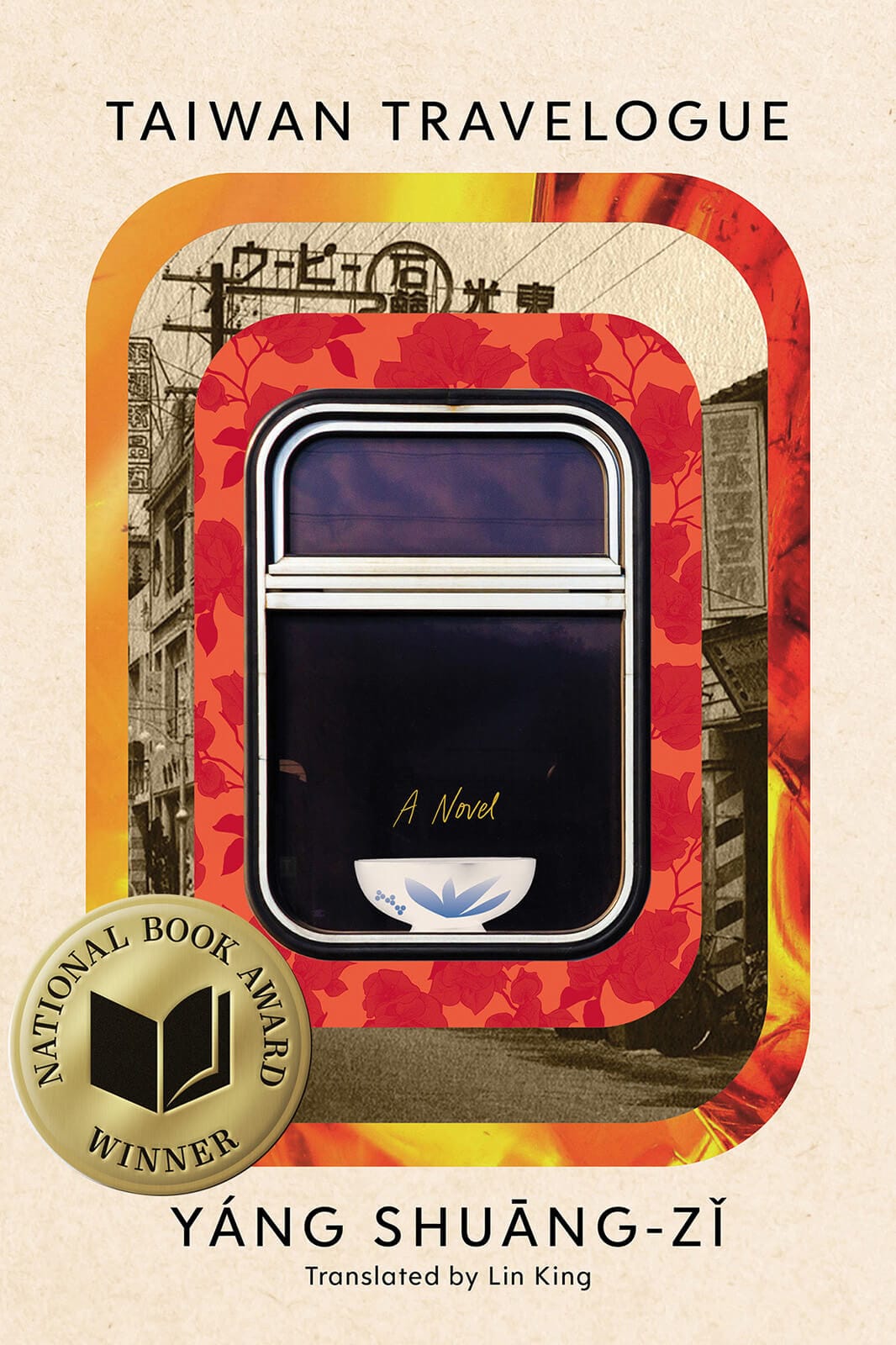
It's been many years since I've been able to return to my homeland of Taiwan, but reading Taiwan Travelogue transported me there for a little while with its vivid descriptions of Taiwanese food, mountains, and history.
The most compelling aspect of this novel is that it's presented as a rediscovered translated nonfiction travel memoir by a young Japanese writer who traveled to colonised Taiwan in 1938.
Aoyama Chizuko wants to experience the real Taiwan, not Japan-style Taiwan, especially authentic Taiwanese cuisine. She's not interested in Japan's imperialist agenda, despite having been invited by the government to travel to write about Japan's presence in Taiwan.
To satisfy her monstrous appetite, a young Taiwanese woman is soon hired as Chizuko's translator. Ong Tshian-hoh proves to be an accomplished, charismatic, yet reserved woman, as well as a great cook. Tshian-hoh becomes someone who exceeds the role of a translator, acting more as a personal assistant.
Chizuko is understandably charmed by this good-natured young woman, who presents an amiable disposition and seems to anticipate Chizuko's whims before she does. When Chizuko discovers in Tshian-hoh an appetite to match her own, she feels a kindred spirit. And yet, Chizuko notes a distance between them, despite her effusive overtures of friendship. She describes what she calls Tshian-hoh's "Noh mask"—a mask of pleasant politeness that keeps Chizuko at arm's length. And she can't understand why!
The book hinges on this relationship between Chizuko and Tshian-hoh—between coloniser and colonised—and begs the question, "Can two people with such stark power differentials be true friends?"
This is one of those slow, subtle books that you have to take time getting to know. It covers multiple layers of colonialism, identity, history, and friendship. Once you sit with it, though, it's well worth it.
Outright hatred is easy to spot. Oppression hidden behind ignorant kindness is much harder to see, and fight against.
"There is nothing in the world more difficult to refuse than self-righteous goodwill."
On the surface, Chizuko is not a cruel person. She's a single woman in the 1930s making her own way in the world, so she's also a strong woman. She has a strong sense of justice, in that when she witnesses racism against Tshian-hoh, she responds with righteous outrage and flies to Tshian-hoh's defense. Chizuko showers Tshian-hoh with gifts—expensive gifts, some intended to help her life on a colonised island "easier."
Chizuko thinks she is helpful to Tshian-hoh, but in a way that asserts her own sense of superiority and "I know better," despite the reality that Tshian-hoh is an extremely capable woman in her own right.
This reminded me of the book, When Helping Hurts, by Steve Corbett and Brian Fikkert. The entire premise of the book can be summed up in this quote: “Until we embrace our mutual brokenness, our work with low-income people is likely to do more harm than good. I sometimes unintentionally reduce poor people to objects that I use to fulfill my own need to accomplish something. I am not okay, and you are not okay. But Jesus can fix us both.”
The irony, of course, is that throughout the book, Chizuko does not acknowledge Tshian-hoh as someone of equal standing as herself. She exoticises her (even using that exact term to describe her in one incident in a desire to write about Tshian-hoh in a novel; Tshian-hoh, of course, does not even respond), shields her from racists, clothes her in luxurious Japanese kimonos, and demands she not give in to family expectations by marrying but live an independent life like herself—simultaneously stripping Tshian-hoh of her agency and failing to realise that the system that allows Chizuko to live her life is the same system that prevents Tshian-hoh from living that same life.
While Chizuko is able to pat herself on the back for being a good person by doing all this, Tshian-hoh does not have the luxury of refusing these gifts or acts of goodwill. Tshian-hoh is paid to be accommodating, and to reject Chizuko's offerings would be to welcome possible termination, cessation of a relatively pleasant working relationship.
The kindness, then, is a double-edged sword.
"Her Japanese was so fluid, so elegant, that if I closed my eyes, I could almost forget I was in a colony at all. It was a testament to our education system that a girl from the islands could speak with the grace of a Tokyo aristocrat," Chizuko says of Tshian-hoh, giving the empire sole credit for Tshian-hoh's accomplishments.
Chizuko consumes traditional Taiwanese food and history with fascination but without true appreciation.
A major aspect of the book is Chizuko's gluttony. The metaphor is rather on-the-nose, but colorful, as Chizuko literally eats her way through Taiwan. As she does so, she marvels at the different ethnic groups and dishes, then mourns their impending erasure. "For the greater good," would the phrase she might use, because in her eyes, Japan was improving the island. If some aspects of various cultures must be sacrificed, it was a worthy one.
However, what does it mean that Tshian-hoh shares the same gluttony? Perhaps it is reflected in this quote:
How do I explain myself so that I don't seem like an unreasonable child who covets your equal treatment yet paradoxically defies your kindness?
Tshian-hoh has her own personality, desires, and hopes for the future. She has a voracious appetite reflected in the way she consumes food, books, languages, history, and even human behaviour. Yet, she consumes so she can survive in a harsh world under a tyrannical government.
Today, one cannot travel through Taiwan without bearing witness to the effects of Japanese and Chinese occupation. There are Japanese-style buildings—so many that Taiwan remains a popular tourist attraction for the Japanese. My Wáipo still spoke Japanese that she learned growing up during the occupation.
Meanwhile, the largest monument in Taiwan is Chiang Kai-shek Memorial Hall, whose plaza is ironically called Liberty Square. Chiang Kai-shek was the Chinese general who fled to Taiwan after losing to Mao Zedong, and who then took over the island—and who later massacred thousands of Taiwanese during the period now known as the White Terror. During that period, the government did not allow anyone to speak Taiwanese, or any other language except Mandarin.
However, while rage is present as part of learning about my country's history, I know there must also be self-examination. While I am mostly Taiwanese and 1/4 Hakka, one of my grandfathers came to Taiwan with the conquering army during World War II. He was part of the military response against civilians during the 228 Incident that sparked the White Terror. That is part of my own personal history, two sides of my family I have to reckon with.
I bring to Taiwan another layer as someone who was born and raised in the United States. Up until recent years, America was highly regarded in Taiwan. Even now, those who are bilingual are viewed with more respect. I felt this even as a young child, and was never shy about flouting my bi-national status.
It took me until my twenties to realise I had exoticised my own country, the same way Aoyama Chizuko did. I loved going to Taiwan, eating the food, walking the streets, but I had only a shallow understanding of what it meant to be Taiwanese, only a limited knowledge of Taiwan's history. I, like Chizuko, enjoy Taiwan for a short time, then leave its people to their struggles when I return to the U.S.
The truth that I have come to learn is that I am both the colonised and coloniser—that I am shaped by the merged histories of multiple nationalities that I did not choose. So are most of us, besides the indigenous people, but if we go back far enough, every race has colonised someone. It is not something to be ashamed of, but to be aware of—to be better.
Nostalgia, for me, is complicated. Taiwan feels like home to me when I go there, but I have never lived there, and never will. Each generation loses a little bit more of our heritage, despite our best efforts to retain it. The past is a tapestry of memories in my grandparents' house and setting off firecrackers for Lunar New Year, heat that sticks to my skin, and tiny street stalls that most certainly no longer exist. They whisper of days gone by, of fighting mosquitos, street sounds that never stopped, even late into the night, and flashing lights from the city.
I hope this love for my homeland is one I am succeeding at cultivating in my children—with a truer understanding of it than I had.
(I read this as a buddy read with @danisreadinglit. Follow her for diverse book recommendations and thought-provoking posts.)
P.S. Apparently, I'm supposed to tell you how to feel about this book and whether it's worth reading, according to my husband. I don't do that with my book reviews. However, I will say that if you enjoy Kazuo Ishiguro's style of writing (restraint, subtlety), clever framing, a slow-paced read that takes its time unfolding, and a book that forces you to examine your beliefs, you will likely enjoy this book.
With Love,


In my short story collection, "Beneath the Hawthorn Tree" is a story about fighting against a corrupt government. Sign up here to be notified when it launches.
About Me: Tiffany Chu is a Taiwanese American writer based in San Diego. Her essays and short stories have been published by San Diego Writers, Inc., Chicago Story Press, and Renewal Missions. She writes about evergreen themes of grief, belonging, and what it means to be human. She's been writing this publication, The Untangling, since 2023. Order my books here or here.
No spam, no sharing to third party. Only you and me.

Member discussion