What Is Memoir For?
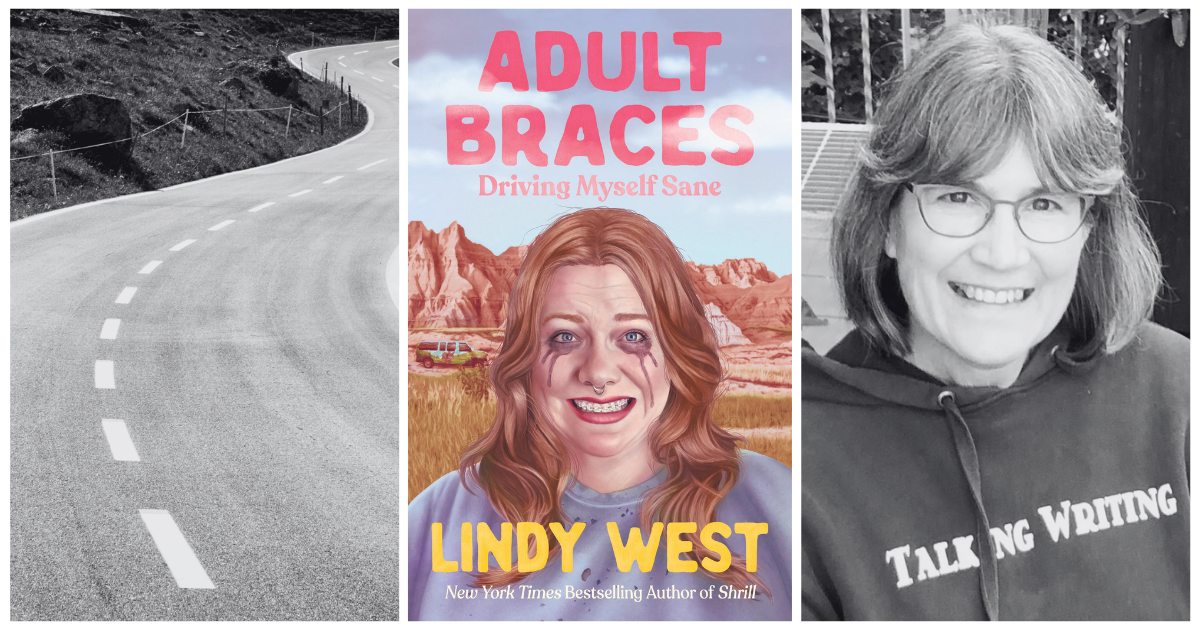
I'm pleased to share this essay by Martha Nichols today, an incisive and timely reflection on memoir and storytelling in the age of AI. The essay originally appeared on Martha's Substack, Inside Reader, which you can subscribe to here.
 Martha Nichols
In the late 1990s, my husband and I drove cross-country from the Bay Area back to the Boston, after a six-month sabbatical.
I don’t remember every bit of the drive home across the northern states, but there are indelible moments: my husband getting food poisoning when we camped in the Eagle Cap Wilderness in northeastern Oregon; another day when he held my hand all the way up a gondola to the mountain top. I’m scared of heights, but after a glass of bad rosé, I felt better on the ride down, facing snowy peaks through a sheet of glass.
On that same trip, we got stuck in Fargo for a week because of car trouble. We filled the days between talking with the guy at the Mitsubishi dealership, who seemed genuinely sad it was taking so long for a part to be shipped, with excursions through golden prairie grass in a loaner car. We spotted bobolinks and dickcissels and finally saw greater prairie chickens on the same day (I think) that a huge herd of goats rippled past us, a cowboy-hatted man on a horse shooing them on.
I could keep going, about that trip and many others, although Fargo stands out because I had an unusual stretch of unscheduled time to think. Life is episodic that way. I feel this more deeply the older I get, and really, it’s a good thing. Anyone who writes about themselves over time is on the equivalent of a road trip.
It’s my best answer for what a memoir is for: a writer making sense of each pit stop while driving onward. Except the specifics of what I tell you — or what other writers describe on their own roads — bring personal writing to life, and they transcend formulaic narrative about self-discovery.
My opening is a riff on younger first-person writers like Lindy West and Lena Dunham. But I’d go back to Joan Didion, even Michel de Montaigne, and the way remembering evokes wonderful and hopeless efforts to make meaning. What I did in 1999 doesn’t inevitably connect to what I’m doing now. I’m still married to the same partner in prairie-grass excursions, and some of what happened after that trip could be predicted, but not most of it. I didn’t know then how much I’d love the baby boy we adopted from Vietnam a few years later or how many times we’d go back to visit Vietnam. Our son has reconfigured what I once thought I understood about myself.
For readers, memoirs capture moments in time. For writers, memoirs help connect the episodic dots. But writers are readers, too, and we’re influenced by what others have told us is true. This conversational interaction is why I’m focusing on Lindy West’s 2026 memoir Adult Braces: Driving Myself Sane. Her fourth book isn’t a perfectly crafted narrative gem, but the risks she takes reveal qualities of voice and thought I don’t want fixed. With AI systems threatening to edit away all our words, honest messiness matters more to me now than it did in 2010 or 1999.
West vividly details a solo road trip she took in a rented van, mixing datelined travel vignettes from 2021 with accounts of the marital crisis that led to the trip and self-reflection about her current home life as a throuple. She includes stilted “Hi Lindy!” texts from Roya, her husband Aham’s girlfriend (who becomes West’s “sweetie,” too), trying to figure out if his nonmonogamy is forgivable. The polyamory angle has generated a slew of online hate that I won’t dig up again here. West has long been a troll target, but other fans didn’t like her apparent backtracking as a feminist.[^ For a good summary of the viral mess, I suggest Kate Lindsay’s “Why the Internet Is Arguing About Its Favorite Feminist” on her ICYMI Slate podcast. It includes a dive into the angry email West’s husband sent to Scaachi Koul, who wrote a fairly sympathetic profile of West about Adult Braces. A 2022 video in which the three of them announce “we’re three sweeties,” in West’s words, also did none of them favors. (“Polyamory Is Not Too Good to Be True: Lindy, Roya & Aham on the Best Relationship of Their Lives.”)]
She decided to stay with Aham and Roya, the “sane” conclusion of her memoir, and much of the vitriol she’s received leaps beyond the actual book. Yet there have been thoughtful analyses of the unresolved shadows in it, such as Leigh Stein’s “I Escaped Bluebeard’s Castle. Lindy West Didn’t” and Brooke Warner’s video take on “Why Is Everyone Hating on Lindy West’s ‘Adult Braces’?” (Memoir Nation).
Her book raises questions about what writers owe readers when their stories change. Like many humans, West tries to have it both ways. “I know as well as anyone that life comes at you fast,” she says on the last page of Adult Braces, “that everything beautiful built in these pages could collapse in a blink … But I’m not afraid of hindsight anymore. A life isn’t a book. Change doesn’t make the past a lie.”
Writing personally is a means for developing introspection, and that is the very best reason for doing it. The imperfections that bleed through increasingly seem like bright sparks of humanity in a void of sameness. West’s writer-self drives through some dark nights, but at least it’s her voice, not a Waymo taking over the wheel.
It’s always been clear to me that the “I” presented in memoir is a partial construction of self. It’s fine to tell readers you aren’t going to discuss certain people or events. You don’t have to reveal every pair of dirty underwear (although West has little compunction about that). Memoir as a term conveys traveling around in time, and the writers I like best address readers as their contemporary selves looking back.
I do have a love-hate relationship with personal storytelling, though. A few years ago, I wrote First-Person Journalism, a textbook that spells out the value of a subjective perspective in nonfiction along with the problem of self-obsession in the most annoying personal essays and blogs, many by young women, written in the heyday of Jezebel and other online sites: that is, the “Watch My Train Wreck” school of writing in which exposing traumatic experiences often appeared to be the only point.
But I liked Lindy West’s pieces, in Jezebel and elsewhere, because they were funny and explicitly feminist. In her 2016 breakout book Shrill: Notes from a Loud Woman, those memoir “notes” move forward in time but read like opinion columns with personal anecdotes. (The tagline on West’s website about Shrill reads “a women’s studies class taught by your favorite comedian.”) I admired her embrace of fat bodies, including her own, and her hilarious sendups of bro culture. I thoroughly enjoyed her 2016 Guardian column “How to Talk About Female Olympians Without Being a Regressive Creep — a Handy Guide,” in which she advised, among other things:
“DO write about female athletes the way you write about male athletes — i.e., without mentioning their gender except maybe in the name of the sport. Can you imagine if we brought up gender every time we wrote about men? ‘Perky male point guard Isaiah Thomas, stepping out in a flattering terrycloth headwrap, proves that men really can play ball and look cool-summery-sexy doing it!’ See how unbearable that sounds? Chase that feeling.”
In 2019, Shrill became a Hulu show with Aidy Bryant standing in for West as “Annie.” I haven’t watched it, but in Adult Braces, West indicates that having her own life munged around for streaming content was one of many things depressing her at the start of her road trip: “you can only be undermined so many times on an adaptation of your own life before you start to question whether you even know who you are.”
The trouble comes when the self a writer evokes is perceived as social property. Once you’ve got a public persona like West, and somebody else is playing you as a character on screen, how you present yourself in a new memoir is … complicated. You’re not just having a writerly conversation with individual readers. You end up in public arguments about truth, fiction, and the American Way. As West notes in Adult Braces:
“[A]s body positivity went mainstream, that became my career: Loving myself where other people could see. Insisting that I was healed — that I no longer cared what anyone thought, no longer fought against my body, no longer wanted to lose weight, was no longer touched by shame and fear and unlovability.”
When she writes a couple of pages on, “Here’s the truth: Sometimes I feel bad in my body,” I think that really is the truth. I was relieved to see her acknowledging contradictions. Her status as an influencer probably makes pushback inevitable, yet I don’t have to accept all the parasocial weirdness that now attends every word somebody spews online. I want writers like West to keep writing, even if she tries to convince herself something is beautiful when a happy ending is not assured. We’re all performing in some way in social media or on camera. Once I had her new book in hand, her writing convinced me of her vulnerability.
She does lapse into occasional oracular glosses, such as “It feels brave to stay true to yourself when it costs you.” If I were her editor, I also would have cut the whole opening scene (“Alarm”). Sleeping on a friend’s couch, she describes being awakened by an alarm clock going off in an unopened mailing box, which becomes a clunky analogy for an inner “bomb” going off. Consider a better start:
“I was holding my dog’s face in my hands and singing the Beach Boys’ ‘Kokomo’ to comfort him after his neuter surgery, when I felt the first stirrings of mutiny. It’s not fair, I thought. Women don’t get to just go to Kokomo and live in a hammock and leave their worries behind and drink mai tais and become leathery beach men. Women don’t get to have midlife crises.”
That’s the opening of the second section on p. 5, and there it is: the tart, self-aware voice that kept me on this ride. I felt West’s mind at work, making sense for readers of why she undertook a road trip in a van from Washington State to Key West:
“As a fictional-map fetishist, I am helpless before a list of magical islands where people are falling in love and defying little bits of gravity. Someone wants to take me to Aruba AND Jamaica AND Bermuda AND Bahama AND they think I’m a pretty mama??? Now we’re cookin’ with gas! I first heard ‘Kokomo’ in 1993, when I was eleven years old, courtesy of the Muppets, and it imprinted on me for life. I don’t want to get too deep into high-level neuroscience, but let’s just say the spider librarian who indexes my brain spun a gossamer thread from ‘Kokomo’ straight to the concept of adventure itself.”
The corny Beach Boys song is an amusing running theme, especially because their “Kokomo” is not a real place (there is a Kokomo, Indiana, West later discovers, with a less-than-idyllic history with the Ku Klux Klan). But her self-reflection about it is real for the very reasons I love personal nonfiction and think it’s endangered in the AI age.
I doubt I would have read Adult Braces without the online screeds it sparked. Ironic, I know. I’ve been distracted by the Epstein-befouled, AI-hallucinated wreck of a country we’re living in. I’m also concerned about how much online mouthing-off drives a book’s sales. Now I find myself defending the kind of emotional info dump I don’t usually like but that I recognize gets at the fragility of human self-creation.
At its best, West’s memoir is a travelogue that cuts diagonally across the country from the Pacific Northwest to the tip of Florida and back again (a cheerful cartoon map appears up front). I’m fond of books about American road trips, including classics like William Least Heat Moon’s Blue Highways (1982) and John Steinbeck’s Travels with Charley: In Seach of America (1962; Charley was “an old French gentleman poodle”). There are many others about cross-country trips, such as Suleika Jaouad’s Between Two Kingdoms: A Memoir of a Life Interrupted (2021).
With a road trip, you don’t have to work hard to change the mental and emotional scenery or to surrender to joys of the moment. Even hilarious attacks by mosquitoes at a hot springs camp pin the ups and downs to reality. West’s strength is her humor, especially once she gets to Key West and doesn’t find anything like Kokomo. In her telling, it’s more like a cut-rate Margaritaville. (That’s not a spoiler.)
I laughed out loud when she described breakfasting the first morning in Key West at a poolside bar, overhearing two drunken couples argue about whether a rooster is a chicken. One of the wives “began typing a search query into her phone, presumably some version of WHAT IS A CHICKEN?,” West writes:
“I wondered if Google gave out medals for questions that no one has ever asked before. ‘Ohhhhh, okay,’ [the wife] said, interrupting the melee. ‘So a rooster and a hen are both a chicken, but a rooster is the male.’
Both men threw up their hands and bellowed. ‘No way!’ ‘I don’t believe it!’ ‘No!’”
For a boomer feminist like me, though, some of the self-talk is TMI. I don’t mean sexual details or bloody tampons (or outraged male hens), but the clutter of therapy sessions and “voice memos” West says she made while driving. I like this realization about recording herself in action: “I thought about how often I catch myself lying in my journal, trying to convince my present self of what I want to be true instead of what’s actually happening.” Yes, writers are prone to lying to themselves. But talking out loud is still a performance, and choosing the right details for readers matters.
Unfiltered chattiness is rarely sparkling. Take these excerpts from “Hwy 194, Colfax, Washington,” her first voice memo: “I got all my stuff. I got my breakfast. I’m having some, uh, almond cake, yogurt, and some cheese wrapped in salami.…” She spots “these huge white birds” flying overhead, exclaiming “They’re so beautiful” two times, wondering if they’re pelicans. A potentially lovely moment of being falls as flat as the “Scraggled Shit Stork or something” West invokes.
On the other hand, her account feels like a real human driving out of a campground. I’ve long balked at memoirs smoothed for public consumption with the standard story arc of personal change. Maybe that’s what some readers want — self-destruction + turning point + triumph — but I’ve never liked inspirational TED Talk takeaways.[^ I wrote about many of these same issues more than a decade ago when I reviewed Mark Vonnegut’s second memoir for Talking Writing: “Why Going Crazy Isn’t Just a Good Story.”]
I’m making a point of my own perspective here because it shapes my critical response. Recounting your life is not an objective record of facts, something West is aware of. As a millennial online writer, she breaks the fourth wall a lot, not always to good effect, but I appreciate her courage. Not even halfway into the book, she addresses readers in a key passage that’s drawn some flack:
“You are predisposed to sympathize with me. This is my book, and you’re reading it. Presumably, you like me. At the very least you’re stuck in my head, and I control the aperture. In many ways, my side of the story is easier to understand than Aham’s — mine hews to cultural norms about heterosexual love and relationships while his challenges them. Also, he was a big asshole to me and put me through hell. I could write this book in a way that would make you hate Aham’s guts and pity me for staying with him. Or I could write it in a way that makes him sound tortured yet wise and make me sound like a codependent freak. It’s all true. All nonfiction is actually fiction.”
She’s right that both versions of the story have truth to them; we all have our own apertures. But this is bedrock for me: all nonfiction is not fiction. That sweeping statement undercuts the real point West is making about individual subjectivity. Personal experience can speak truthfully to readers, if writers are honest about their limited perspectives and transparent about what they’ve left out.
What is memoir for? That depends on why you care about personal nonfiction, whether you read memoirs, and how true you think an account of a real life should be. I can answer the second two questions fast: (2) I read some narrative memoirs but prefer essay collections; (3) an account of your life should be as true as it can possibly be; you may not know all the facts, but tell readers when you don’t know.
It’s the first “why care” question that vexes me. Too many personal nonfiction writers aren’t sufficiently candid about what facts they’ve changed. Consider the uproar over Raynor Winn’s The Salt Path or AI-generated content that popped up recently in the New York Times Book Review.[^ Janice Harayda’s “Who’s to Blame for Fake Memoirs?” and Lincoln Michel’s “What Memoir Scandals Tell Us About Two LLM Writing Scandals” are excellent overviews.] Beyond past scandals about fake memoirs, there’s a pervasive lack of transparency about how literary nonfiction is crafted.
The ethical call for truthfulness doesn’t go away just because you have a book contract or can ask a bot for help. But the overlap between fabricated artificial content and fictionalized memoir is a warning sign for us all. Personal honesty is very difficult to maintain online, whether in parasocial conversations or, increasingly, in AI content. Who is your “I” supposed to be? What do readers expect? How much do you satisfy their expectations? What makes your personal voice convincing?
With the advent of AI, trust in human expression is unraveling every millisecond. That’s why I wish West and other memoir writers addressed readers directly about changes of name and chronology they’ve made instead of in small-print disclaimers on the copyright page. I want even more honest disclosure when writers use AI.
If you don’t explain to readers what’s missing, filling in the holes with fabrications, you’re writing fiction—or autofiction, which might be a more accurate term for all memoir. Yet I remain attached to the observations of the best personal nonfiction writers, including Emmanuel Carrère, Joan Didion, and Ta-Nehisi Coates, all of whom have faced criticism for exposing too much or not enough. It’s a hazard of the genre.
The many versions of Lindy West can all be true: bad-ass feminist, sarcastic trickster, insecure lover, shy observer, camper who loves Coleman stoves. In Shrill, I admired her take-no-prisoners polemics. In Adult Braces, the ragged nature of how she puts things together is credible precisely because the seams are showing, even some of the stink.
Unfortunately, the “stink” of introspection has fallen out of favor. Elon Musk, Peter Thiel et al. have made clear that the tech lords don’t care what humans, especially women, feel. But I’d argue that we need the shaggy wildness of introspection more than ever along with the right to privacy. Chatbots now fabricate first-person stories that are too tidy, deleting the lived experience of bumbling along.
I love the improvisational nature of self-creation, and I’m appreciating memoir as a genre more than I used to. A good memoir is humanizing, connecting what a writer sees and feels with their imagination — with what they hope will happen but aren’t sure of. These days, reading one can seem anachronistic, like opening a paper map to help navigate down squiggly roads, an experience many of us have already lost.
In Fargo, at the end of the last century, I went to a matinee of The Blair Witch Project. A faux documentary, it’s oddly relevant in hindsight, but I only recall lots of running around with cameras in the woods. At the Barnes and Noble with a Starbucks near our motel, we whiled away time over the only decent espresso we could find. I read magazines and books filched from the shelves for free, including Eudora Welty’s Delta Wedding. We drank gin martinis in plastic cups at the “rock and bowl” alley where the helpful dealership guy told us Mick Jagger once dropped in after a concert. There were hardly any other bowlers when we were there, but Mick Jagger became part of our story, because it was told to us by another person to whom it mattered.
That’s what memoir is for, whether it’s by Lindy West or any other imperfect human writer whose inner life is alive: not just to remember, but to connect with the stories of others, to imagine subjective realms in a way an AI system can’t. Bots can simulate all sorts of personal communication — cover letters, emails, journal entries — but expressing your own mess is the best defense against losing yourself.

Martha Nichols is the author of First-Person Journalism: A Guide to Writing Personal Nonfiction with Real Impact (Routledge, 2022). Much of her writing and editorial energy since 2010 has been devoted to running Talking Writing, a digital literary magazine and nonprofit organization, along with her teaching at Harvard University Extension School. She edited and contributed to the first Talking Writing Books anthology—Into Sanity: Essays About Mental Health, Mental Illness, and Living in Between—which was published in 2019.
Martha got her editorial start in book publishing, then shifted to magazine journalism in the early 1990s, working as an associate editor at Harvard Business Review and Women’s Review of Books. Her work has appeared in HBR, WRB, Utne Reader, Christian Science Monitor, Salon, and Brain, Child magazine, among many other journals. She has also been a reporter for Youth Today, a national newspaper on youth services.
Martha received her bachelor’s degree in psychology from Reed College (1980) and a master’s degree in creative writing from San Francisco State University (1985). A writing workshop that she led during the mid-1980s in San Francisco is the subject of Until We Are Strong Together: Women Writers in the Tenderloin by Caroline Heller (Teachers College Press, 1997), which examines nontraditional teaching techniques in community settings.
No spam, no sharing to third party. Only you and me.

Member discussion