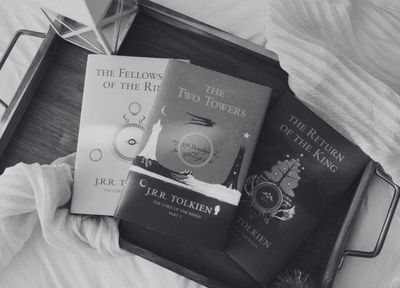
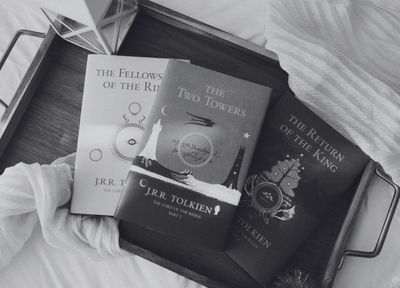
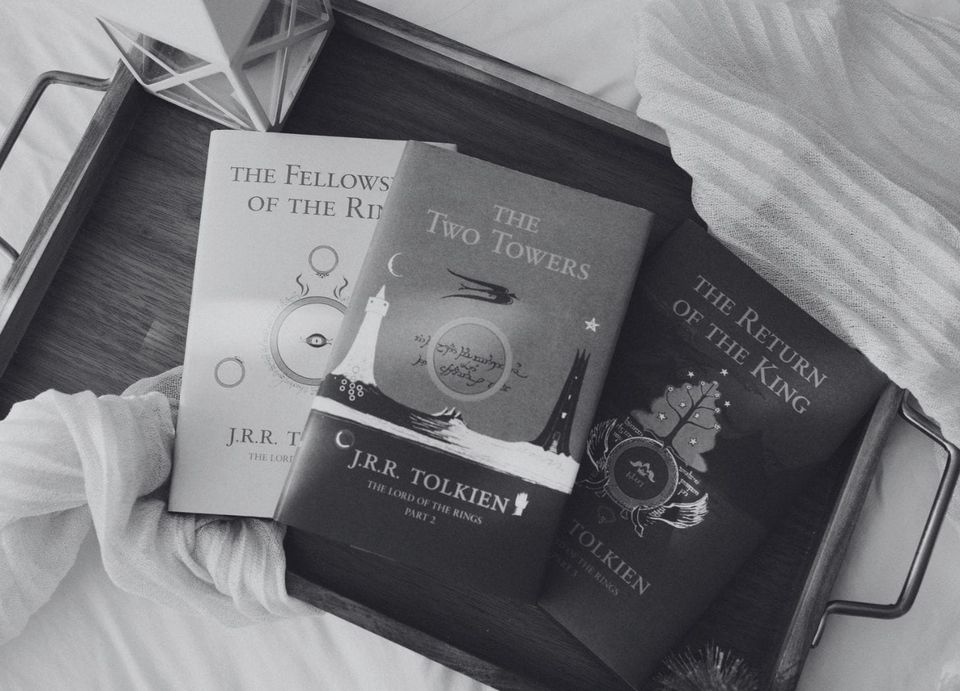
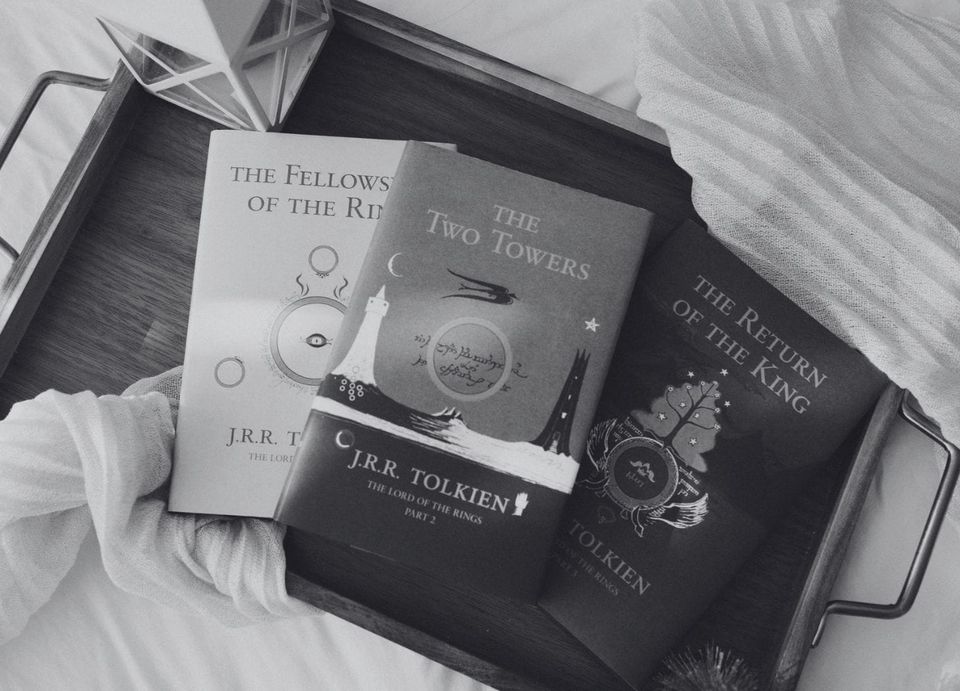
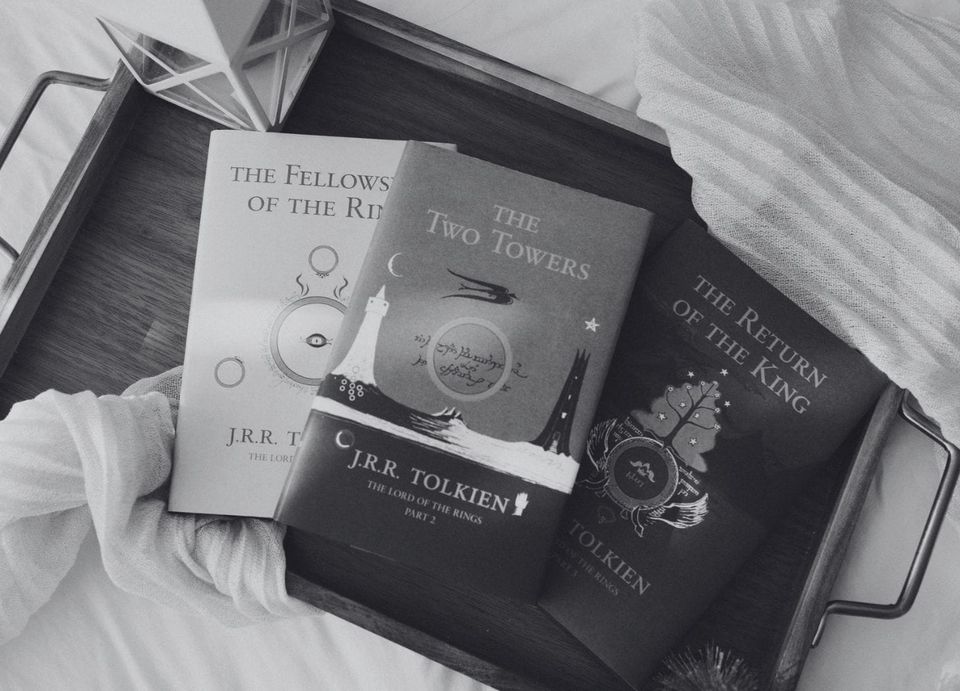
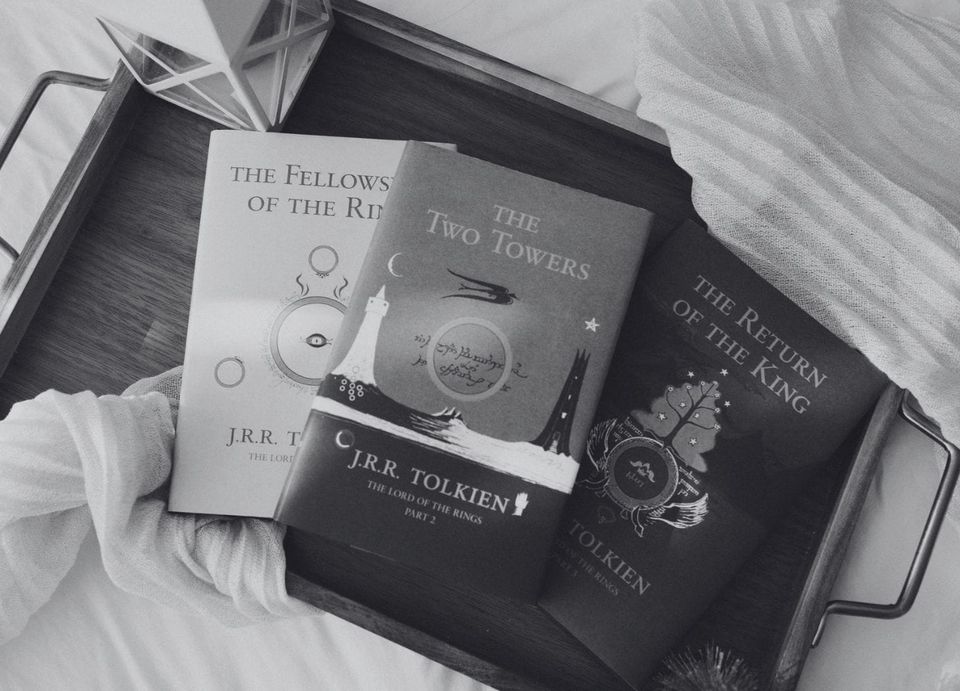
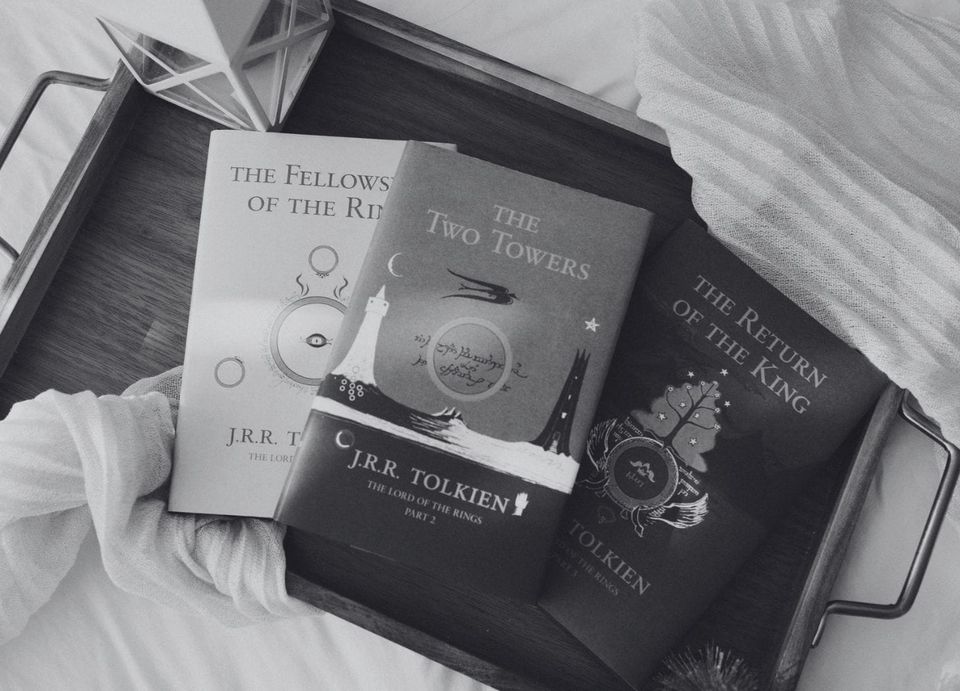
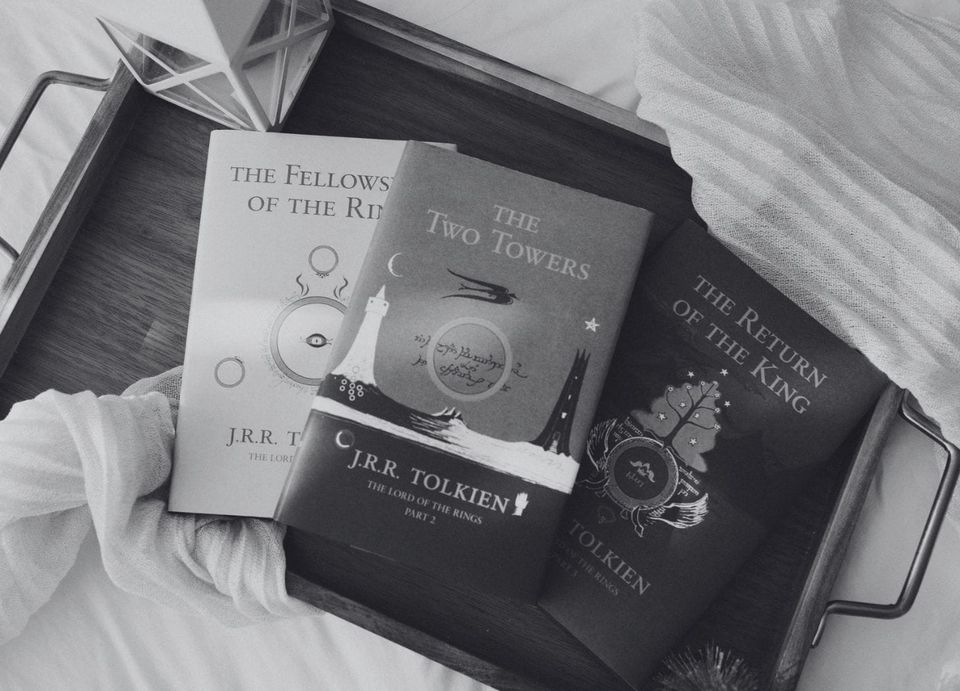
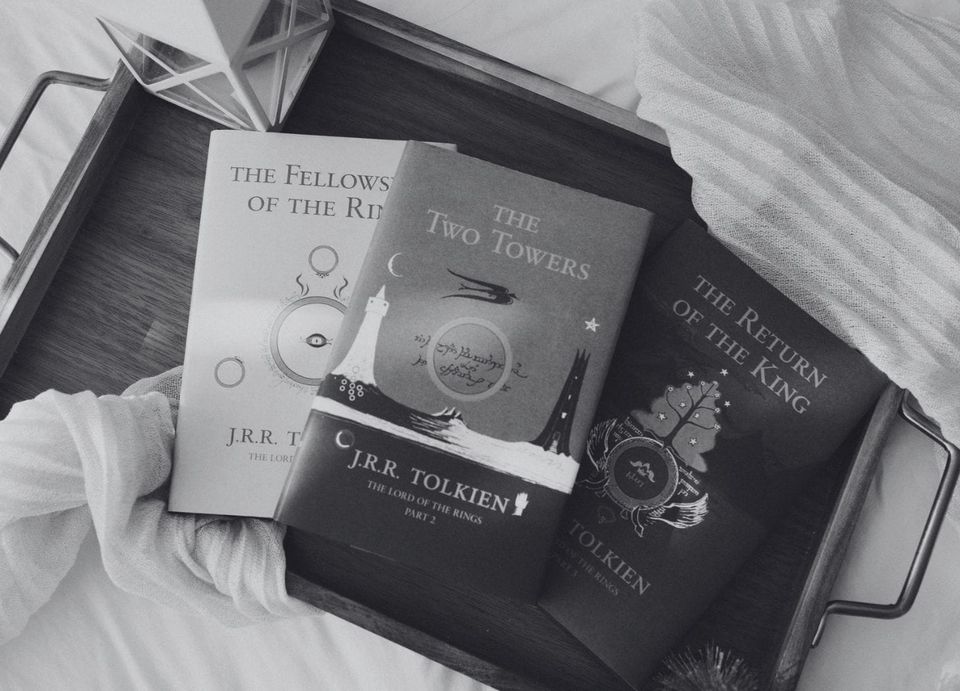
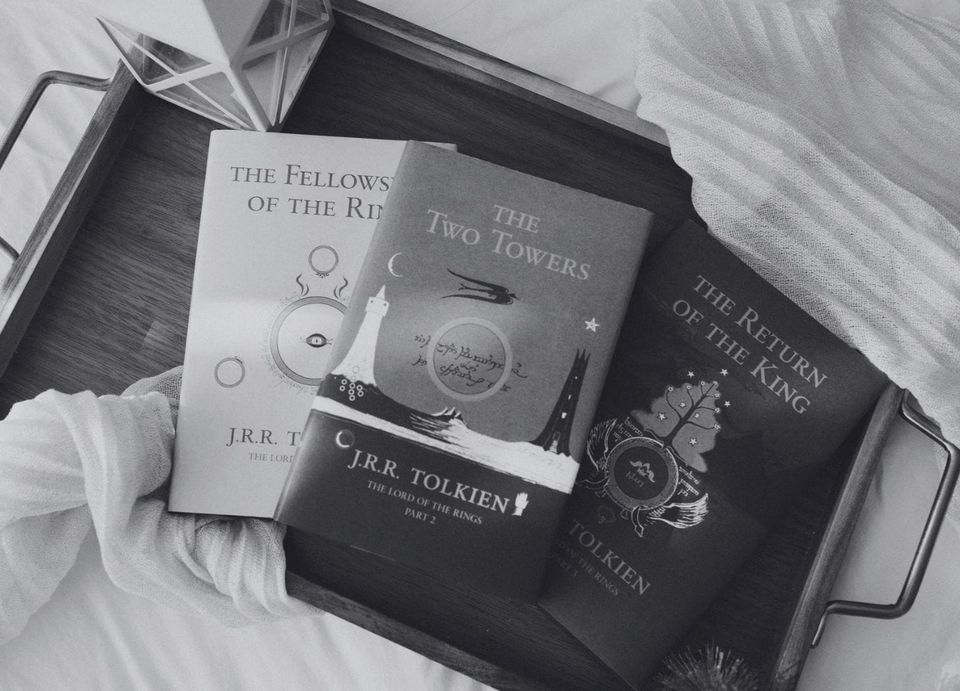
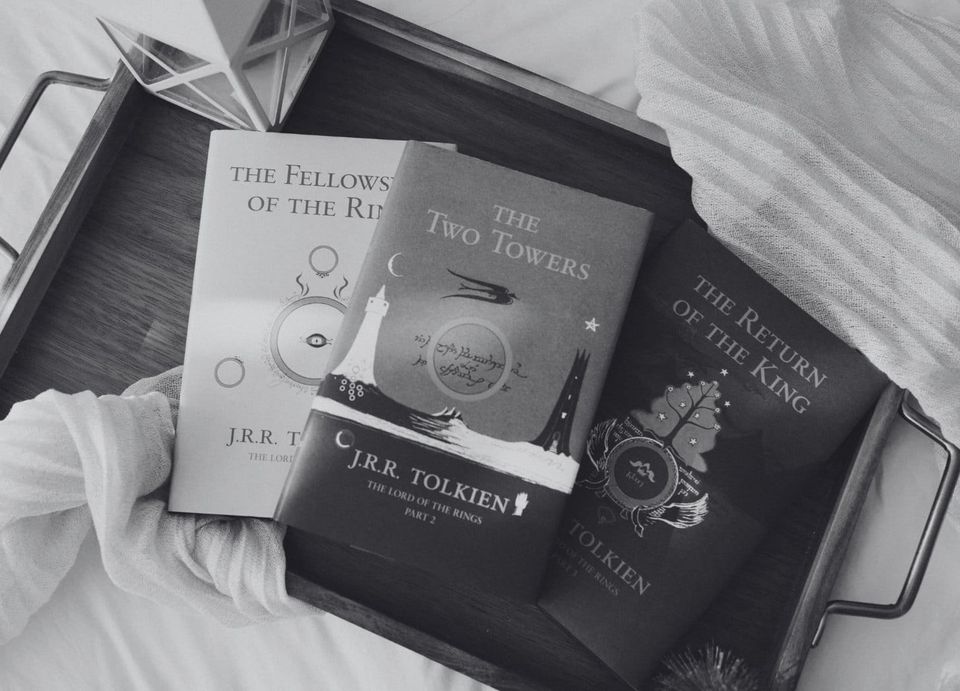
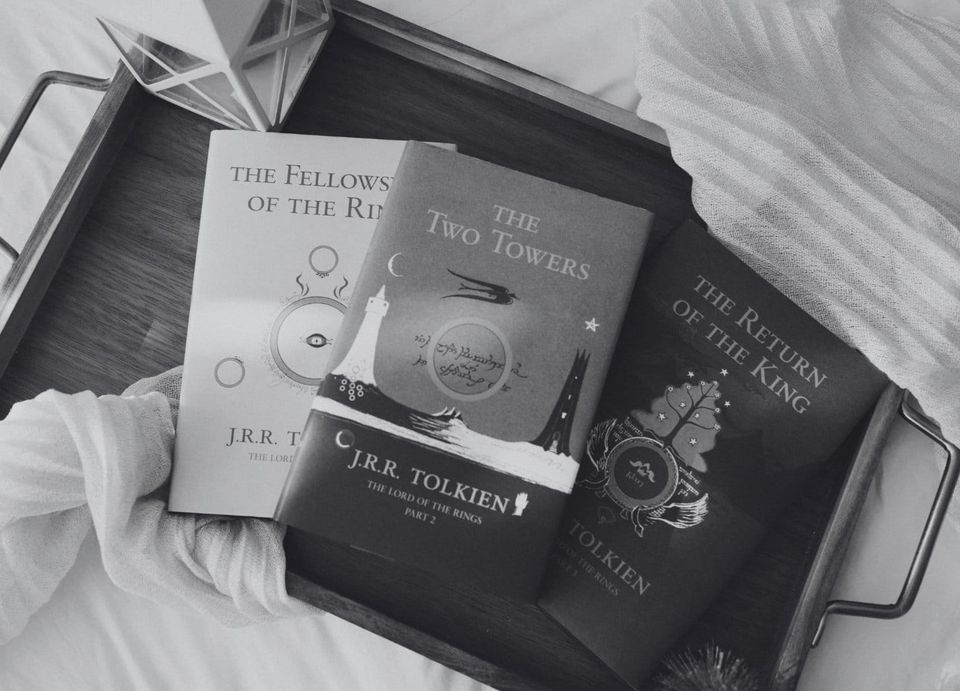
Why Should You Read The Lord of the Rings?
Contrary to popular belief, this book is not a simple story of good defeating evil and everyone living happily ever after. There is so much nuance and layering that even after sixteen years of reading it, I find something fresh and relevant with each read.
A Fellowship Stronger Than Fate
Neither of these Hobbits is chosen based on their skill, knowledge, or power, but rather on their fierce loyalty to Frodo. Arguably the most loved Hobbit of all, Samwise Gamgee, is the least impressive.
Reality Echoes in Tolkien's Legendarium
While The Lord of the Rings is an epic fantasy, depicting a life-threatening, world-altering quest, the story within Tolkien’s three books is but one small piece of a much larger history.
Hope in the Face of Shadow
From the (seemingly) lowly to the wise and powerful, for years—generations, even—people have been fighting with all the means they have—unseen, unthanked.
Everyone believes themselves to have been alone in their struggles. Only in this moment do they realise they never have been.
To love at all is to be Vulnerable
So much fear and anger exists between people, and how easily we can see each other as enemies or “others.” I’m not so naive as to think that just listening and talking will solve all problems, but it is a starting point—one more powerful than we might think.
Valuing the Least of These
Through these chapters, Tolkien illustrates that one of the highest goods—a light by which to choose in dark times—is caring for those who seem weakest among us, carrying them along in their journey.
Seeing Stones and Silver Tongues
Whether through magical devices or human speech, the challenge of conveying and receiving truth remains central to these chapters. This illustrates the difficulties of communication, not between different languages, but between what comes out and what is received.
Only That Which They Defend
And yet, in The Lord of the Rings, Sam and Faramir end up having tremendous influence over the outcome of the story. Not because they are powerful, but because of those very attributes the world deemed unworthy.
Samwise Gamgee: The Heart of the Fellowship
Sam’s decisions in these five chapters cement both his character and his strength, both of which draw on his strongest attribute (and why I—and I suspect so many of us—adore him so much). His heart.
Éowyn's Redemption from Despair to Hope
I’m also struck by the fact that once again, heroism in Tolkien’s story does not present the way it conventionally would in such stories, or in the way Éowyn understood heroism at the start of her journey.
She learns that it does not have to take her skill with a sword to make her a strong woman.
Why Should You Read The Lord of the Rings?
Contrary to popular belief, this book is not a simple story of good defeating evil and everyone living happily ever after. There is so much nuance and layering that even after sixteen years of reading it, I find something fresh and relevant with each read.
Neither of these Hobbits is chosen based on their skill, knowledge, or power, but rather on their fierce loyalty to Frodo. Arguably the most loved Hobbit of all, Samwise Gamgee, is the least impressive.
“You can trust us to stick to you through thick and thin—to the bitter end. And you can trust us to keep any secret of yours—closer than you keep it yourself. But you cannot trust us to let you face trouble alone, and go off without a word. We are your friends.”
—Merry Brandybuck (emphasis mine)
And here, we have the crux of the whole trilogy. That’s it; we can all go home now.
Kidding aside, let us delve into one of the major themes of Tolkien’s work, influenced by the deep friendships he experienced throughout his own life. In The Fellowship of the Ring, Tolkien presents friendship as a force powerful enough to shape fate and transcend wisdom.
I read this book every year. What struck me during this year’s reading was the interplay of fate, wisdom, and friendship.
Jenn Zuko also has an excellent essay on this topic. Fate is mentioned several times just in the first few chapters of the first book: both the force of evil and “another force” at play.
When Elrond is choosing members of the Fellowship, Frodo’s friends, Merry and Pippin, insist on being part of it. Elrond is hesitant, as he would rather select those who are more powerful or wise. Gandalf counters him, saying, “I think, Elrond, that in this matter it would be well to trust rather to their friendship than to great wisdom.”
This is powerful.
Friendship trumps conventional wisdom
Gandalf, in his own wisdom, recognises the power of the Hobbits’ bonds and encourages Elrond to allow Merry and Pippin to join the Fellowship. This has a direct impact on the outcomes of the quest, as both Merry and Pippin play significant roles in the story.
Without Merry, a major villain would not have been vanquished. Without Pippin, a beloved character would be dead.
Neither of these Hobbits is chosen based on their skill, knowledge, or power, but rather on their fierce loyalty to Frodo. Arguably the most loved Hobbit of all, Samwise Gamgee, is the least impressive. He is a mere gardener, lower on the social ladder than the other Hobbits, which is reflective in his speech and deference to “Master Frodo.”
Yet it is this loyalty that turns the tide. We will see this unfold throughout the entirety of the trilogy.
Let’s go back to when Gandalf is recounting Bilbo’s finding of the Ring to Frodo:
“It was the strangest event in the whole history of the Ring so far: Bilbo’s arrival just at that time, and putting his hand on it, blindly, in the dark.
[…]
“Behind that there was something else at work, beyond any design of the Ring-maker. I can put it no plainer than by saying that Bilbo was meant to find the Ring, and not by its maker. In which case you also were meant to have it. And that may be an encouraging thought.”
It’s clear throughout the series that opposing forces of fate are at work, influencing events, yet though destiny may have led the Ring into Bilbo’s hand, it is the friendships formed—namely, the bond between Frodo and Sam— that ultimately allow the quest to succeed.
In other words, while fate plays a role in setting the stage, individual choices are what carry the power of goodness and hope to victory.
Which brings me to one of my all-time favourite quotes:
“I wish it need not have happened in my time,” said Frodo.
“So do I,” said Gandalf, “and so do all who live to see such times. But that is not for them to decide. All we have to decide is what to do with the time that is given us.”
Serenity to accept what we cannot change, Courage to change the things we can
We live in tumultuous times. I lament often over how much I feel I don’t belong to this era and long for a simpler time.
But I had no choice over when, where, to whom I was born to, or the things that happened to me as I grew up. I did not choose my environment, experiences, or the values imposed on me.
In my life, I have seen much of the cruelty of the world and tasted from the cup of bitterness. I drenched myself in its dregs; doing so only left me distrustful and closed off, protected but alone.
Grace or serendipity placed people in my path. They had been there all along, but I chose not to open my heart to them until my life completely crumbled around me and I either had to stretch my hand out for help, or drown:
There are truths I once knew, but had forgotten. Well, not forgotten, but drowned perhaps, by louder voices clamoring in my head. Yet still they came, other voices, speaking of what is certain, what is sure. They break through the haze sometimes, and I remember I am not abandoned - have never been and never will be.
They are a cloud of love that envelops me, cloaks me in a warmth that does not burn and will not fade. And they, to me, are each a tendril of deep roots that anchor me to reality and will not let the tempests sweep me from the earth. They say that to have one true friend is to be truly blessed. Yet I have one, two, three, four, five, six, seven, eight, and words fail me for the miracle of such a thing.
To those whom I speak, if they don't yet know what they are to me, then here is my chance to tell them, because there is a saying that family is not always blood, and for us that has ever been true. So now I thank them for walking with me through every peak and every valley, for the laughter they share with me, for the strength they lend me, for the truth they speak into my heart, no matter how many times I may need to hear it, for the prayers that sustain me.
Because of them, the world is not so very hopeless, and because of them, I can know a little of the love of God.
Because I forget often that it's okay to not always be strong, and I don't know how to ask, but they create for me safe spaces to be known and not afraid.
Because they see me, in parts but true parts, and they have stayed, and I know they will stay for the days to come.
This day I chased the rising of the sun and for once did not resent it, but felt it as a dawning that promised, not smoother seas, but at least seas that I need not navigate alone, and that perhaps is enough. For in the past years when I entered a Dark Night of the Soul, the likes of which I have not known for an age, they are the constellation of stars that reminds me again and yet again of days I have forgotten, of days to come in which darkness will not endure, and who are with me, and who love me always, always, always.
When Frodo, Sam, and Pippin run into the Elves traveling to the Grey Havens, one of the Elves, Gildor, says this:
“Our paths cross theirs seldom, by chance or purpose. In this meeting there may be more than chance […]”
By chance or purpose, you are here, reading these words. We have gathered from all corners of the world, connecting somehow despite our differences, and finding a shared love of this book and this universe, and hopefully something more.
Like the unlikely heroes of Middle-earth, we are here, together, bound by friendship and common purpose. We exist in this same space and in this time, fighting for a better world.
Gildor says, “Courage is found in unlikely places.” As we continue reading, I hope we find ours alongside these characters.
For next week, read the rest of Book 1, up to “Many Meetings.”
While The Lord of the Rings is an epic fantasy, depicting a life-threatening, world-altering quest, the story within Tolkien’s three books is but one small piece of a much larger history.
While The Lord of the Rings is an epic fantasy, depicting a life-threatening, world-altering quest, the story within Tolkien’s three books is but one small piece of a much larger history. It bridges the old world and the new, giving us a modern myth of the decline of magic—marked by the departure of the Elves, destruction of the Ring (and with it, that of other ruling Rings)—and a believable tale of how our current world may have come to be.
In our reading this week, we see evidence of this history etched into the very landscape itself. It’s no accident that our characters voice songs and stories of a distant past, even as they are making a desperate escape to Rivendell. In the coldness of the wild, “[Aragorn] began to tell them tales to keep their minds from fear. He knew many histories and legends of long ago, of Elves and Men and the good and evil deeds of the Elder Days.” They meet Tom Bombadil and also learn about the Barrow-wights, Gil-galad and the Last Alliance that fought against Mordor, the love story of Beren and Lúthien—all while they travel across a land shaped by ancient history.
As they journey on, our characters’ remembrance of the past becomes a well of comfort for them. This has been true during storms in my own life also. I wrote once,
“I think I love history so much because it helps me feel less alone. I can look at all those people who came before me, who have experienced lives just as real to them as mine is to me. Tragedy and loss used to be so accepted and normal it was woven into the fabric of being. It comforts me to know I am not the only mother who has lost children, that my life is hardly the worst to have been lived.” —Fractured Perspectives on Loss
Barrow-wights capture the hobbits in the Old Forest and there seems no hope of escape, “But though [Frodo’s] fear was so great that it seemed to be a part of the very darkness that was round him, he found himself as he lay thinking about Bilbo Baggins and his stories, of their jogging along together in the lanes of the Shire and talking about roads and adventures.”
Later, when Aragorn and the hobbits are fleeing the Black Riders to Rivendell, they come across the very same trolls Bilbo did in The Hobbit. Trembling with fear at first, they remember from just a recent past, that trolls turn to stone in the daylight.
“Well!” [Frodo] said. “We are forgetting our family history!” […] They all laughed. Frodo felt his spirits reviving: the reminder of Bilbo’s first successful adventure was heartening (emphasis mine).
The hobbits know little of the broader history of Middle-earth; none of them have even stepped outside their small world of the Shire, yet just their own family lore is enough to give them courage.
From “small” history to “large” history
Not only do personal family stories provide the hobbits with encouragement, in an indirect way, the larger history does also.
A phrase stood out to me as I read the part when Aragorn tells the hobbits about Beren and Lúthien. He says, “In those days the Great Enemy, of whom Sauron of Mordor was but a servant, dwelt in Angband in the North, and the Elves of the West coming back to Middle-earth made war upon him […] (emphasis mine).”
This Great Enemy is Melkor, later known as Morgoth. He was one of the Valar, who are (in a grossly simplified explanation) celestial beings who had helped shape the making of the world during its creation. He rebelled against the Creator, Eru, and became the first Dark Lord. Eru later created lesser beings called Maiar, as subordinates to the Valar.
Sauron is a Maiar, which is to say, he is less powerful than Morgoth.
And yet, we know from The Silmarillion that Morgoth was eventually defeated. None of the characters know how their story will end yet, but they can draw strength from this. When Aragorn tells the hobbits this story and makes what seems to be a passing statement, Tolkien draws our attention back to the fact that this piece in his legend is merely: one small piece.
The events of The Lord of the Rings are, indeed, dire. When Pippin is with Gandalf later, in The Return of the King, Gandalf says, “There never was much hope. Just a fool's hope, as I have been told.”
If The Lord of the Rings is Tolkien’s pre-history of the world, we can draw comfort from it, too.
Many of us feel like we are alone with our experiences. Through books and history, we often and quickly find we are not. I think again of Gandalf teaching Frodo the history of Ring in chapter 2, “The Shadow of the Past,” when he lays out the threads that have led the Ring to Frodo. He tells Frodo that “that may be an encouraging thought.”
It reminds me of what we often forget in the midst of troubling times: that previous generations have each had their troubles—some worse than ours—they may look different through the ages, yet our human struggles have continued for eons, and so has the human spirit.
We may or may not have a modern-day Sauron trying to destroy and subdue the world to their will, but we do face evil. None can deny we live in a time of great upheaval, fear, and doubt. Many times, it seems as though the Shadow has never been deeper.
However, like Frodo, his companions, and Aragorn, may we look to those who have fought against Shadows even greater than our own. Each of their battles has paved a way to make ours a little easier.
Our time in the world is a dot on the tapestry. It doesn’t make our sorrows and joys lesser than those that came before; rather, it gives us hope.
For next week, read Book 2, chapters 1-4, up to “The Bridge of Khazad-Dûm.”
From the (seemingly) lowly to the wise and powerful, for years—generations, even—people have been fighting with all the means they have—unseen, unthanked.
Everyone believes themselves to have been alone in their struggles. Only in this moment do they realise they never have been.
“It would comfort us to know that others fought also with all the means that they have.”
“Then be comforted,” said Elrond, “For there are other powers and realms that you know not, and they are hidden from you. […]”
“Still it might be well for all,” said Glóin the Dwarf, “if all these strengths were joined, and the powers of each were used in league.”
This passage is just one of many that expresses similar principles of every person doing what they can to push back against evil forces. It is a recurring theme in The Lord of the Rings—one of the most significant.
Frodo and his companions have made it to Rivendell, where they meet Elrond, a powerful elf lord. They also meet others who have gathered from all parts of Middle-earth, seeking Elrond’s advice. It turns out Bilbo has been having a lovely, relaxing time there after leaving Frodo behind to inherit his dangers, and the hobbits are reunited.
Elrond calls a meeting, where all the disparate pieces finally come together, and the elves, men, dwarves, and hobbits discuss what to do about Sauron and the Ring:
“What shall we do with the Ring, the least of rings, the trifle that Sauron fancies? That is the doom that we must deem.
“That is the purpose for which you are called hither. Called, I say, though I have not called you to me, strangers from distant lands. You have come and are met here, in this very nick of time, by chance as it may seem. Yet it is not so. Believe rather that it is so ordered that we, who sit here, and none others, must now find counsel for the peril of the world” (emphasis mine).
We come again to the theme of fate; somehow all these different people of different races arrive at Rivendell at the same time. They each come with a few pieces of the puzzle. They are all part of a long history—one Elrond recounts in detail for the first time.
The dwarf, Glóin, had been part of Bilbo’s previous adventures detailed in The Hobbit; he comes with his son, Gimli. Legolas the elf is the son of Thranduil, the elven king who had imprisoned Glóin and the other dwarves in The Hobbit. Once again, we see the continuation of a story.
Glóin is not the only one to wonder if they are alone in their fight against the Shadow. But as we read on, we learn more about Aragorn and Rangers, who silently guard and protect lands without any expectation of thanks. We learn about Boromir and Gondor’s constant vigil against Mordor.
The significance of this mustn’t be overlooked. Boromir is the elder son of Denethor, the steward of Gondor. He has been brought up to rule as the next steward, and he has been a strong military leader, protecting his people. Meanwhile, Aragorn is the long lost heir of Isildur, the last legitimate king of Gondor. He has lived his life in the shadow of insignificance, scorned even by the silly townspeople he silently protects.
From the (seemingly) lowly to the wise and powerful, for years—generations, even—people have been fighting with all the means they have—unseen, unthanked.
Everyone believes themselves to have been alone in their struggles. Only in this moment do they realise they never have been.
Reconciling of differences to form a fellowship
The Council of Elrond ends with Frodo volunteering to take the Ring into Mordor. The Fellowship of the Ring is formed to accompany him on his journey. Sam, of course, is the first to sign up, joined later by Gandalf, Aragorn, Boromir, Legolas the Elf, Gimli the Dwarf, and finally, Merry and Pippin, whose addition I referenced in my first post.
It’s no accident that the fellowship is made up of all different races of Middle-earth, nor that two pairs are characters with long-standing enmity (Boromir and Aragorn’s rivalry, and Legolas and Gimli). It reminds me of the famous social psychology study, the Robbers Cave Experiment. This study found that when two groups were forced to work together toward a common goal diminished inter-group conflicts and prejudices.
The differences between members of the fellowship fade away in light of their common purpose: to bring an end to Sauron, who threatens them all.
Wrestling with despair
One of the reasons I love Lord of the Rings so much, and why I return to it time and time again, is because of it offers a buoy against seemingly inevitable hopelessness. As the free people of Middle-earth discuss how to solve the problem of the Ring in the Council of Elrond, their suggestions come to nothing. In the end, the only solution is to take the Ring into the very heart of their enemy’s land, and throw it into the mountain of fire. And yet, it is a desperate quest, one with only a “fool’s hope” of success.
Even so, Gandalf says, “Despair, or folly? It is not despair, for despair is only for those who see the end beyond all doubt. We do not.”
I want to linger here for a moment, because it is an essential point.
This is not the first time Gandalf has expressed similar sentiments. Earlier in the book, he said of Bilbo’s mercy toward Gollum, “Many that live deserve death. And some that die deserve life. Can you give it to them? Then do not be too eager to deal out death in judgement. For even the very wise cannot see all ends.”
Wisdom is knowing its own limits; no one can see all threads or how they will affect the future.
From these words, we can draw some hope. We live in troubled times, yes. The Shadow is all too pressing, too powerful, too large—not just the darkness in the world, but also our own personal Shadows.
I want to believe there is more than the darkness that threatens to consume us. That even though at times, it can feel like you are the only one who cares, the only who is fighting for the good in this world, you can believe there are others in their own corners, invisible and unacknowledged, who are fighting, too.
Finally, let’s talk a bit about Frodo’s decision to take on the responsibility of the Ring. Because yes, the crisis is a collective one, but the choices are also very individual.
Frodo has no obligation to take the Ring all the way to Mordor. He, and others who care for him, wishes he could rest with Bilbo in the shelter of Rivendell. And yet, he has also been pierced by the darkness himself, and seen through the veil, so to speak. So, though he waits in vain for someone else to speak up, though he does not even know the way to Mordor, he takes the Ring of his own free will.
Like Frodo, the responsibility to fight for a better world rests on each of us. Like him, we don’t go it alone, but we also cannot linger behind and wait for others to act.
However small our voices, however powerless we may feel, this is our world. If we do not find a way, no one will.
For next week, read to the end of The Fellowship of the Ring.
So much fear and anger exists between people, and how easily we can see each other as enemies or “others.” I’m not so naive as to think that just listening and talking will solve all problems, but it is a starting point—one more powerful than we might think.
The fellowship has entered Lothlórien after losing Gandalf in the mines of Moria, where they gain some reprieve from their anguish. It is a heavy loss—the first of many to come. The intertwining of grief and love will continue to form the heartbeat of the series. In our reading this week, we see it unfold in several aspects:
The fall of Gandalf
Frodo’s quest as “the footstep of Doom”
Gimli’s love for Galadriel
The breaking of the fellowship
During Frodo’s conversation with Galadriel, she tells him whether he succeeds or fails, the result bodes ill for the elves. If he fails, Sauron will be able to see the hidden elven rings; if he succeeds, all the rings’ power is broken, include that of the elves’, which is bound to Sauron’s One Ring. Though the three elven rings have been used to preserve beauty and goodness, the defeat of evil will also diminish all such magic. The world as they know it will fade away.
Gimli falls in love with his enemy
Gimli the dwarf also undergoes a significant change. As has been hinted at throughout the narrative, dwarves and elves have a longstanding enmity with each other. Yet when he meets Galadriel, she does not shun him; she speaks of his ancestral homes with reverence and in his own language. She validates his desire to see Moria in spite of the dangers.
And the dwarf, hearing the names given in his own ancient tongue, looked up and met her eyes; and it seemed to him that he looked suddenly into the heart of an enemy and saw there love and understanding. Wonder came into his face, and then he smiled in answer.
Galadriel’s effect on Gimli lasted his entire life. I don’t think it’s a coincidence that Gimli and Legolas were able to form such an intimate bond just after this encounter.
But after being touched so deeply, Gimli leaves behind his newfound love and continues on the quest with his companions. He laments, “Torment in the dark was the danger that I feared, and it did not hold me back. But I would not have come, had I known the danger of light and joy. […]”
Legolas responds, “[…] For such is the way of it: to find and lose, as it seems to those whose boat is on the running stream. But I count you blessed, Gimli son of Glóin: for your loss you suffer of your own free will, and you might have chosen otherwise.”
This theme calls to mind the well-known quote by C.S. Lewis from The Four Loves: “To love at all is to be vulnerable. Love anything and your heart will be wrung and possibly broken. If you want to make sure of keeping it intact you must give it to no one, not even an animal. Wrap it carefully round with hobbies and little luxuries; avoid all entanglements. Lock it up safe in the casket or coffin of your selfishness. But in that casket, safe, dark, motionless, airless, it will change. It will not be broken; it will become unbreakable, impenetrable, irredeemable. To love is to be vulnerable.”
My loss I suffered of my own free will
When I first connected with the boy who would become my son, Renley, I knew he would have the potential to break my heart. Ren had severe physical and mental health issues, long left untreated.
From the beginning, I was informed that perhaps he’d have ten years—if he took meticulous care of his health.
Of course, as those who have been reading for a while know, Ren’s health plummeted, and he died much earlier than anyone expected.
However, ten years or one year—my husband and I always knew we would likely outlive our son. We chose to adopt him anyway.
“The world is indeed full of peril, and in it there are many dark places; but still there is much that is fair, and though in all lands love is now mingled with grief, it grows perhaps the greater.”
Haldir’s words here resonate with me, as do Legolas’s to Gimli later. Grief is tightly intertwined with love. The longer we live, the more we will experience it.
As I shared in the first essay, I was once the person whose heart was locked in a casket, as C.S. Lewis described. It did not serve me well. Nowadays, I am much “squishier,” as one of my close friends would say. But I am also fuller, happier.
The breaking of the fellowship
The Fellowship of the Ring ends with the corrupting influence of the Ring overtaking Boromir at last, and the splintering of the fellowship. This group, held together by such a noble purpose, falls apart even after all they undergo together. The next two books follow separate storylines as a result.
Most strikingly, Frodo and Sam become separated from Merry and Pippin. Our core group of hobbits is split, and until the very end, neither has any idea if the other is alive or dead. Frodo and Sam continue on with dwindling hope.
In spite of separation, the remaining members of the fellowship think of each other constantly. They continue to hold each other in their hearts, even as they play their individual parts in pushing back against darkness.
How beautiful is the unity of souls across distance and time?
Through these chapters, Tolkien illustrates that one of the highest goods—a light by which to choose in dark times—is caring for those who seem weakest among us, carrying them along in their journey.
Guest post by Rebecca Martin
“How shall a man judge what to do in such times?”
“As he has ever judged,” said Aragorn. “Good and ill have not changed since yesteryear.”
I like looking for opposites in Tolkien.
When we begin this section, the story is fractured because the fellowship has fallen apart. Hitherto, we have walked with Frodo together with his growing group of companions, but now the narrative moves from thread to thread, more like a modern YA novel that changes point of view by the chapter. The second member of the nine has been lost to death, the ringbearer and his servant have silently struck out on their own, the two faithful hobbit friends have been captured by orcs, and the remaining triad of elf, man, and dwarf are left to choose which path they will follow. Their choice means everything: they follow the friends who, in all the story, seem to bear the least value.
When Eomer, nephew to the king of Rohan and leader of an awe-inspiring cavalry (There’s no shortage of new characters in these five chapters) questions Aragorn, Legolas, and Gimli’s purpose in crossing his land, Aragorn frames his response surprisingly: “I am in great need.” Why? Not because the quest to destroy the one ring has moved beyond his grasp. Not because he must arrive at Gondor soon to assert his power. “We are pursuing an orc-host,” he explains, “that carried off our friends.” Gimli is more to the point about the two captured hobbits: “...these were very dear to us.”
The characters we follow in the first two chapters of Book Two are, arguably, the strongest members of the fellowship left alive. They fit the mold of Beowulf and other medieval heroes who perform great deeds in the eyes of others, covering leagues in pursuit of Merry and Pippin with the stamina of legend. In contrast, the second two chapters shift to the plight of the seemingly weakest members. We are cast deep into Pippin’s point of view as he is tossed on the ground, crushed against hairy orc necks, and hovered over by fanged goblin faces. At one point, he acknowledges his smallness in the big scheme of the story, lamenting,
“What good have I been? Just a nuisance: a passenger, a piece of luggage….I hope Strider or someone will come and claim us! But ought I to hope for it? Won’t that throw out all the plans?”
Surprisingly, Aragorn says the same of himself around the same time, admitting that “with [Frodo] lies the true Quest. Ours is but a small matter in the great deeds of this time.” What is that small matter? The rescue of friends. Because it is friendship that makes Merry and Pippin treasures to Aragorn, Legolas, and Gimli, even though they are not the ringbearers.And friends go after friends, and they carry them along.
The idea of carrying one another isn’t mine. Sociologist Robert Coles borrows the phrase “handing one another along” from a Walker Percy novel, saying that “amidst life's potential for loneliness or despair, we are ultimately, and ideally, deeply connected to one another, always handing one another along in our journeys.”
In our story—more opposites—there is the literal carrying to which Merry and Pippin are subjected–the bruising, tossing, clutching, whipping manner in which the orcs carry the hobbits across the hills and plains. At one point, just before escape, Grishnak “tuck[s] them one under each armpit, and crush[es] them fiercely to his sides.” But less than a day later, the hobbits find themselves held “gently but firmly” by the ent Treebeard, “one in the crook of each arm,” as he carries them through the forest. This time, “they felt, oddly enough, safe and comfortable.”
Then there is figurative carrying: the second choice of Boromir. Yes, he sought to take the ring from Frodo in the last section we read, setting terrible events in motion. And yet, when Merry and Pippin are in danger, he is full-hearted in his decision to defend them. I look at Boromir in his final moments and see not just the ways we can fail each other, but also the way, afterward, we can turn and choose love and friendship again.
“How shall a man judge what to do in such times?” Eomer asks Aragorn.
Aragorn answers, “As he has ever judged... Good and ill have not changed since yesteryear.” Through these chapters, Tolkien illustrates that one of the highest goods—a light by which to choose in dark times—is caring for those who seem weakest among us, carrying them along in their journey. From Aragorn’s pursuit across the plains to Boromir’s sacrificial defense, we see that true heroism often lies in valuing and supporting those who might appear least significant. While we may not always succeed in this, as Boromir’s earlier failure shows, the choice to act with compassion and loyalty is always before us. In this way, Tolkien’s tale continues to offer profound guidance on how to navigate our own complex world, reminding us of the power of friendship and the unexpected strength found in caring for others.
Thank you for sharing your thought-provoking insights, Rebecca. If you enjoyed this, make sure to read more of Rebecca’s writing at Out for Stars.
Whether through magical devices or human speech, the challenge of conveying and receiving truth remains central to these chapters. This illustrates the difficulties of communication, not between different languages, but between what comes out and what is received.
Wow, a lot happens in these chapters. We meet Théoden, the king of Rohan, and his adviser, Wormtongue. There’s a huge battle at Helm’s Deep. Saruman is defeated by Treebeard and the Orcs. Wormtongue also happens to be a spy for Saruman, and he has been whispering little lies into Théoden’s ears for some time.
I want to draw your attention to the theme of communication and misunderstandings. We see this theme emerge through Wormtongue, Saruman, and Pippin’s brush with the palantír.
As both Théoden’s adviser and Saruman’s spy, Wormtongue mirrors his true master in using sweet words to weaken Théoden’s resolve. When we meet the king, he is powerless and perceives himself as such. Wormtongue has convinced him that there is nothing to be done in the face of impending doom—that he is too old, too infirm to lift a hand to save his own country. By rendering Théoden useless, Wormtongue steals power to wear away Rohan’s defenses.
Éomer’s actions provide a stark contrast when he rebels against Wormtongue’s orders and leads an orc raid, resulting in the rescue of Merry and Pippin.
When Théoden comes back to himself with the help of Gandalf, he observes, “Faithful heart may have froward tongue.”
“Say also,” said Gandalf, “that to crooked eyes truth may wear a wry face.”
This line is especially applicable to Saruman, whom our heroes finally confront after the battle. Of Saruman’s voice, Tolkien writes:
Suddenly another voice spoke, low and melodious, its very sound an enchantment. Those who listened unwarily to that voice could seldom report the words that they heard; and if they did, they wondered, for little power remained in them. Mostly they remembered only that it was a delight to hear the voice speaking, all that it said seemed wise and reasonable. When others spoke they seemed harsh and uncouth by contrast; and if they gainsaid the voice, anger was kindled in the hearts of those under the spell.
Let’s draw these two passages together and consider this: on the one side, truth sounds offensive to ears unwilling to receive it, regardless of good intentions. Éomer has his uncle and his kingdom’s good in mind, but under the influence of Wormtongue telling him of Éomer’s treachery and rebellion (ironic), Théoden views Éomer as a traitor and locks him up.
Meanwhile, Saruman was able to get away with his duplicity for so long, even under Gandalf’s nose, because he played upon existing fears and used his status of “expert” to keep others from examining his words too closely.
In both cases, Saruman and Wormtongue cocooned their listeners in an illusion of safety, when in reality, the world was already crumbling around them. This kept those under their control complacent and quiet, allowing evil to continue while they did nothing.
For now, let’s consider how the palantír shows viewers only what its wielder wishes them to see—incomplete truths.
Sauron has been using this tool to manipulate others for years by the time the palantír is introduced in the story: Saruman, and as we will later learn, Denethor. While the seeing stone shows the truth, Sauron is powerful enough to reveal only partial truths. And as Galadriel told Frodo regarding her magic mirror in the previous book, such tools are poor advisers of action.
Whether through magical devices or human speech, the challenge of conveying and receiving truth remains central to these chapters. This illustrates the difficulties of communication, not between different languages, but between what comes out and what is received.
It’s also worth noting the parallels between the palantír and social media, and media in general. All too often, we are tempted to accept things at face value and think we are given full stories. In reality, we are given only snapshots; at best, a single perspective. Almost nothing is as it seems.
Then, what are we to do? I want to bring back the quote Rebecca used in last week’s essay:
“How shall a man judge what to do in such times?
“As he has ever judged,” said Aragorn. “Good and ill have not changed since yesteryear.”
Discernment and wisdom come into play once again. Théoden failed when he chose to listen to Wormtongue instead of Éomer. Wormtongue kept him safe and cozy in his chair. He could pretend he was powerless and that circumstances were hopeless. Perhaps this is what he wanted to hear because it was easier to think this way.
Éomer, however, spoke harsh words Théoden did not want, so his mind twisted them.
Tolkien brings this all home when Gandalf and Aragorn discuss the next course of action.
“When have I been hasty or unwary, who have waited and prepared for so many long years?” said Aragorn.
“Never yet. Do not then stumble at the end of the road,” answered Gandalf.
In his hastiness, Sauron makes a grave error based on what he sees in the palantír. We will watch the consequences of this error unfold in The Return of the King. This reinforces what we’ve seen throughout these chapters: that wisdom comes from stepping back to examine thoughts, words, and actions closely.
How we apply this to current times
This week is a tense one for those of us watching the U.S. election. While I don't want to comment on specific politics, these chapters offer valuable insights about misinformation and discernment that feel especially pertinent to our modern information landscape.
We live in an age where information spreads like wildfire. Anyone with access to the Internet can share a thought and disguise it as fact without anything else supporting it. Like the palantír showing partial truths, or Saruman's voice weaving enchantment with words, modern communication technologies can both reveal and distort reality.
It’s more important than ever to check sources, apply critical thinking, and most especially: not get swept up in emotional mob mentality. While we cannot know everything about everything, we can know enough to make informed decisions. This does, however, require more effort than skimming headlines and passively absorbing soundbites.
In other words, we would do well to follow Treebeard’s advice: “Do not let us be hasty.”
And yet, in The Lord of the Rings, Sam and Faramir end up having tremendous influence over the outcome of the story. Not because they are powerful, but because of those very attributes the world deemed unworthy.
“War must be, while we defend our lives against a destroyer who would devour all; but I do not love the bright sword for its sharpness, nor the arrow for its swiftness, nor the warrior for his glory. I love only that which they defend.”
Ah Faramir, best loved character of the whole book, rivaled only by Sam. Butchered by Peter Jackson in one of the worst character assassinations I’ve ever seen on screen.
But we won’t talk about that now.
Instead, let’s draw some parallels between Sam and Faramir while we’re looking at these two characters—beloved for good reason.
Like Faramir, Sam has not set out on this quest for love of war or glory; rather, for the love of his master, Frodo. In these same chapters, Sam reflects on war when he and Frodo come face to face with it for the first time.
It was Sam’s first view of a battle of Men against Men, and he did not like it much. He was glad that he could not see the dead face. He wondered what the man’s name was and where he came from; and if he was really evil of heart, or what lies or threats had led him on the long march from his home; and if he would not really rather have stayed there in peace …
I can’t help but suspect that Sam may be projecting onto this dead man who had fallen before him. It also reveals something of Sam’s heart—his ability to empathise, even with enemies. He does not see a faceless evil here; he sees a human being. This seems especially important to point out, as division continues to grow. It’s more essential than ever to find our common humanity, even amidst seemingly insurmountable differences.
In the film, Faramir is the one who voices these thoughts, but I think them both equally likely to share the sentiments.
There’s a common theme that shows up in Tolkien’s work: the lowly are raised high, while the great are brought low. As this also runs throughout the Bible in the way God treats those overlooked by the powerful, I’m sure Tolkien’s faith informed the way he wrote.
Sam is a gardener, as we’ve established previously. He is the least impressive of even the hobbits—a race that is already small and overlooked by the wise and powerful.
Faramir is a second son, despised by his father, Denethor. Boromir was the loved one, the one who regularly brought glory to his kingdom.
And yet, in The Lord of the Rings, Sam and Faramir end up having tremendous influence over the outcome of the story. Not because they are powerful, but because of those very attributes the world deemed unworthy.
Most telling is the fact that the Ring doesn’t hold the same temptation over either of them as it does others. Think of this: Sam has been traveling with Frodo from the very beginning of his journey, yet has not expressed even the slightest desire to possess it.
By contrast, Gollum has not ceased lusting after the Ring since even before he became the hobbits’ guide. Boromir also saw the Ring for only a moment during the Council of Elrond, and it haunted him until the bitter end.
Meanwhile Faramir, his brother, keeps his word that he would not take the Ring, “Even if I were such a man as to desire this thing … But I am not such a man.”
Why are Sam and Faramir so easily able to resist the Ring’s lure?
While I’m sure there are many layers to this, I keep going back to Faramir’s famous quote: “I love only that which (swords) defend.” To him and Sam, their chief aim is not to empower themselves, but to protect those whom they love. This act of protection is worth more than their own power or glory. They love individual people, yes, but also their homes, and even the future generations.
Remember that Bilbo began his possession of the Ring with an act of mercy by sparing Gollum’s life in The Hobbit. This strength of character also gave him a protection against its corrupting influence. It allowed him the fortitude to relinquish the Ring of his own will (with help from Gandalf).
The present is not all that matters
In previous essays, I’ve written about the importance of knowing our own history. These chapters illustrate something of equal significance: taking the future into account.
Faramir tells the hobbits of the decline of Gondor, when “Kings made tombs more splendid than houses of the living, and counted old names in the rolls of their descent dearer than the names of sons.”
It calls to mind the conversation during the Council of Elrond, when Gandalf entreated them to think of a solution that would take into account the generations to come, not just their own.
In Tolkien’s world, it is considered good and wise to care for the future, even beyond their own lifetimes. This is not seen as optional; it is a responsibility.
The theme of generational responsibility appears to me a strong factor bolstering characters against the Ring’s power. It is like delayed gratification taken to an extreme. Boromir, on the other hand, wanted to use the Ring to save Gondor—a noble cause, but he was unable to take the long-term consequences into account—unlike his brother, Faramir.
Gollum, of course, is an even more extreme example. He simply wants the Ring for himself, to possess and hide it in the most selfish way—the complete antithesis of what our heroes strive for. Gollum has no thought beyond his own self-preservation.
Within these themes is the grander theme we’ve been exploring: that of existing in a much larger story.
Just as the past influences our present, so our actions of today influence the future generations. This is not something we should take lightly. It is also not just something for people who have children. Acknowledging our smallness in the great tapestry of our world is counter-cultural in this time of puffing ourselves up. It requires us to think a lot more of people other than ourselves.
We are seeing a huge decline in society as individualism is raised up as the holy grail. We want our boundaries. We want to live happily at any cost, even that of others.
To do so is to be short-sighted.
All of us will have times when we are like Frodo and need to be carried by a Sam. Other times, we will be able to be a Sam for someone else. This is how community survives. This is how society survives.
While Sam’s profound speech is not in our reading this week, I still want to conclude with it:
“…and the Silmaril went on and came to Eärendil. And why, sir, I never thought of that before! We’ve got—you’ve got some of the light of it in the starglass that the Lady gave you! Why, to think of it, we’re in the same tale still! It’s going on. Don’t the great tales never end?”
“No, they never end as tales,” said Frodo. “But the people in them come, and go when their part’s ended. Our part will end later—or sooner.”
Our choices and actions do not exist in a vacuum. While this truth should not paralyse us from doing anything, it should remind us to be more mindful.
Sam’s decisions in these five chapters cement both his character and his strength, both of which draw on his strongest attribute (and why I—and I suspect so many of us—adore him so much). His heart.
Guest post by Kieran Jane
The great doors slammed to. Boom. The bars of iron fell into place inside. Clang. The gate was shut. Sam hurled himself against the bolted brazen plates and fell senseless to the ground. He was out in the darkness. Frodo was alive but taken by the enemy.
So ends The Two Towers, and the hardest choices Master Samwise must face in his adventure. Sam’s decisions in these five chapters cement both his character and his strength, both of which draw on his strongest attribute (and why I—and I suspect so many of us—adore him so much).
His heart.
Sam’s very first choice is leaving the Shire. Perhaps Gandalf assigned him to it, but Sam doesn’t agree to things his heart isn’t in to begin with. Agreeing to accompany Frodo is easy. Sam himself tells you he grew up on Mr. Bilbo’s tales, tales of far-off lands and Elves and adventures—any adventure will sound grand to one who’s never ventured beyond their home, and even an unnamed enemy and a fiery mountain don’t sound so scary in theory. Our humble Samwise had little idea what he was getting himself into; he likely thought he’d see Elves, dispose of the Ring, and get himself back home before Afteryule, or perhaps Solmath if he was feeling pessimistic (which would be quite unlike him). He even reflects on it, in his words to Frodo while sitting outside Shelob’s lair (the words that became his famous speech in the films):
‘And we shouldn’t be here at all, if we’d known more about it before we started.’
After leaving the Shire, the choice to then sneak into the Council of Elrond, and therefore (unwittingly) offer himself as Frodo’s companion on the journey to Mordor, comes as no surprise. Though the journey to Rivendell is far from a stroll in the Shire, there’s little chance Sam will abandon Frodo after what he’s witnessed. Sam has seen his beloved friend hurt by Black Riders, has almost lost him to their poison—knowing Sam, and knowing what Frodo means to him, there’s no way he’ll leave. It bears remembering that Tolkien’s own friendships were battle-tested; standing beside someone through a stabbing and near-death changes one’s understanding of loyalty.
At the end of The Fellowship of the Ring, Sam faces another important decision: to follow Frodo or stay with the relative safety provided by the Fellowship (and four proficient fighters, at the time he leaves). But we know Sam. Tolkien has shown us his character—we already know his decision. Sam sticks with Frodo, no matter what. Again, we could say Gandalf charged him with such a task, but Sam doesn’t take orders he doesn’t care for. And I suspect Gandalf would not have charged Sam with such if he didn’t already know he’d carry through with all his heart. Say what you will about Gandalf’s magic (and that’s an argument for another time), but he’s a good judge of character.
By the time our hobbits meet Faramir and company at the Forbidden Pool, Sam has seen his share of evil. Barrow-wights, Black Riders, Morgul blades, orcs—and the seductive power of the Ring. He’s seen its influence on Boromir, on Gollum, and on his beloved Frodo. Sam understands, as well as he can at this point in the journey, that the seemingly innocuous object Frodo carries is capable of creating more trouble than thieves in Farmer Maggot’s crops. Sam distrusts the Ring and everything to do with it, but he’ll stand beside Frodo because that’s what he does. It doesn’t mean he has to like it. When Faramir shares Sam’s suspicion of Gollum, it must come as such a relief to Sam, who distrusts Sméagol from the get-go (and rightfully so). Just imagine, for a moment, hearing Faramir’s misgivings about Cirith Ungol after enduring what Sam has. He already distrusts Gollum, and now Frodo insists—even after Faramir’s warning—that it’s the only way to pursue their task.
But Sam stays with Frodo. And so he goes on. Could Faramir have delivered him to safety had he asked? Likely. But we know Sam would never have asked.
On the stairs of Cirith Ungol, Sam once again warns Frodo of his suspicions.
‘I don’t make no mistake: I don’t doubt he’d hand me over to Orcs as gladly as kiss his hand. But I was forgetting—his Precious. No, I suppose the whole time it’s been The Precious for poor Sméagol. That’s the one idea in all his little schemes, if he has any. But how bringing us up here will help him in that is more than I can guess.’
Sam, though perhaps lacking Gandalf and Frodo’s nuanced understanding of Gollum, nevertheless sees to the heart of the situation: Gollum is not to be trusted. Frodo has his reasons for keeping him around, and we do pity the poor creature, but Sam’s honest way of thinking sees only the danger toward Mr. Frodo. Would the fight in the tunnels have turned out differently if Sam trusted Gollum as Frodo does? It’s Sam’s suspicions that keep him on his toes. It’s Sam who immediately names a trap when Gollum vanishes, and Sam who recalls the star-glass.
In the deep, dark tunnels of Cirith Ungol, Gollum’s plan creeps from the shadows. Sam has seen barrow-wights, Black Riders, and orcs, but even those resemble men (or Elves) in some form, though twisted versions. Imagine his terror, this humble little hobbit who had never ventured from the Shire, at seeing Shelob. Trapped in her dark tunnels with naught but the light of the star-glass to guide them, Frodo and Sam must face down a foe with only one thought in her wicked head: her next meal. There’s no reasoning with Shelob, she’s no orc or Uruk-hai bound to orders from a higher-up. Sam fights bravely, as we’ve come to expect of this gentle gardener of the Shire, but even Sam’s best can’t defeat Shelob.
Not, at least, until she’s taken his dear Frodo while Sam is distracted. The injustice of finally fighting off the sneak only to find Frodo bound by the great beast.
Sam did not wait to wonder what was to be done, or whether he was brave, or loyal, or filled with rage. He sprang forward with a yell, and seized his master’s sword in his left hand. Then he charged. No onslaught more fierce was ever seen in the savage world of beasts, where some desperate small creature armed with little teeth, alone, will spring upon a tower of horn and hide that stands above its fallen mate.
Sam does not wait to reason. He reacts. His heart tells him to protect his friend, and he does.
And what a fight.
Deep, deep [Sting] pricked, as Sam was crushed slowly to the ground.
No such anguish had Shelob ever known, or dreamed of knowing, in all her long world of wickedness. Not the doughtiest soldier of old Gondor, nor the most savage Orc entrapped, had ever thus endured her, or set blade to her beloved flesh.
Sam, in his love for Frodo, achieves what no one else has in all Shelob’s long years. For no one has been driven by such love. The great spider has met her match, and Sam and the star-glass force her back to the shadows—only to find Frodo dead, or so Sam thinks.
And here, we see the Choices of Master Samwise. We see the weight of every decision up to this point, the weight of the Quest, we see Sam’s love for Frodo, for the Shire, his loyalty and his courage. Poor Sam, to think Frodo dead, but determined to see it through. The moments between Sam’s black despair and his decision to take the Ring are some of the most heart-wrenching and inspiring in the trilogy. Sam doubts himself, his ability to bear the burden, he’s sure he’ll go wrong, and yet, he knows he must go on.
He drew a deep breath. ‘Then take It, it is!’
Sam doesn’t bear the Ring long, and it’s the same orcs who steal Frodo as reveal quite the plot twist.
Sam reeled, clutching at the stone. He felt as if the whole dark world was turning upside down. So great was the shock that he almost swooned, but even as he fought to keep a hold on his senses, deep inside him he was aware of the comment: ‘You fool, he isn’t dead, and your heart knew it. Don’t trust your head, Samwise, it is not the best part of you. The trouble with you is that you never really had any hope. Now what is to be done?’
But I’d argue he had hope all along.
‘And that’s the end of all of us, of Lórien, and Rivendell, and the Shire and all. And there’s no time to lose, or it’ll be the end anyway.’
His heart wants to stay with Frodo, but it also knows there’s nothing for it. Sam first sets out because of his love for his friend (and to see Elves)—it’s his love for his friend that sees him take the Ring and carry on. Because to sit by Frodo’s side would be the doom of the Quest, and Sam won’t see that happen, not when Frodo has given so much to see it through.
Even breaking, Sam’s heart knows that sometimes, standing with Frodo means leaving him behind.
‘But I expect they had lots of chances, like us, of turning back, only they didn’t.’
Sam’s heart won’t let him turn back. And in doing so, he saves the Quest.
I’m also struck by the fact that once again, heroism in Tolkien’s story does not present the way it conventionally would in such stories, or in the way Éowyn understood heroism at the start of her journey.
She learns that it does not have to take her skill with a sword to make her a strong woman.
[. . .] and behold! the Shadow has departed! I will be a shieldmaiden no longer, nor vie with the great Riders, nor take joy only in the songs of slaying. I will be a healer and love all things that grow and are not barren.
So says Éowyn after accomplishing one of the greatest feats in the War of the Ring: vanquishing the Lord of the Nazgûl. Just chapters before, she had made this epic speech to this foe that cowed even Gandalf and laughed in his face.
But no living man am I! You look upon a woman. Éowyn I am, Éomund’s daughter. You stand between me and my lord and kin. Begone, if you be not deathless! For living or dark undead, I will smite you, if you touch him.
Cue the cheering. What a win for feminism and woman’s superiority!
But then, what happens?
She goes and gets married to a man (never mind that it’s to Faramir, arguably the best of them) and swears off battles, Taming of the Shrew-style.
It’s here that some feminist critics throw their hands up in disgust and relegate Tolkien back to the dark box of yet another elitist male author who failed to write a good character arc for a woman.
To have come to such a conclusion, however, would have meant missing who Éowyn is altogether. She is one of the most complex and misunderstood characters in the trilogy.
A morning of pale spring that is not yet come to womanhood
Let us set aside preconceived notions of womanhood for a moment and examine Éowyn’s character arc.
Éowyn dreams of glory but knows nothing of what it entails. She only knows she has lived trapped within the confines of duty to a king and uncle who will not rule, scrutinized and lusted after by a slimy and treacherous man, living under the shadow of her brother and men she sees riding off to renown and fame, while she is forever left behind to tend the house.
[. . .] but she, born in the body of a maid, had a spirit and courage at least the match of yours. Yet she was doomed to wait upon an old man, whom she loved as a father, and watch him falling into a mean dishonored dotage; and her part seemed to her more ignoble than that of the staff he leaned on.
In Gandalf’s words describing her, we gain insight into what it must have been like to live trapped and helpless in a kingdom falling to ruin.
There is much to be pitied in Éowyn, and much to empathise with. She is a spirited woman who longs for more than what her sex can afford her. There is no honour in looking after her uncle, regardless of affection.
At the same time, Éowyn’s perspective is limited by her own predetermined ideas of what life should be like for a person of her bearing and lineage. She is repeatedly described as a girl not yet come to womanhood, which is to say, she is still immature. She sees her life as a cage; when Aragorn arrives like a conquering hero out of a legendary history book, she sees a ticket out of her chains, and falls in love, not with Aragorn himself, but with what he can offer her as an escape.
Forsaking duty in pursuit of vain ambition
The turning point comes at Dunharrow, when Aragorn, on the way to the Paths of the Dead, reminds Éowyn of her charge, even as she entreats him to let her accompany him.
Here, the contrast in their perspectives only highlights where Éowyn’s focus is. She argues against him and quite tellingly, she cannot understand his decision to seek the Paths of the Dead, where he cannot hope to gain glory in the battle at Minas Tirith:
“Yet I do not bid you flee from peril, but to ride to battle where your sword may win renown and victory. I would not see a thing that is high and excellent cast away needlessly.”
He, on the other hand, reminds her of her responsibilities to her people and the trust Théoden placed in her to lead them to safety. The following is a long excerpt, but bear with me here; this is important.
“Your duty is with your people,” he answered.
“Too often have I heard of duty,” she cried. “But am I not of the House of Eorl, a shieldmaiden and not a dry-nurse? I have waited on faltering feet long enough. Since they falter no longer, it seems, may I not now spend my life as I will?”
“Few may do that with honour,” he answered. “But as for you, lady: did you not accept the charge to govern the people until their lord’s return? If you had not been chosen, then some marshal or captain would have been set in the same place, and he could not ride away from his charge, were he weary of it or no.”
Contrast Aragorn’s rebuke with how he too longs to go elsewhere than where his duty bids: to Rivendell where his heart dwells.
Leadership requires sacrifice.
Éowyn has yet to understand this. When she cannot win Aragorn’s love, she decides she would rather die in a glorious blaze and win a name for herself while she’s at it. She disguises herself and goes to battle.
She abandons her people.
When Éowyn grows up and learns true strength
We’ve now come full circle. The Witchking is defeated at Éowyn’s hand; she has won the renown she sought, and yet it is not enough because she didn’t get to die in battle and she still doesn’t have the love of Aragorn.
In the Houses of Healing, she convalesces along with Faramir, and to him she confides the pain of her heart in a way that is both tender and endearing. It’s one of the rare instances we witness Éowyn’s vulnerability as she tells him how her window doesn’t face eastward.
Éowyn sees in Faramir a man who is no less valiant than anyone in Rohan, yet doesn’t love war. As they heal in body and spirit, they grow to understand one another. Like Aragorn, Faramir is also moved to pity toward Éowyn, but he comes to love her for who she is. He recognises her courage and also her innocence in a way even her brother did not, and echoes back to her the words she has kept hidden in her own heart.
Faramir doesn’t talk down at her the way Aragorn and others did, however correct they may have been. He acknowledges her; he sees her.
Then the heart of Éowyn changed, or else at last she understood it.
In being seen, Éowyn is transformed.
I want to linger here for a moment.
Because I don’t think it’s an accident that Éowyn’s transformation comes immediately after Faramir’s mini-analysis of her character. When she realises that he understands and recognises her for who she is, she is no longer compelled to prove herself and her worth through fighting; she now possesses the freedom to be who she is, completely.
It’s too easy to see Éowyn as a fierce woman who settles down to domesticity for a man, but much more is at play here. Faramir’s famous line goes, “I do not love the bright sword for its sharpness, nor the arrow for its swiftness, nor the warrior for his glory. I love only that which they defend.” He exudes this in his bearing, and Éowyn senses it.
Until this point, the sword is a mere means to an end for Éowyn; her deepening bond with Faramir shows her there is meaning to be found in life rather than death. We see a vital shift from literal death to life, both in Éowyn’s will to live and her motivation for living.
This, then, brings us back to my opening quote: “[. . .] and behold! the Shadow has departed! I will be a shieldmaiden no longer, nor vie with the great Riders, nor take joy only in the songs of slaying. I will be a healer and love all things that grow and are not barren.”
Rather than seeking war and death, Éowyn now chooses to cultivate life instead. Her journey of self-discovery led her through dark paths, a loss of meaning, and ultimately to a new sense of purpose.
A few things stand out to me as I bring this to a close:
Éowyn’s decision to nurture life with her hands ties well with Tolkien’s larger themes. We see this in the Hobbits, but most of all in the character of Sam, who, when imagining what he would do with the Ring, dreams of a giant garden.
I’m also struck by the fact that once again, heroism in Tolkien’s story does not present the way it conventionally would in such stories, or in the way Éowyn understood heroism at the start of her journey.
She learns that it does not have to take her skill with a sword to make her a strong woman.
Rather, true strength is found in sacrifice, understanding, and a deep respect for living things. After the devastation of war and a brush with death, Éowyn returns to life and devotes her efforts to restoring a fractured land. She learns what true heroism means: not in the pursuit of acclaim but in the less glamorous yet no less worthy pursuit of healing what is broken.