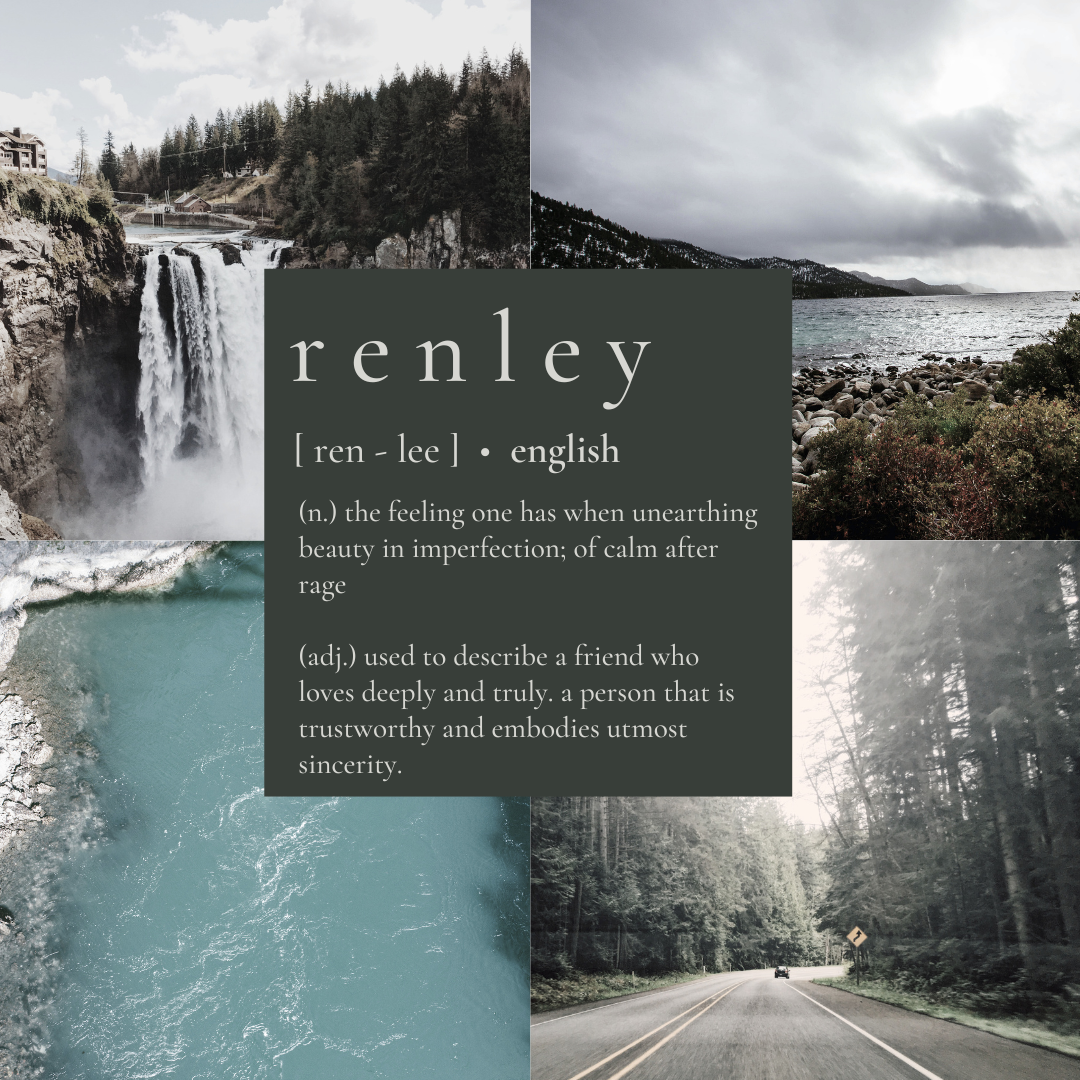
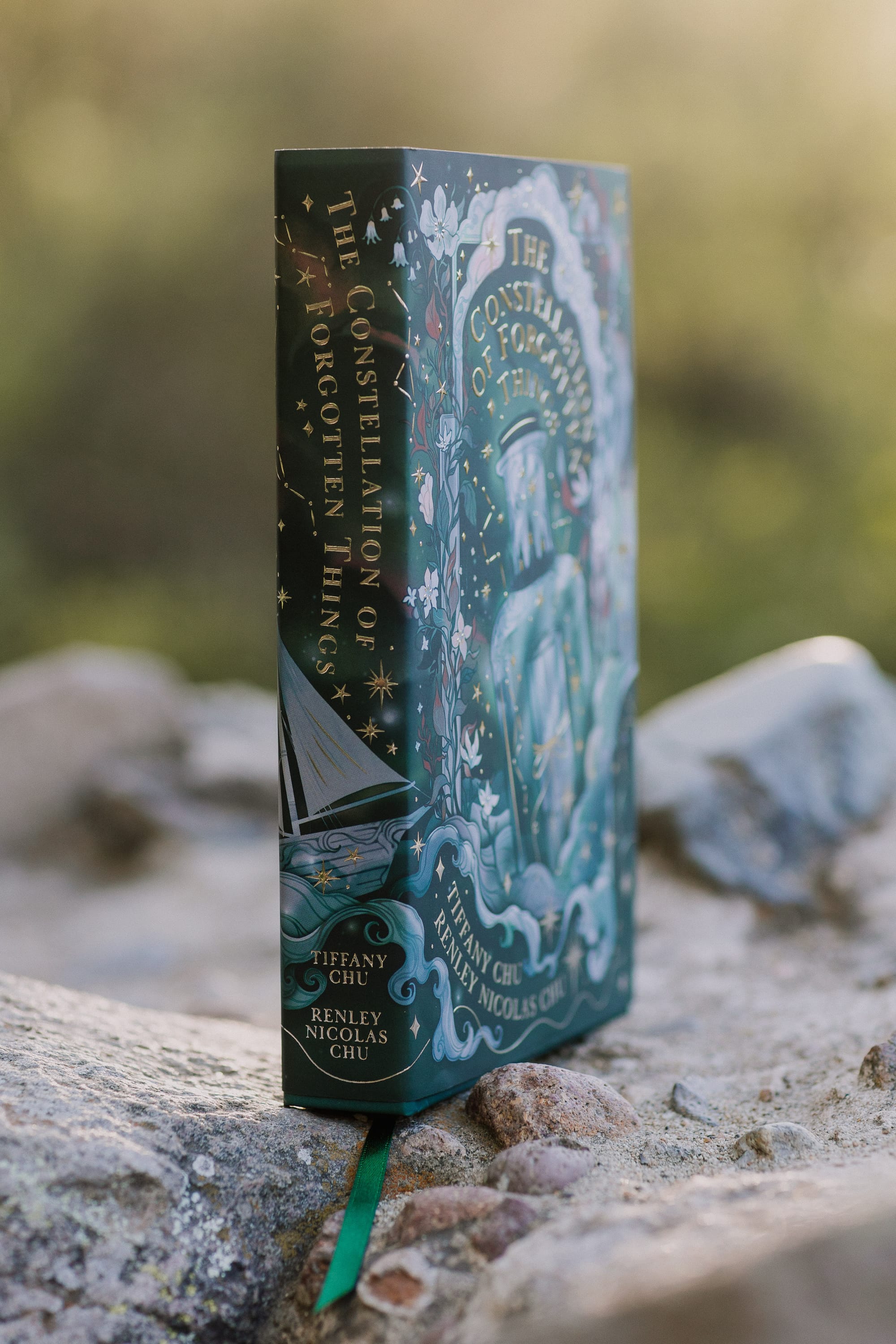
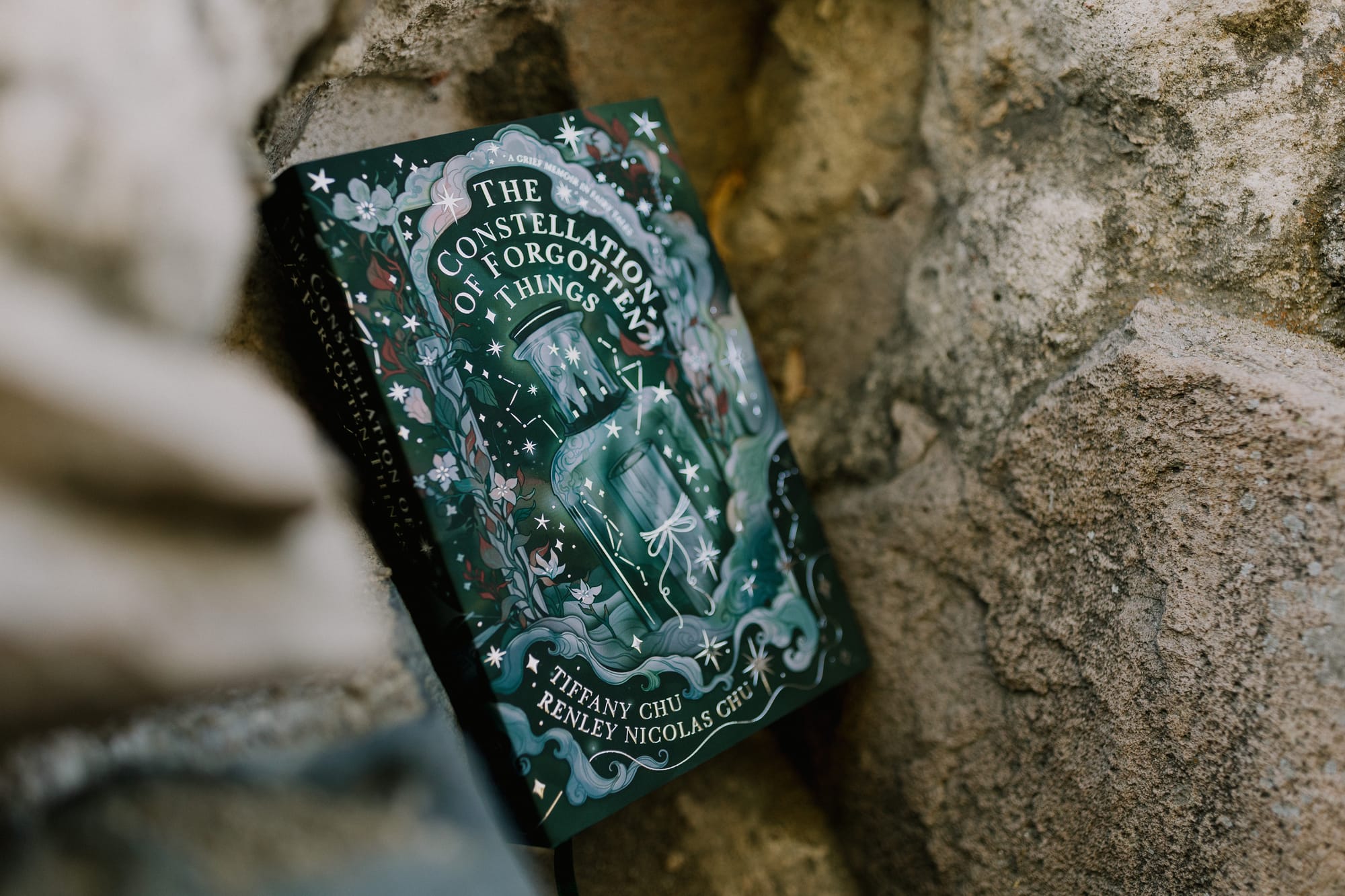
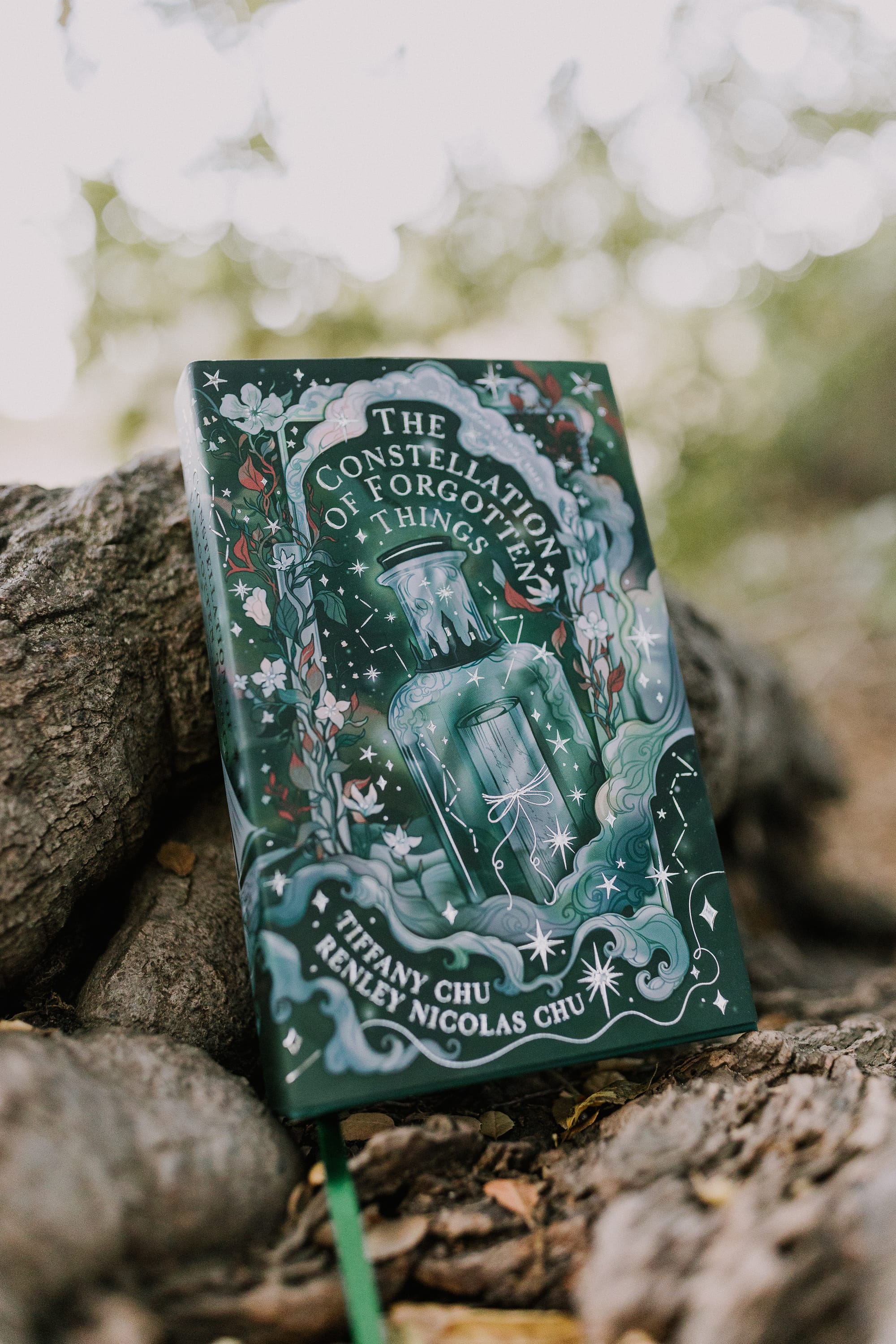
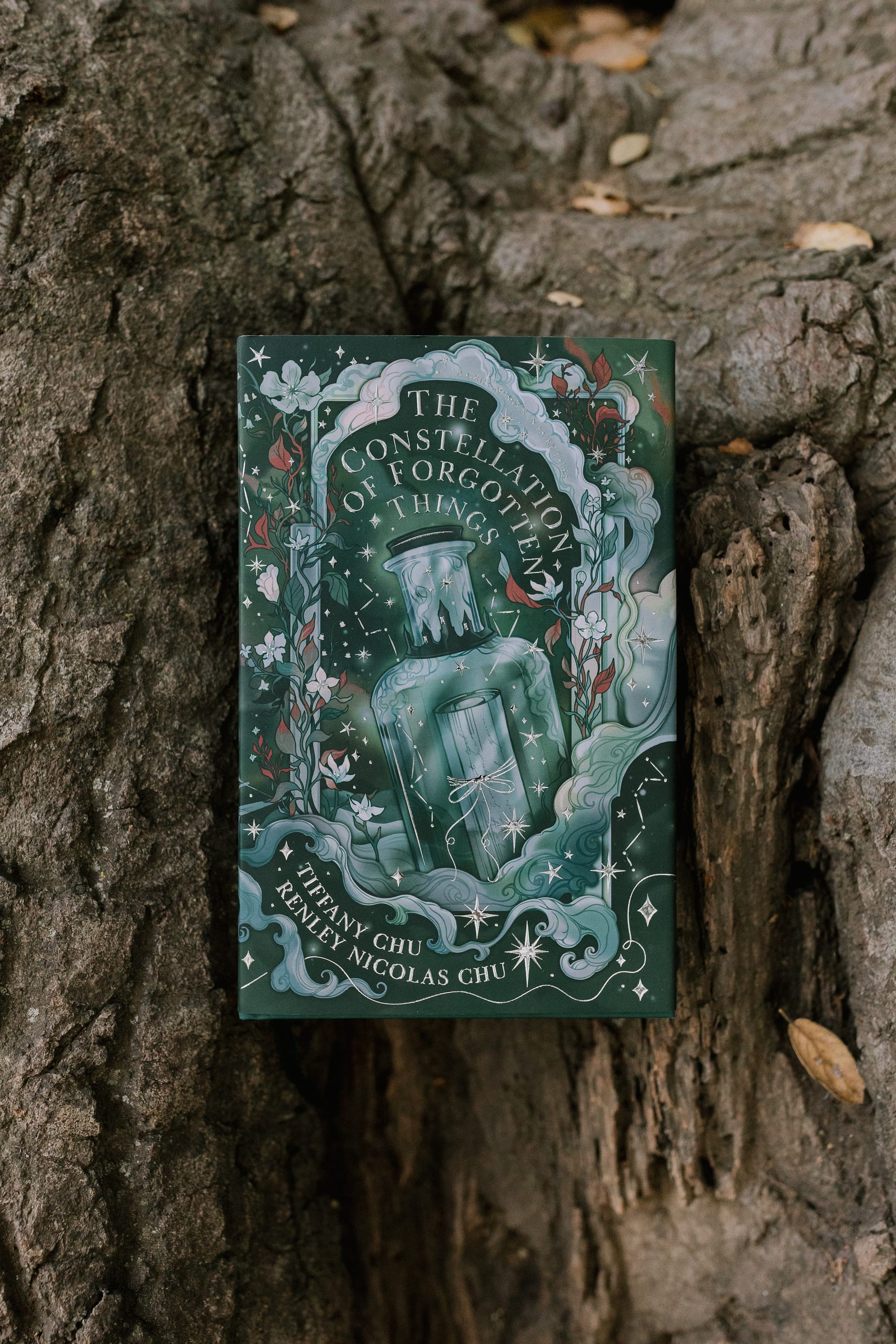
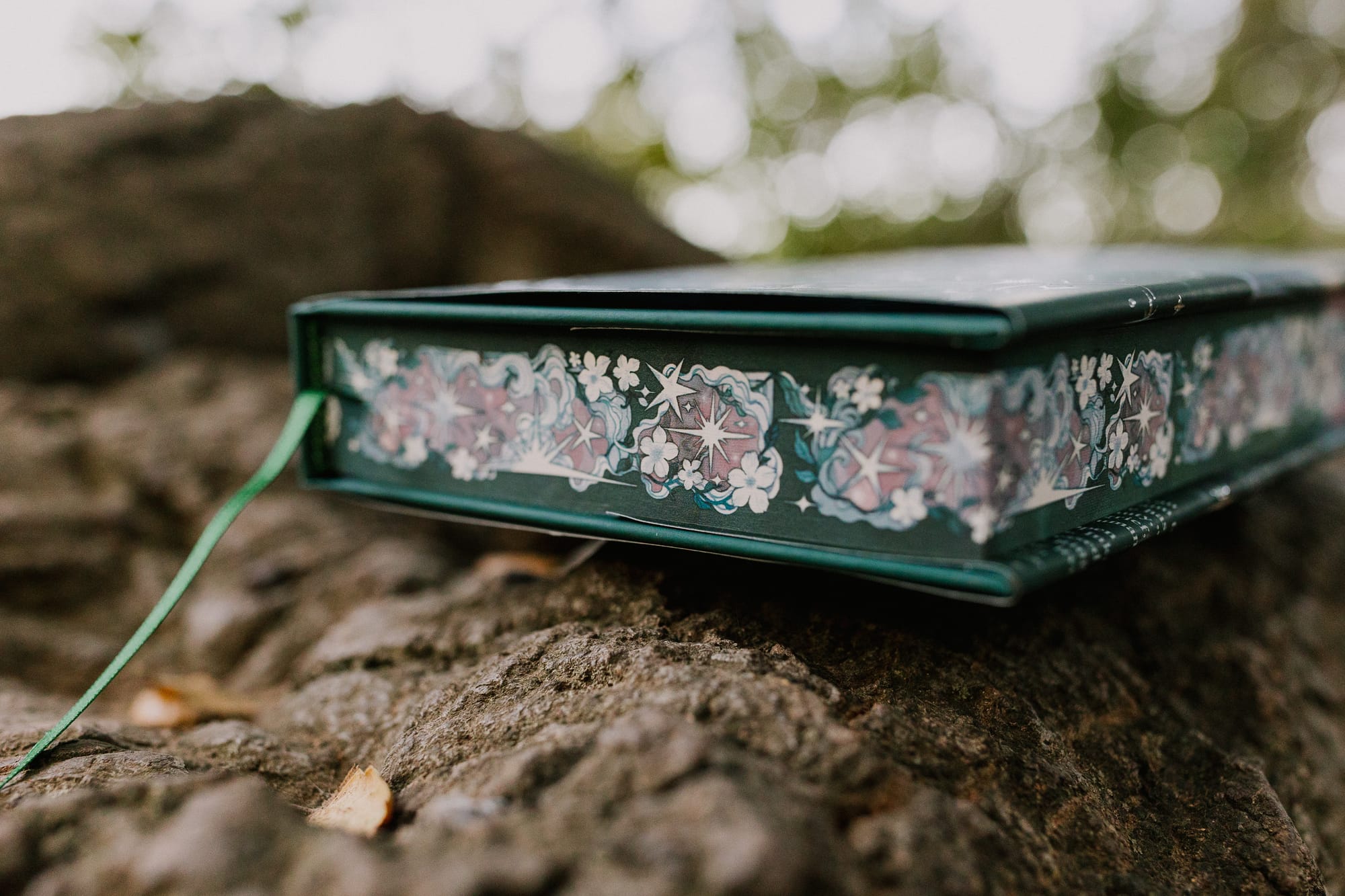
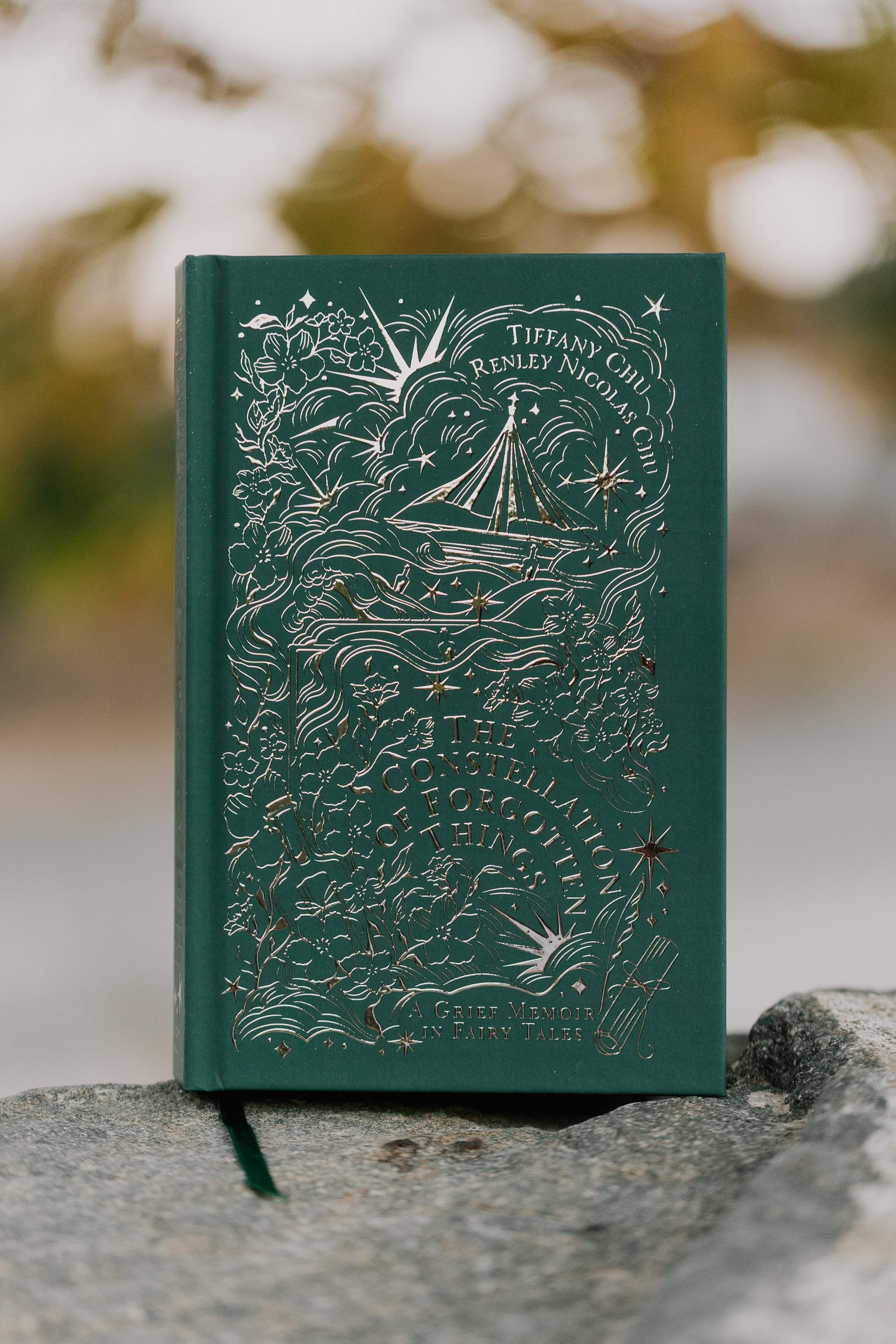
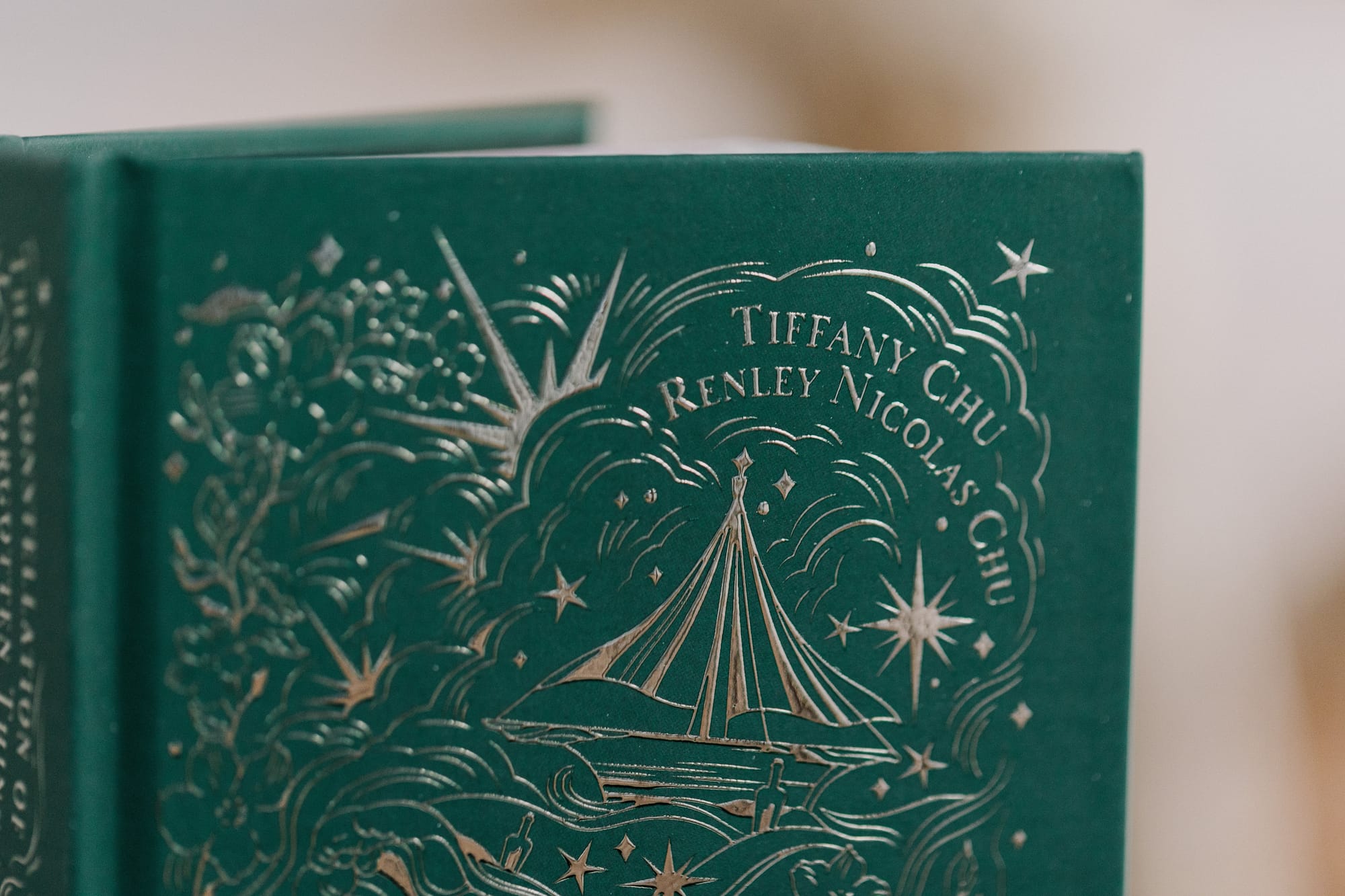
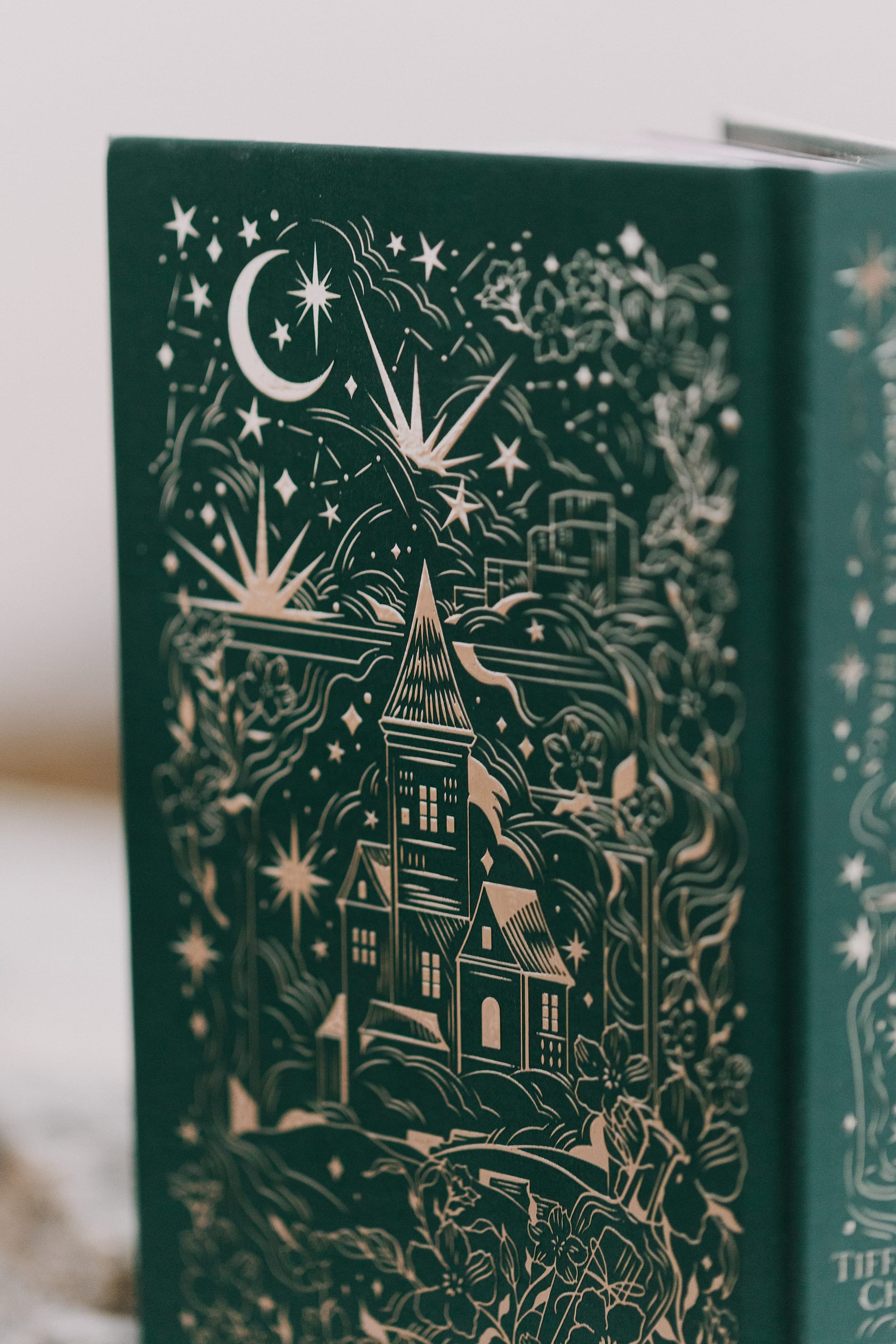
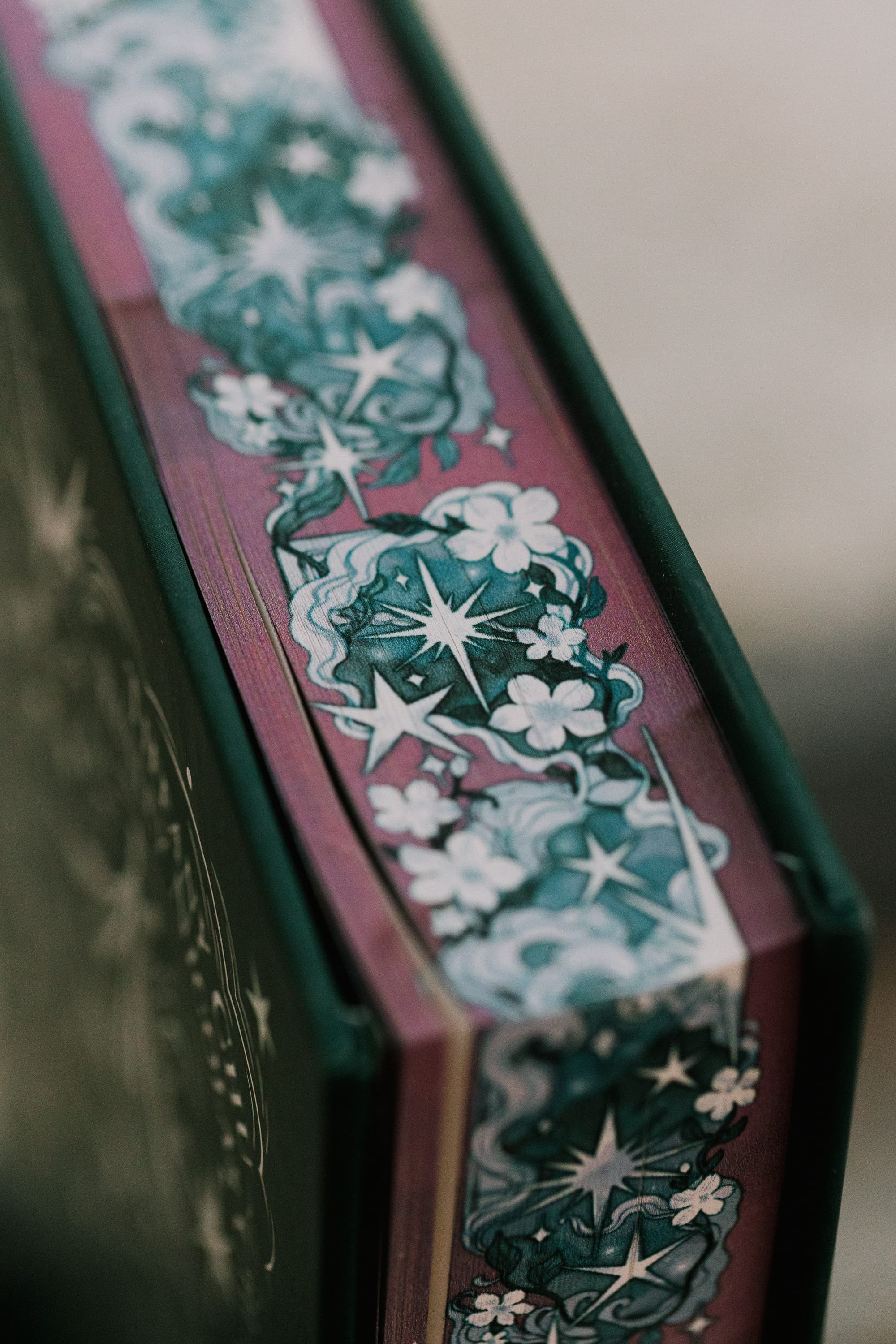
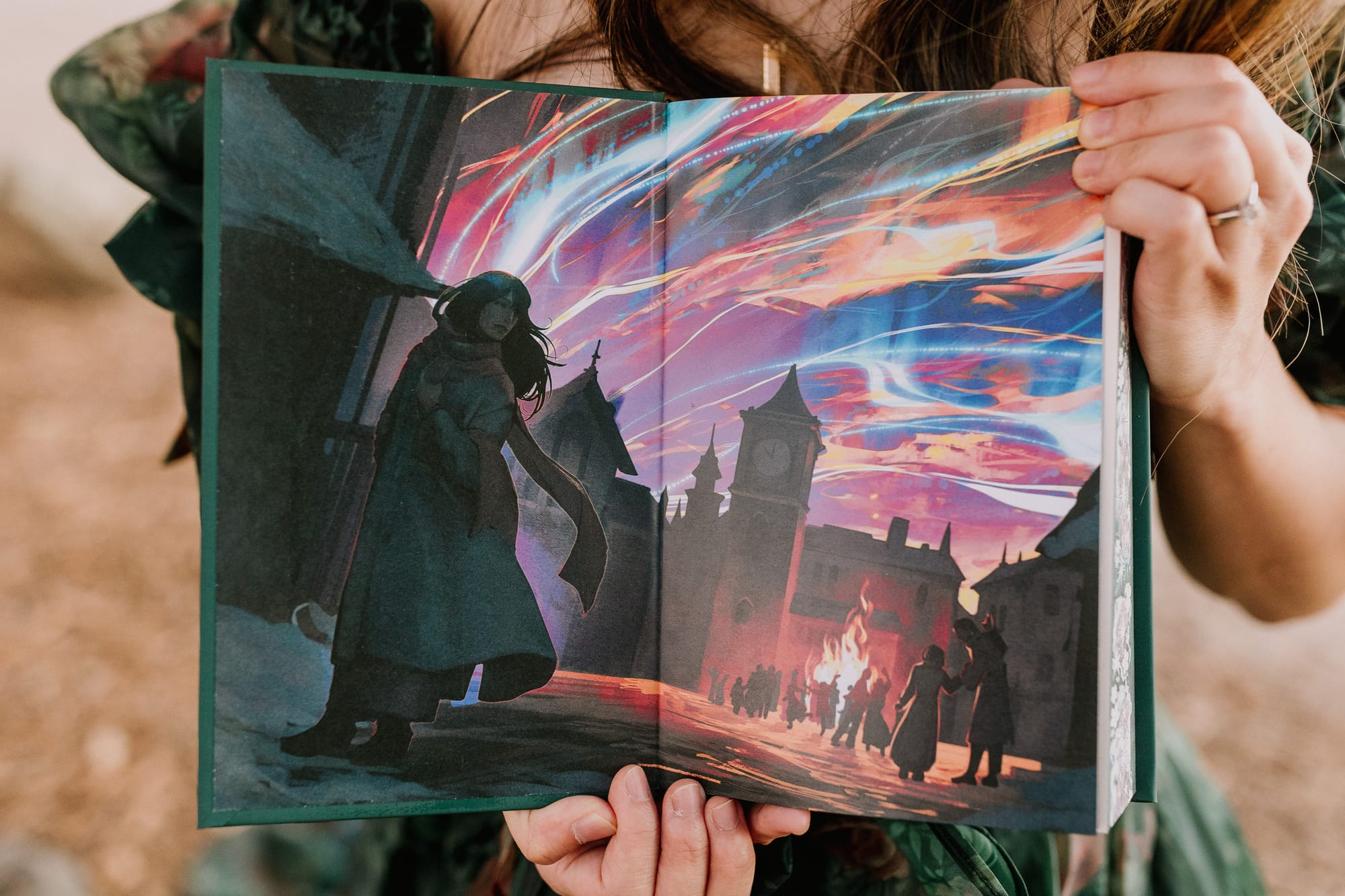
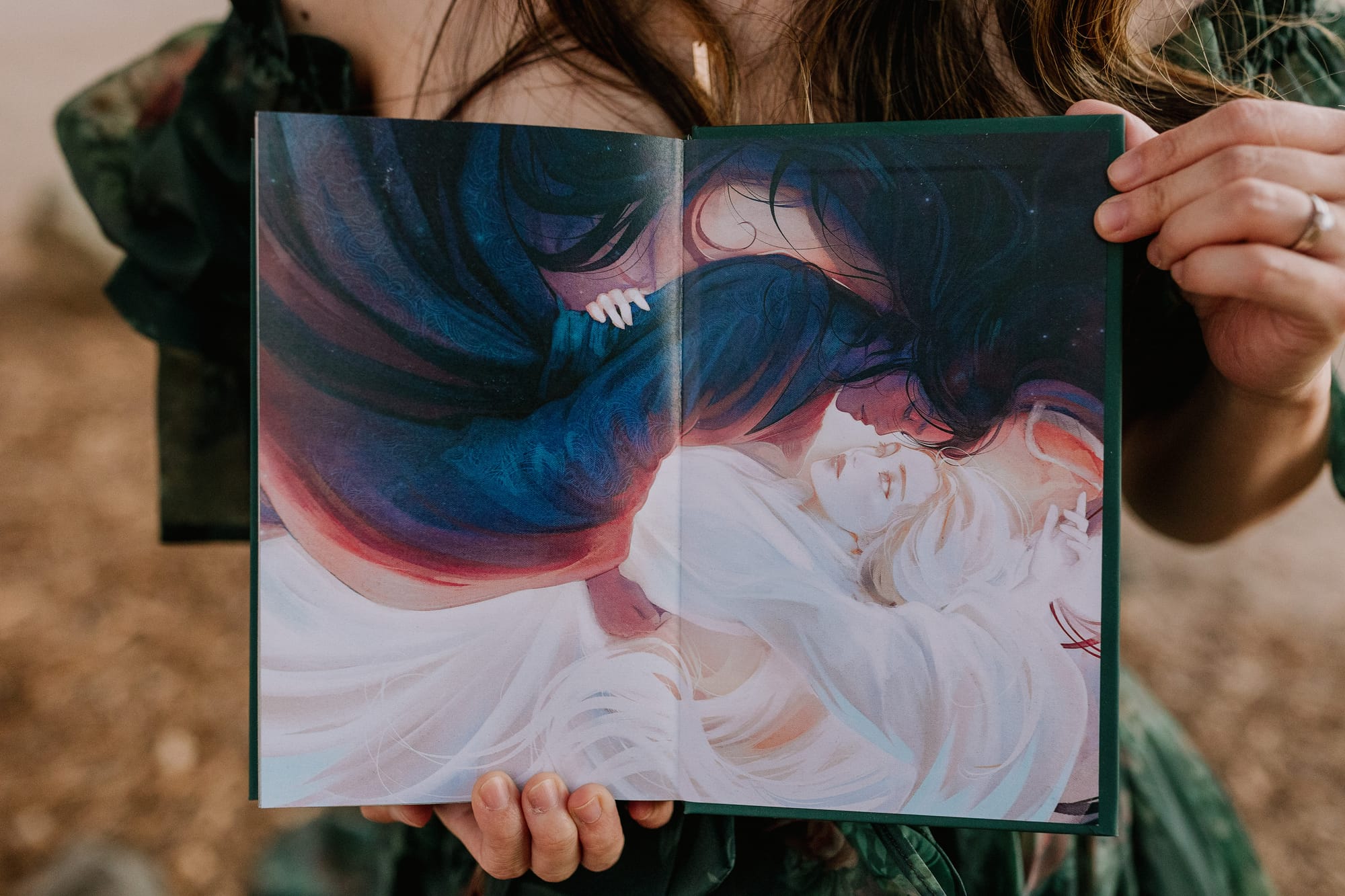
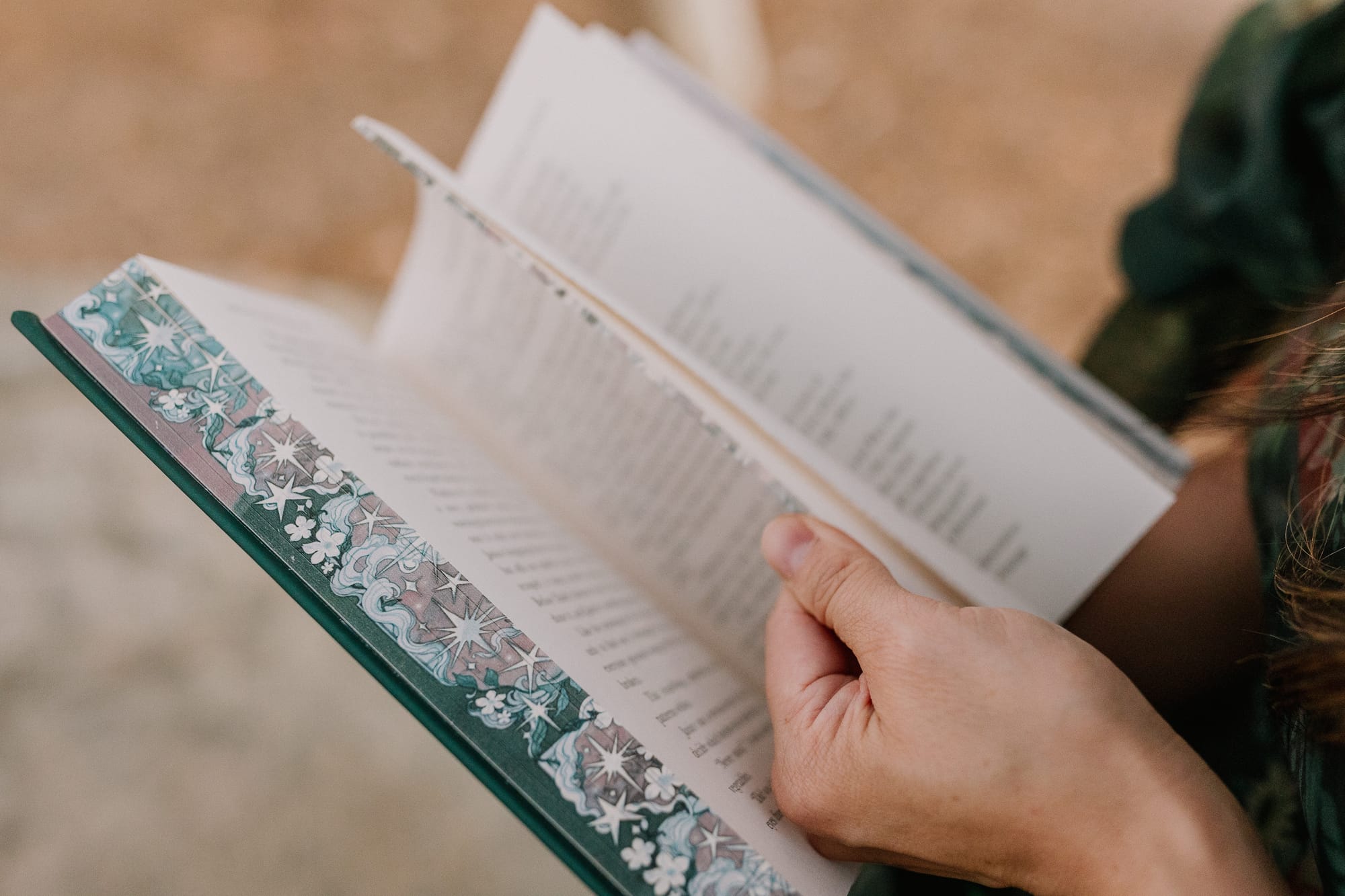
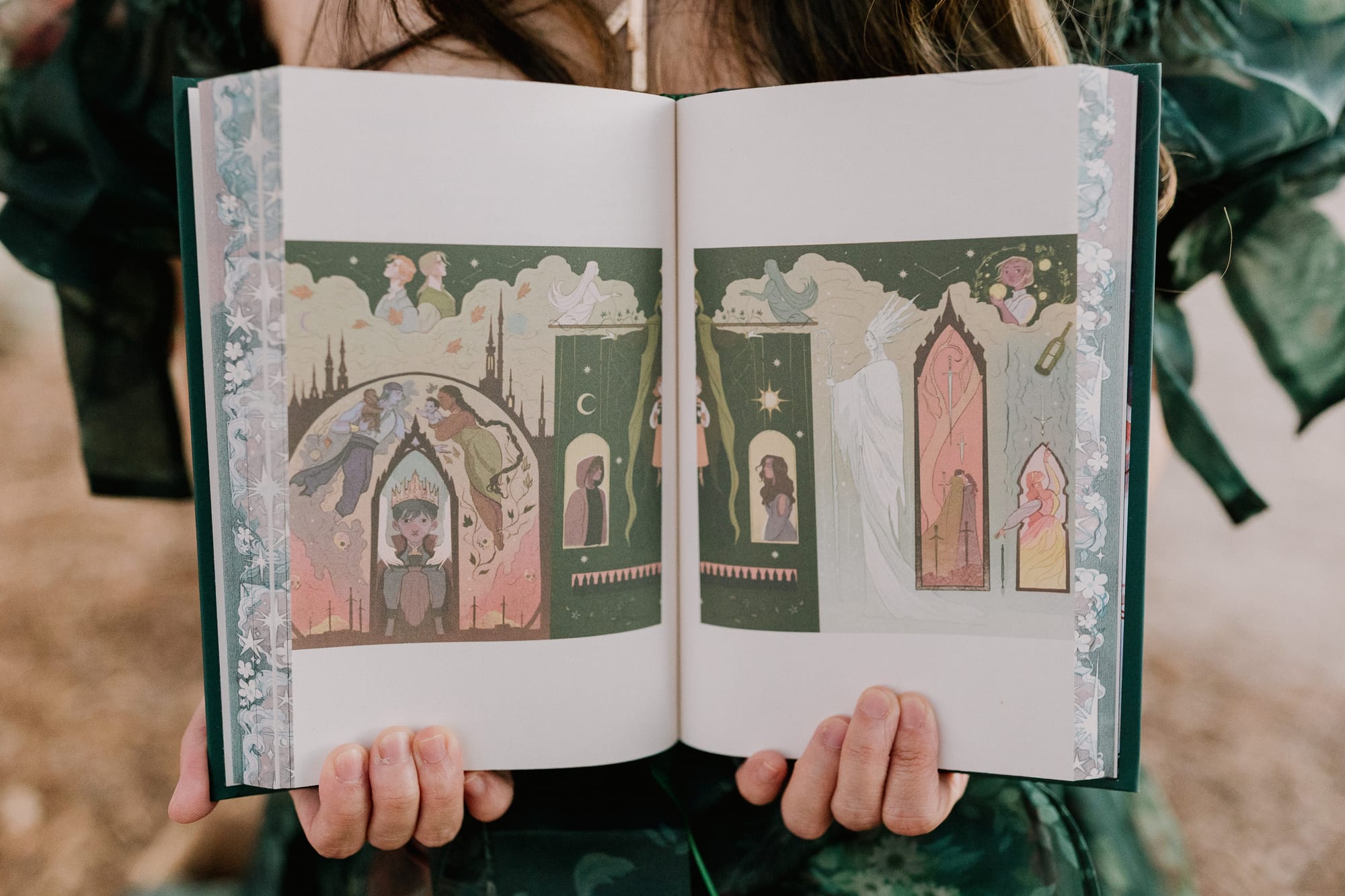
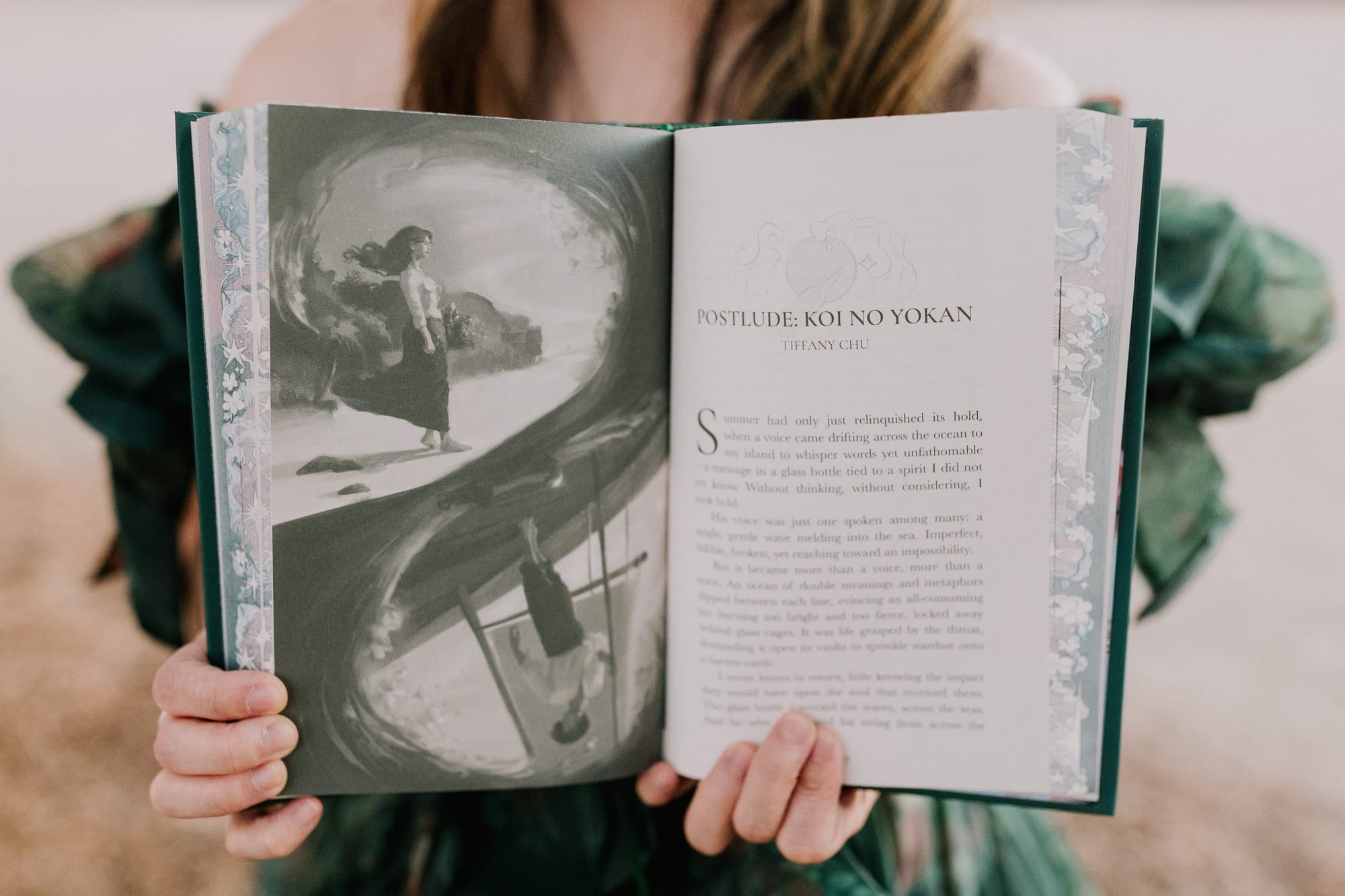
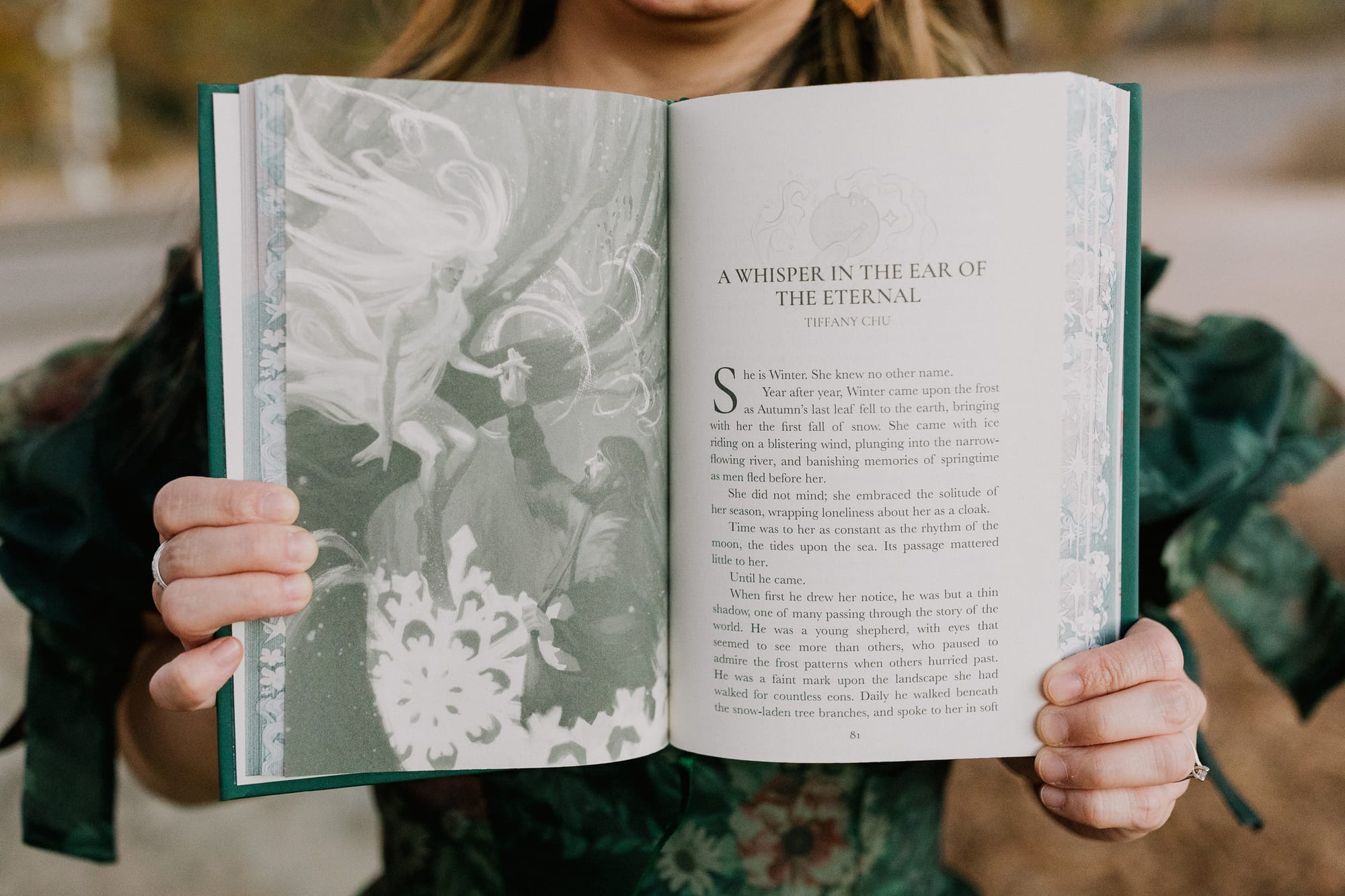
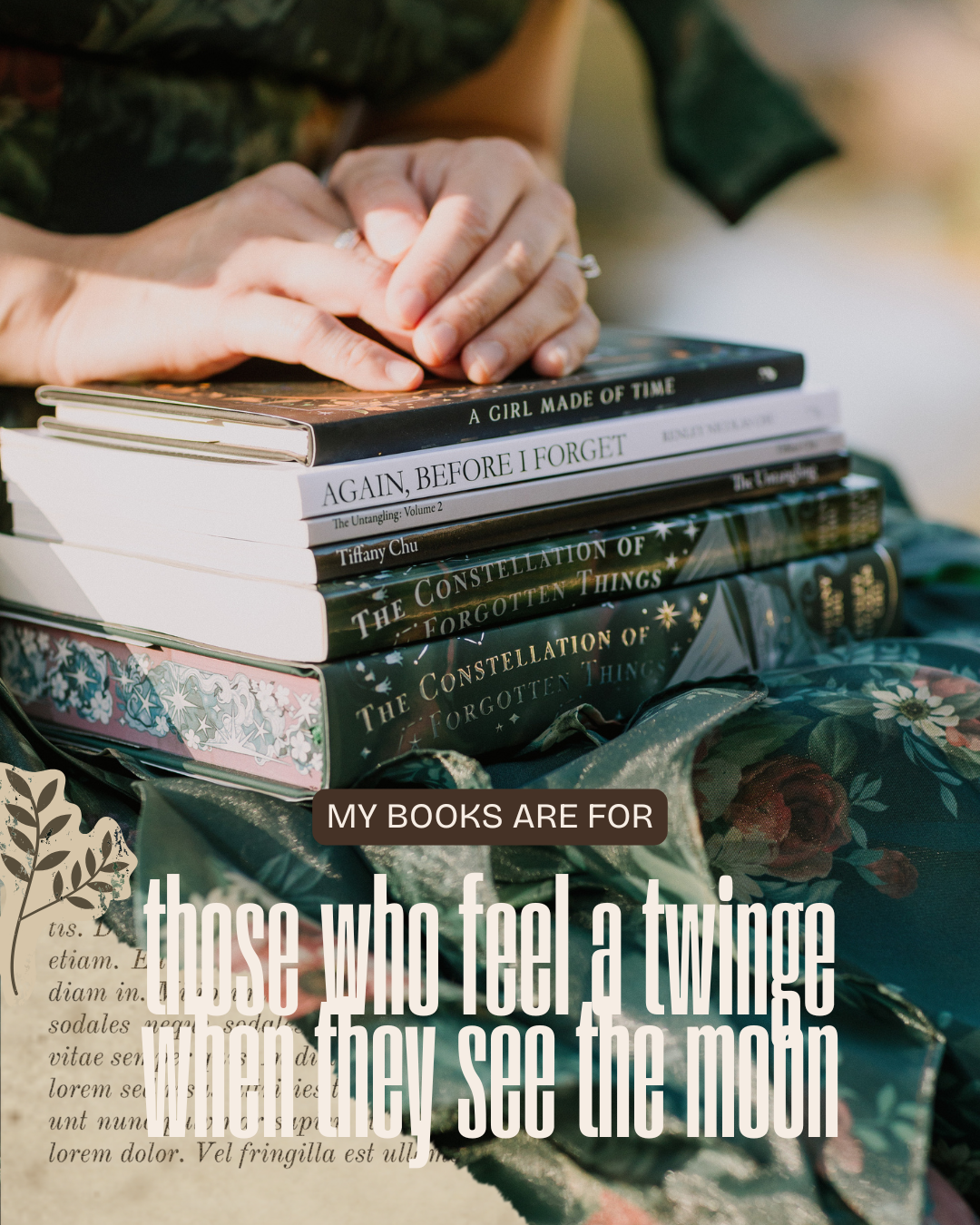
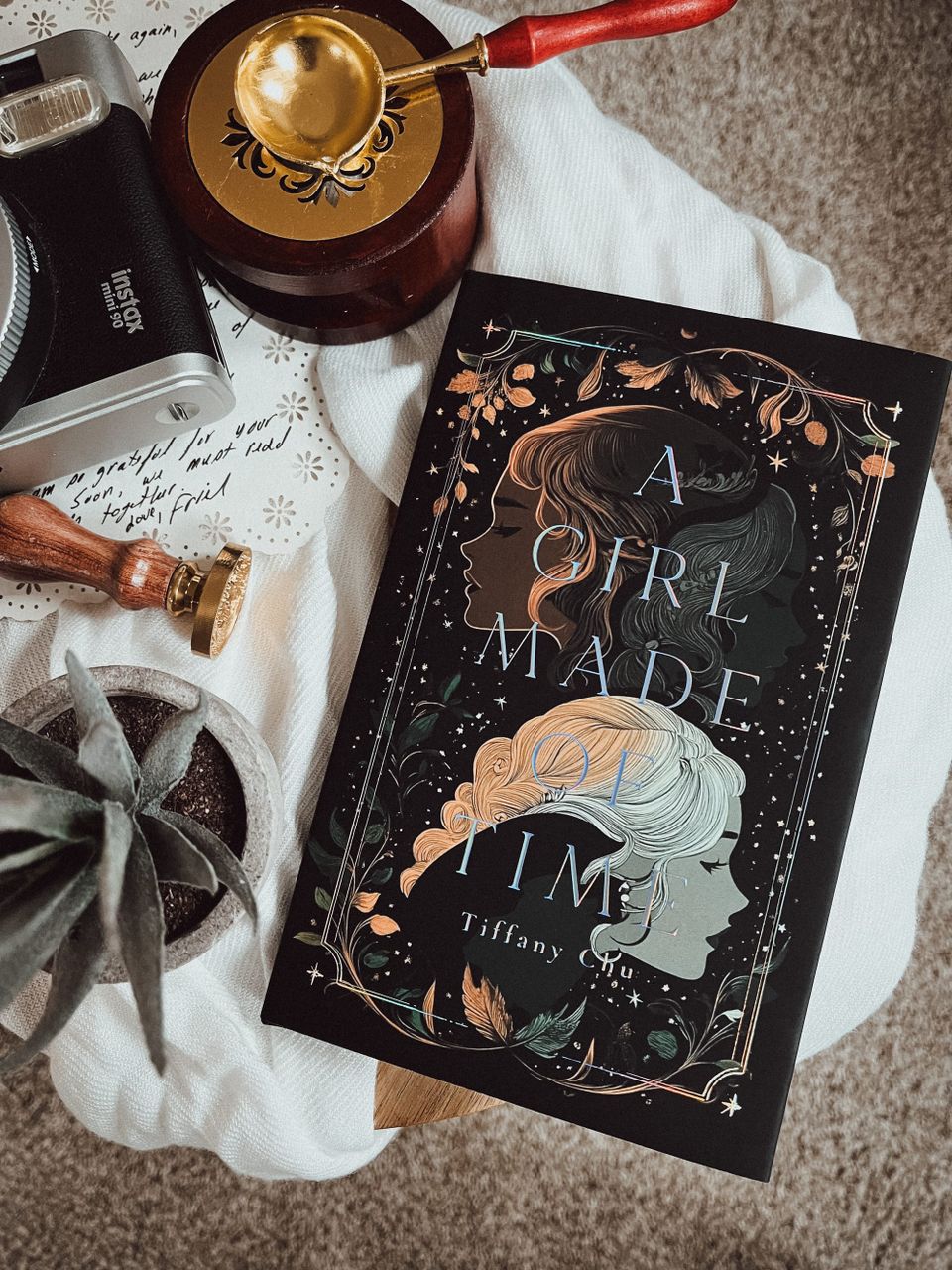
So you want close-up detail shots? I give you close-up detail shots.
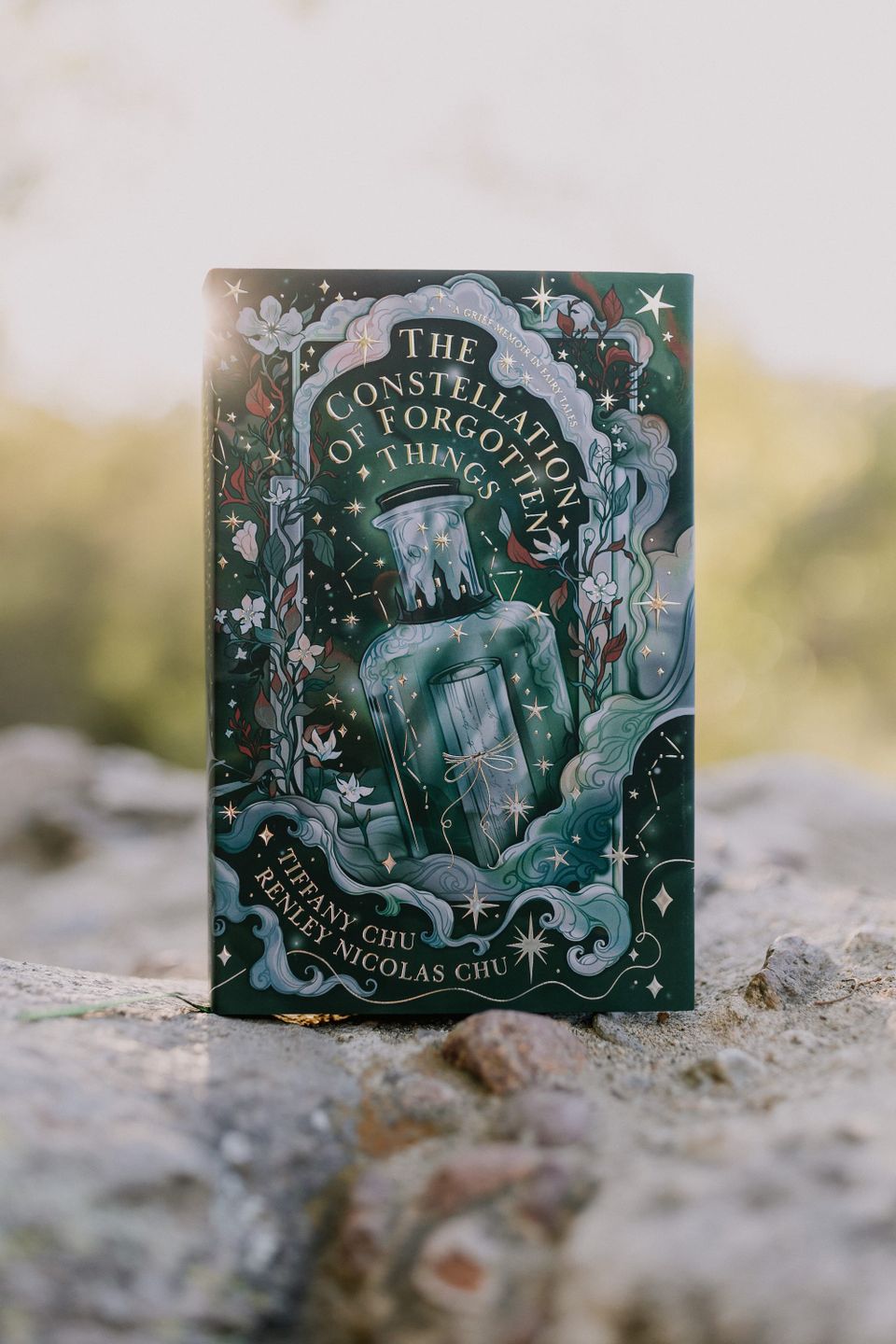
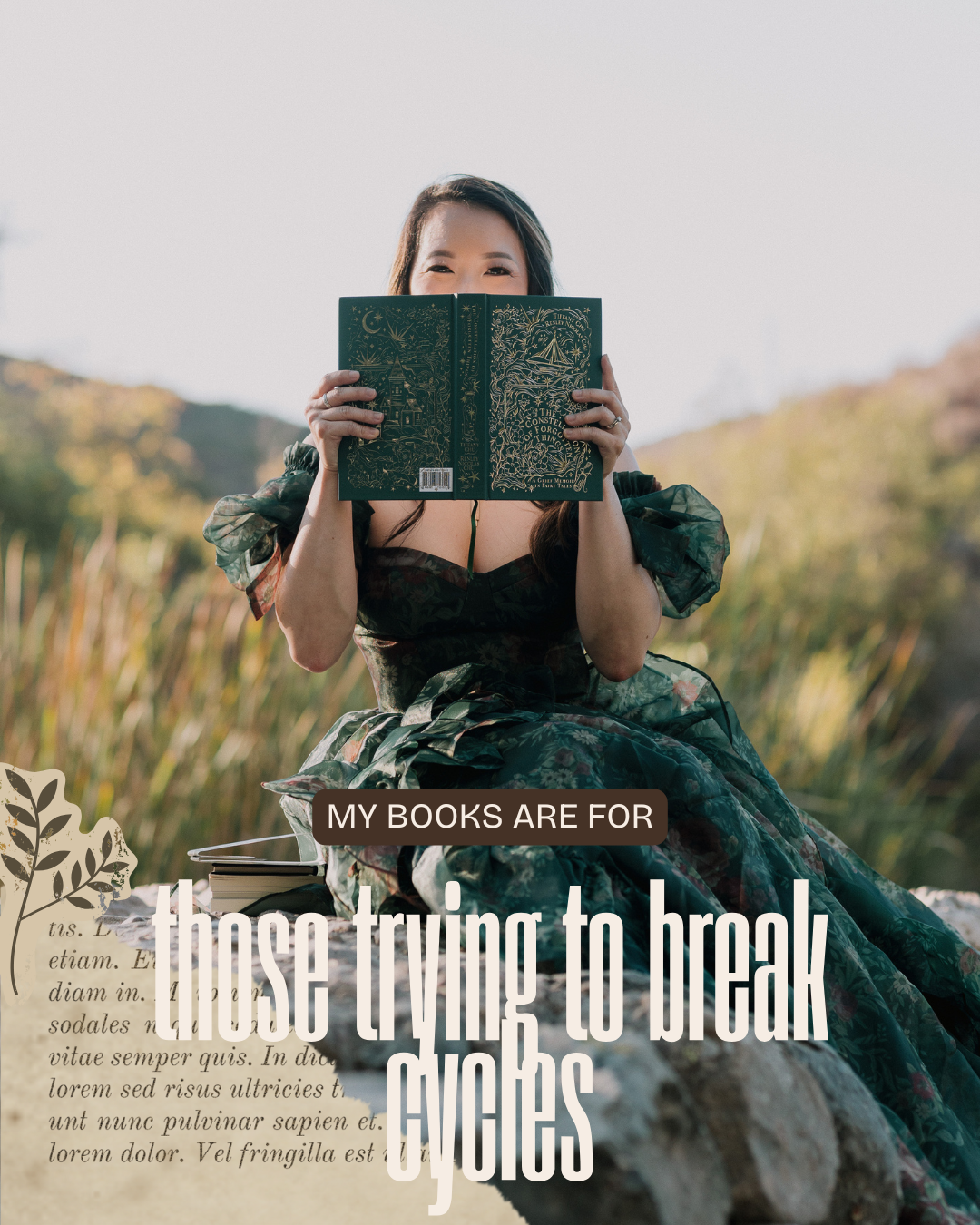
When I tell you you’re not ready for how beautiful this book is in person..
It’s so shiny, y’all. 😭
TWO MORE DAYS TO LAUNCH!!
Little snippets of life and thoughts about books. Everything I'd post on social media if I cared enough.
When I tell you you’re not ready for how beautiful this book is in person..
It’s so shiny, y’all. 😭
TWO MORE DAYS TO LAUNCH!!

I write because I now know stories can light up the Shadow and save a life—two lives.
But one is enough.
The Constellation of Forgotten Things is launching tomorrow.
https://www.kickstarter.com/projects/tiffanychu/revenir
Me: Why am I so tired?
Also me: (stays up until 3AM) (avoids the sun) (forgets to eat all day)
Me: I don’t understand it.
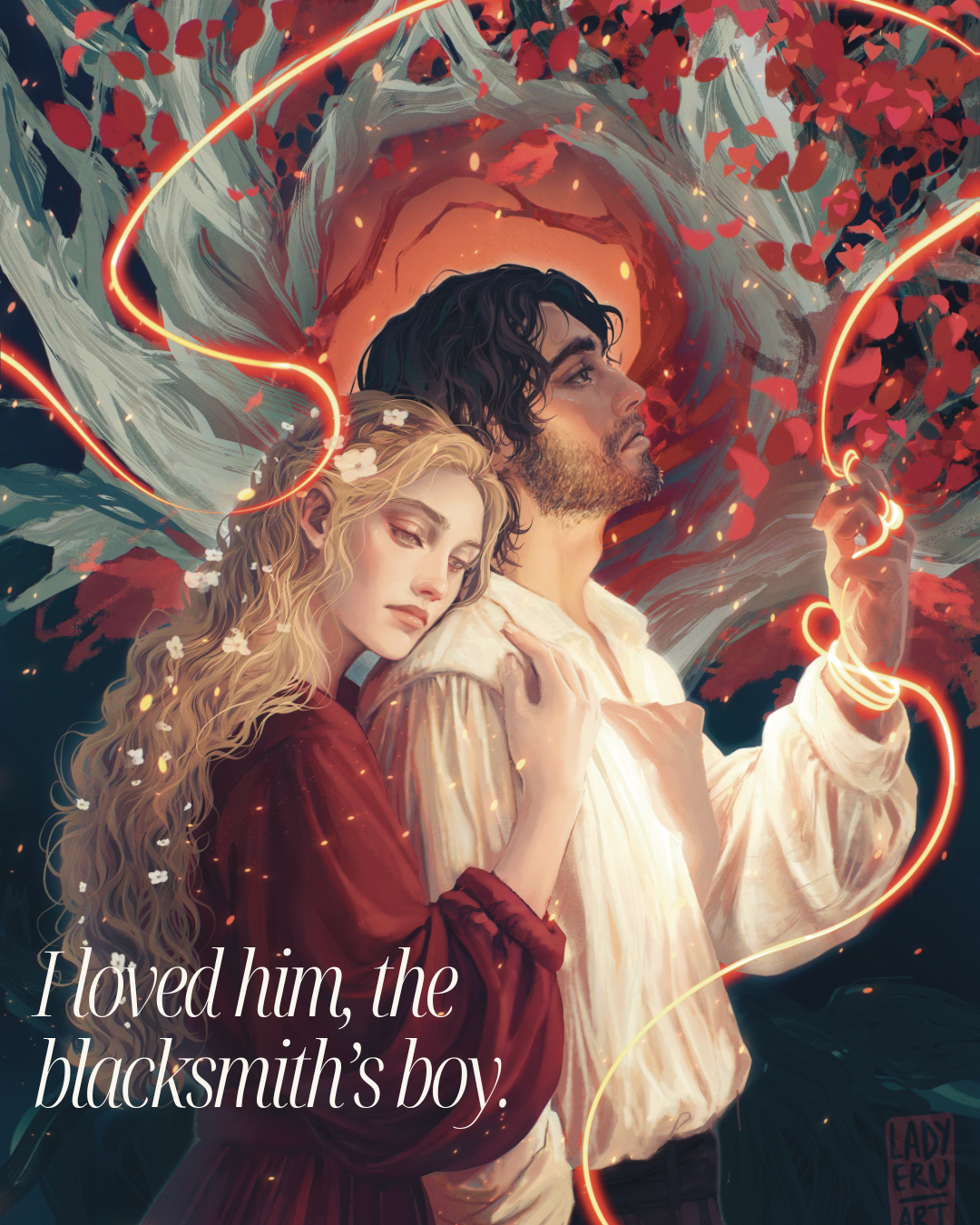
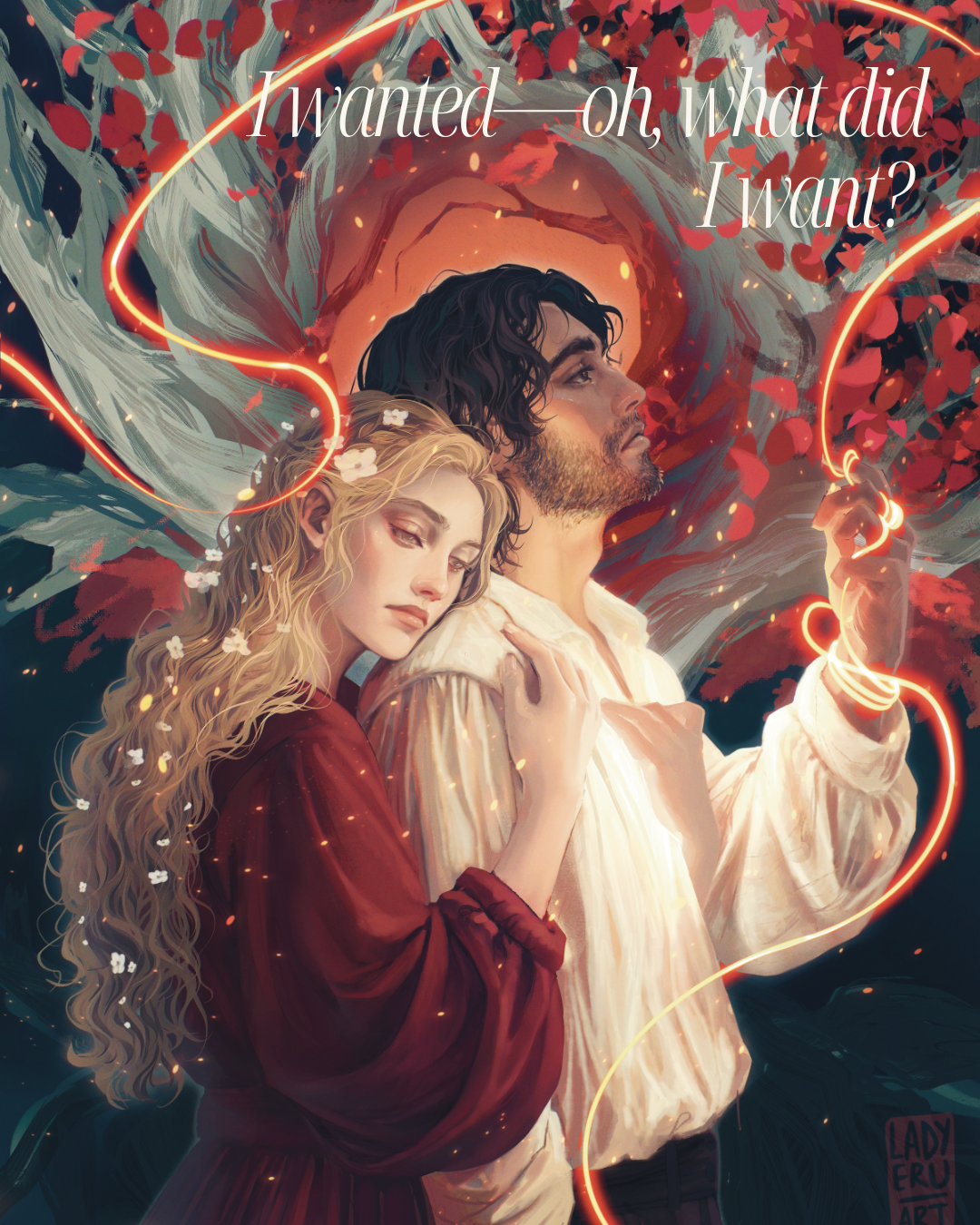
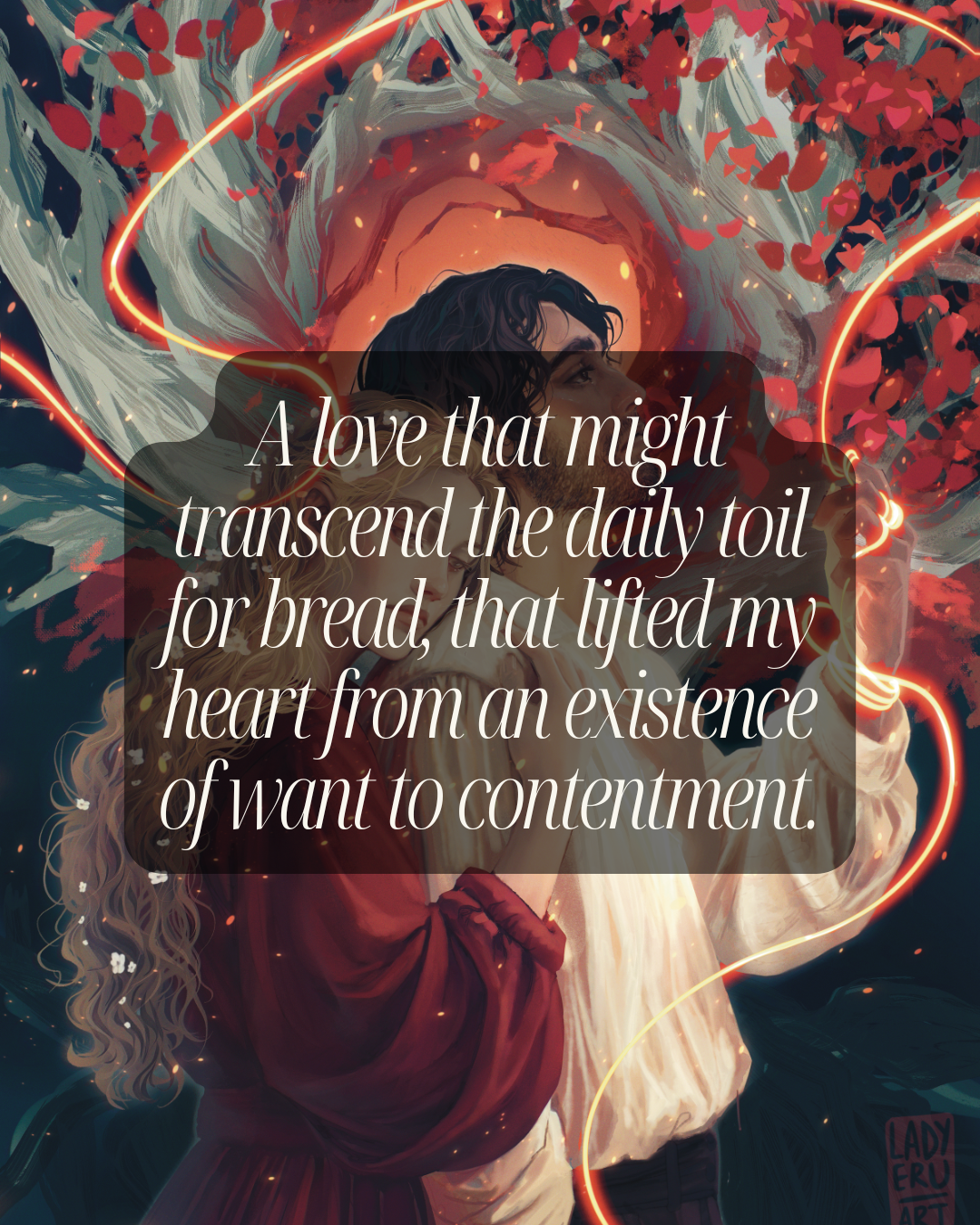
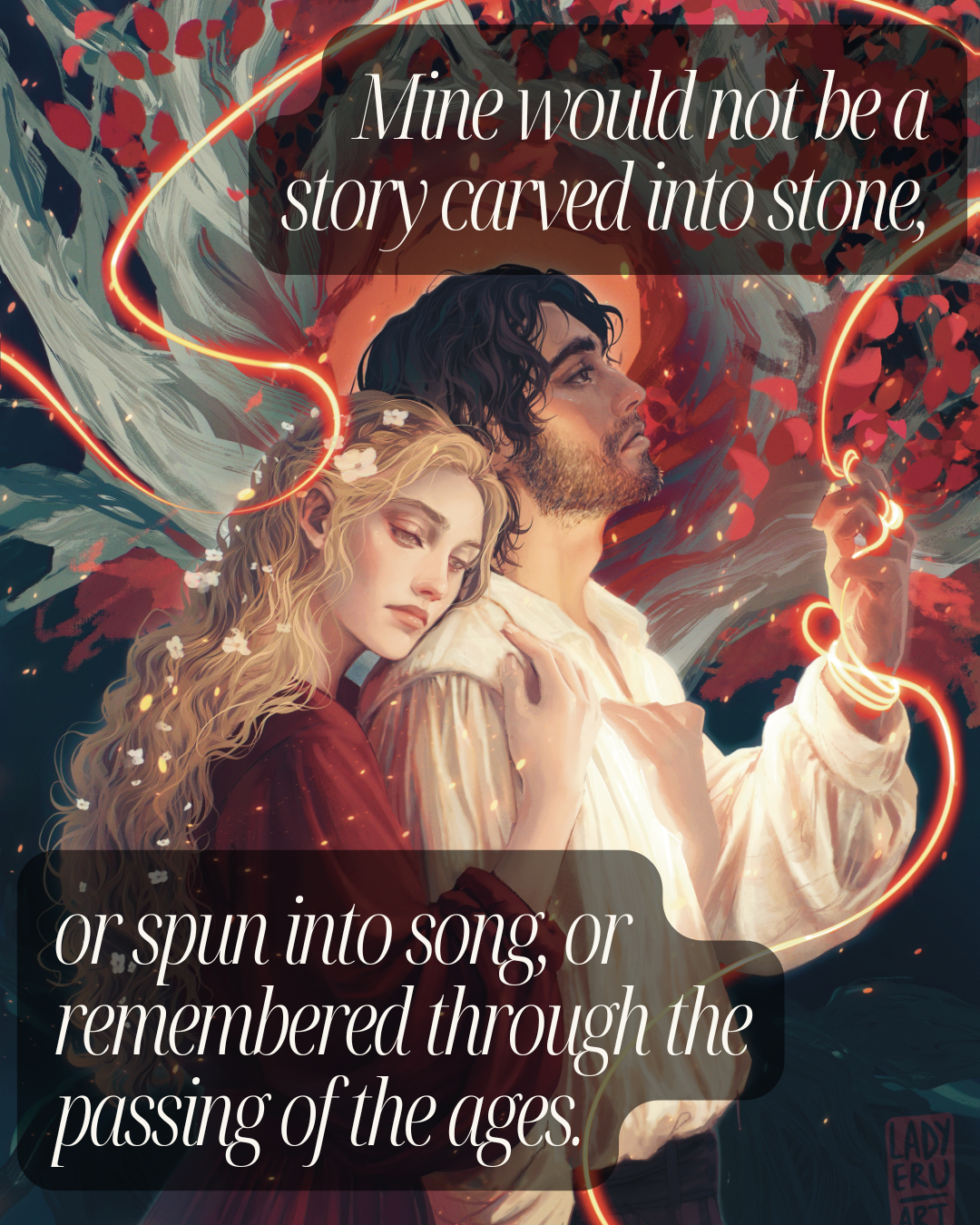
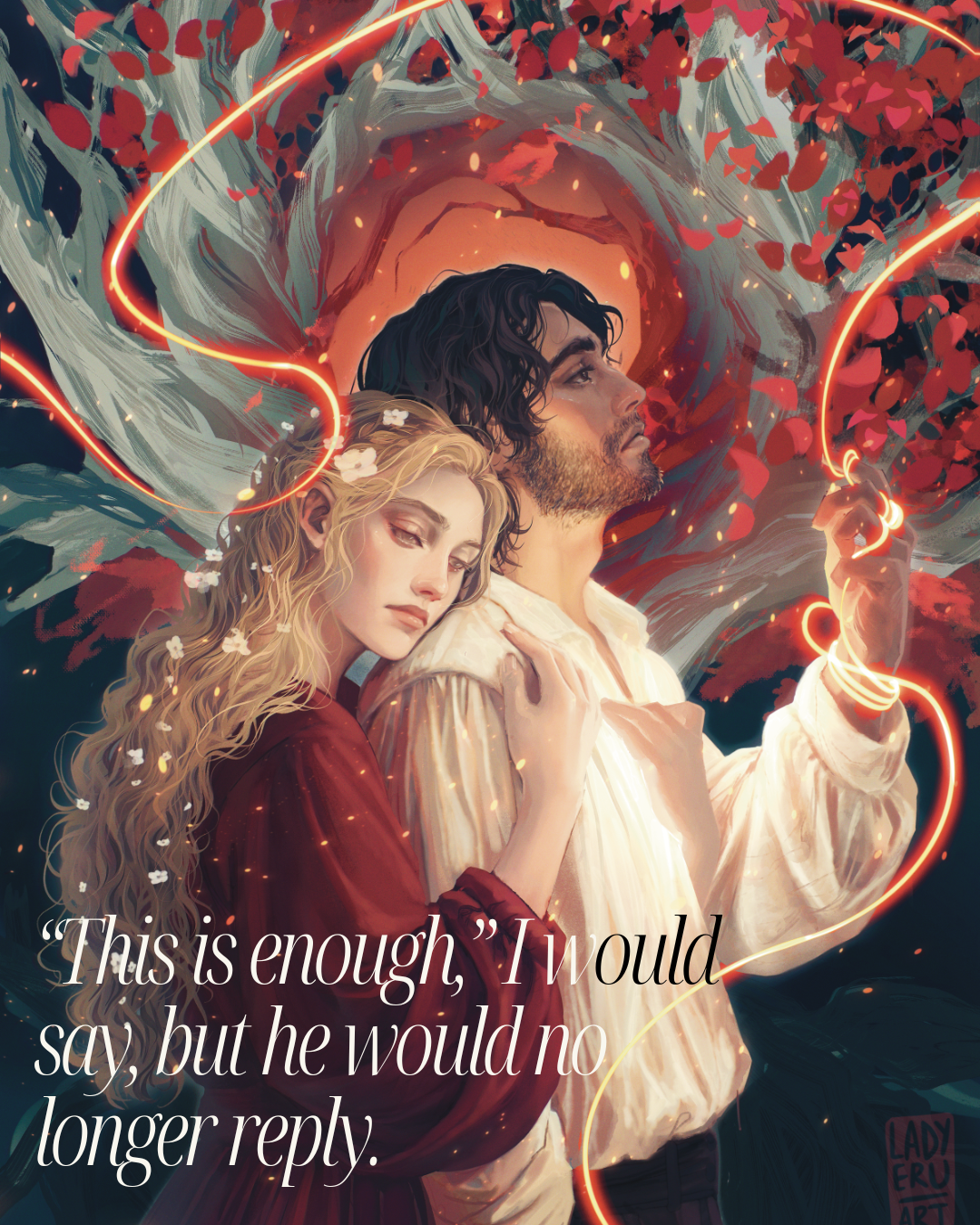
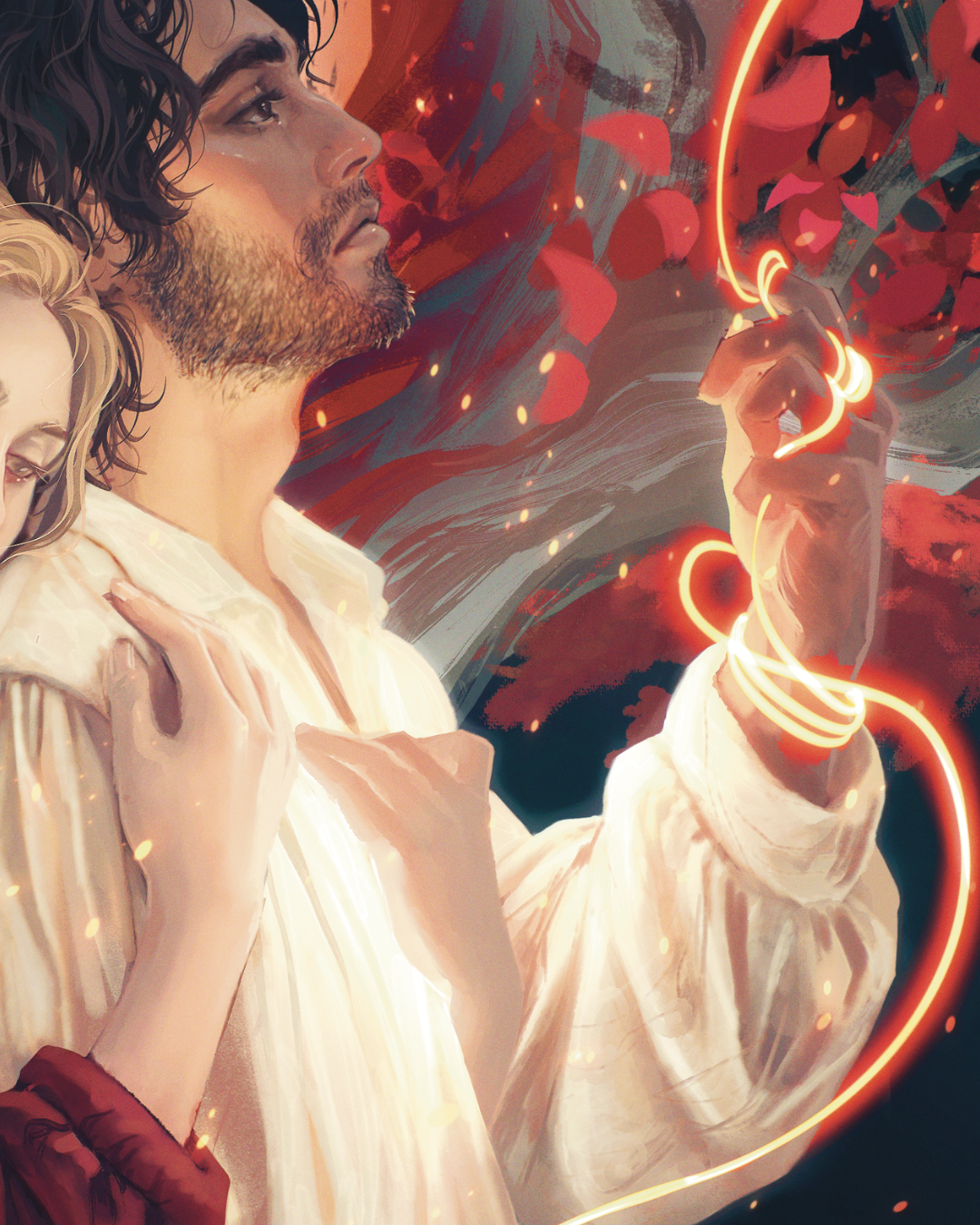
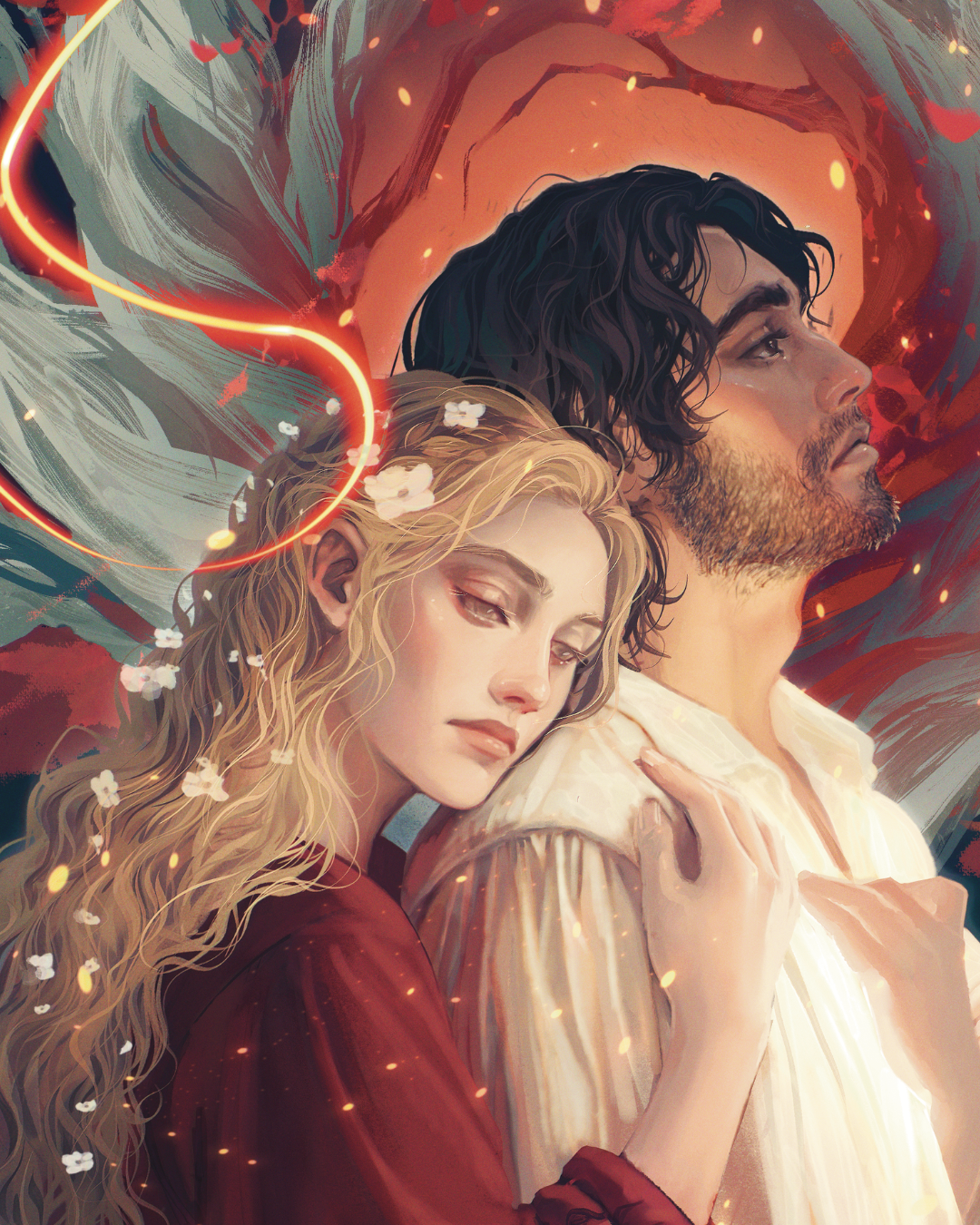
I’m so excited to finally share this dreamy art by Dani, of Elowen and Arden from “Beneath the Hawthorn Tree.”
Her red dress! The white blossoms in her hair vs the red in the hawthorn tree! The red thread of destruction in his hand! 😭😍 I love.
A tale as old as time—lovers who quietly drift apart because they want different things.
This art print is included in all bundles for the Kickstarter, launching Sep 15! FOUR MORE DAYS!
It was a sheriff telling me my parents' neighbour wanted them to move their car (from the street..where there's no designated parking..They just don't want it there). 😑
The popo was just like, "Can you just move it so they stop bothering me lol"
Never answering the phone again.
I have to attribute some of that to learned resilience: "Well, it's not the worst that's happened, and I already got through that at least."
Some of it is leaning on God more.
Some of it is recognising red flags slightly sooner, before I plunge into danger zone of outright despair, and reaching out for my support more readily.
I should not have scheduled my book launch to be right around the same time as the start of the school year. That was a huge mistake. x.x
Even so, I should very much like to be done with 2026 and have a much more chill 2027, please and thanks.
Me: why are our daughter's socks just everywhere in this house!
Husband: (gestures vaguely to all my randomly strewn socks)
Have absolutely no idea how this could have happened.
"I can't do this; you ask too much,"
and it's like,
"Communicate, please and thanks."
LOL.
Christians today reflect the wonder of Christ when the gospel fills their lives and it leads to:
-A proud heart becoming humble
-An addict finding freedom in Christ
-A marriage being restored and reconciled
-A Christian forgiving deep betrayal
-A believer remaining joyful through long suffering
Goddamnit jesusfuckingchrist every fucking time I'm trying to put my foot down and just walk away LOL.
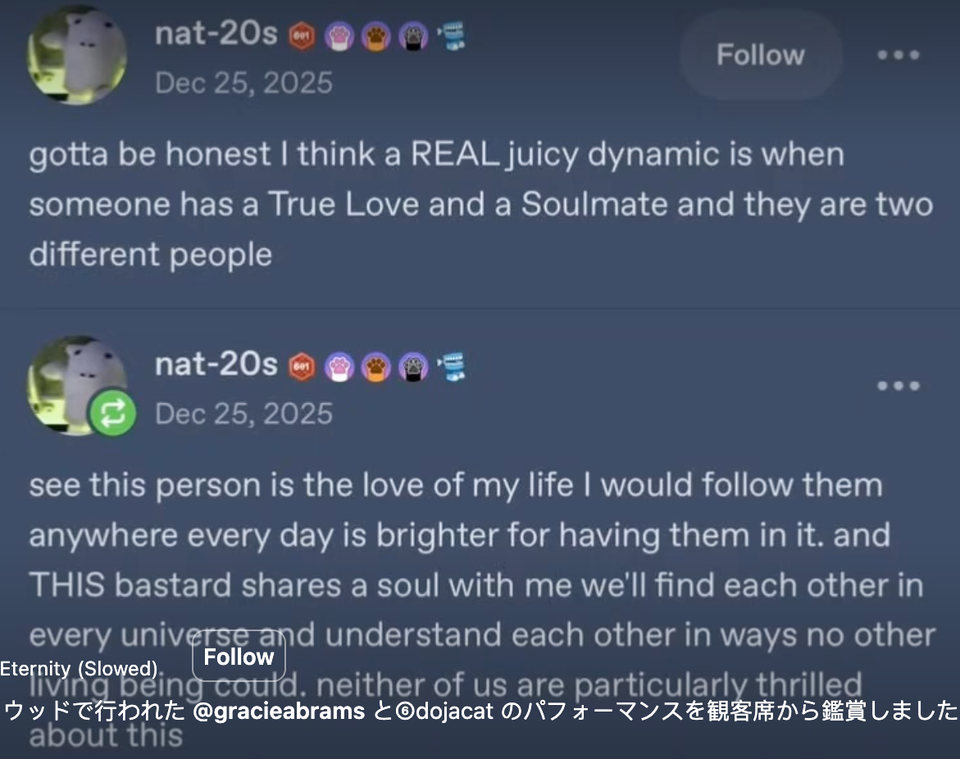
Love of my life: husband
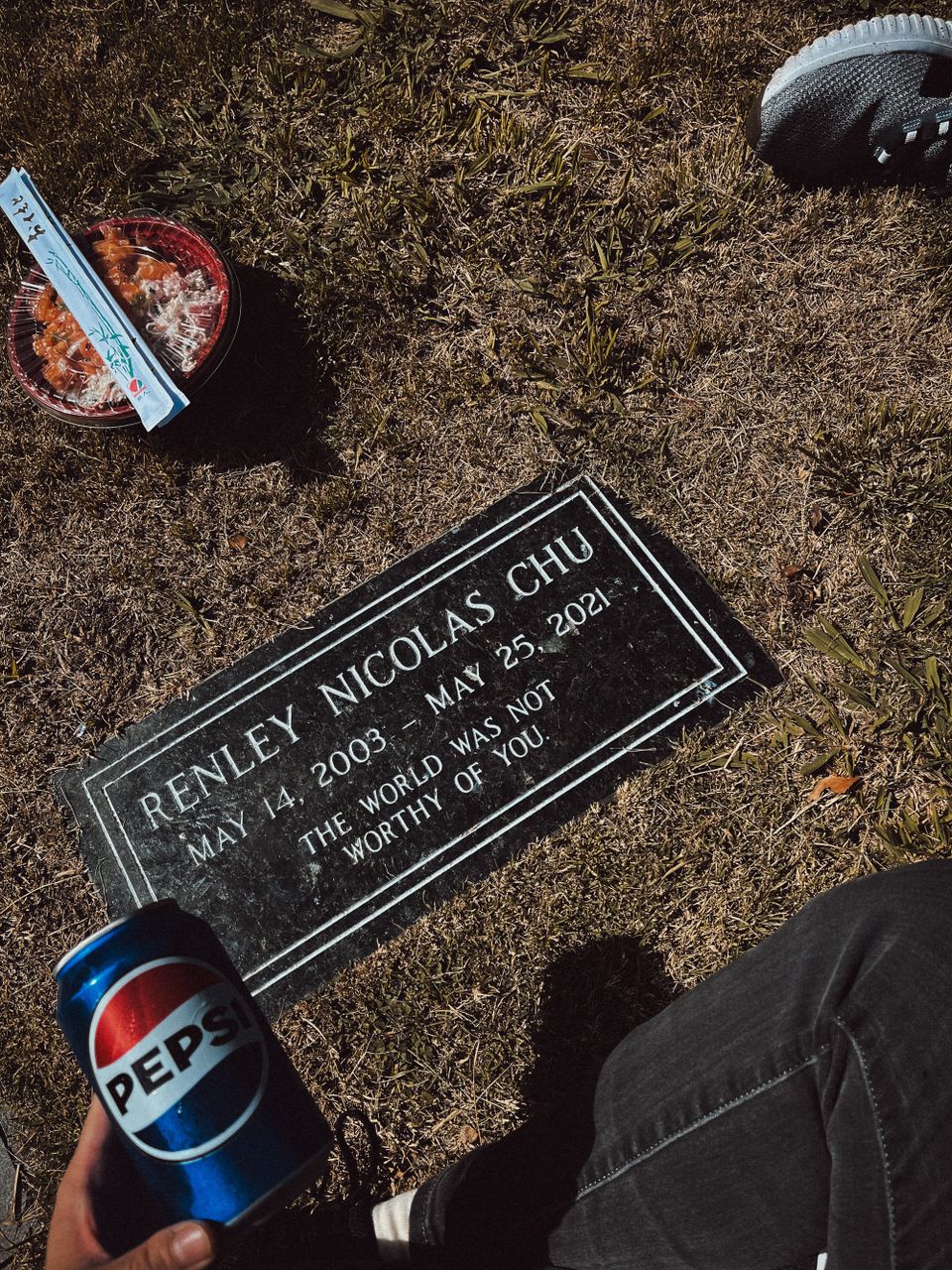
Soulmate (platonic): Renley
This is not my shame to carry.
This is not my shame to carry.
I was not abandoned because I was too much, or not good enough, or too messy, but because someone else was too small.
It's not about my worth.
That was not who I am.
I know who I am.
I will not be broken by someone so emotionally immature and lacking in self-awareness.
I've wasted enough of my life chasing after those who don't value me, and I will not waste any more of it.
Unexplained silence is not space.
It's not processing.
It is punishment.
It is neglect.
It is emotional violence—traumatising, brutal, and devastating—that broke my nervous system and sent me into woke darkness for days.
I've had enough.
I can remember this is not the worst year of my life. I've survived worse. This will pass, too.
Subscribe to continue reading
He told me before he died that he would watch over you all and play with you there the way he wanted to play with E, until we could all be together again. I like to believe that it’s real and they’re together. Maybe one day our family will be together again. I love you. I love you. I love you. I love you so much.
I saw him, standing there. He wore his darkness like a cloak, one that blends itself into the company he keeps, until it stitches itself as skin onto his body.
“You forget, my beloved, that shadows flee in the light of the sun.”
And disappear.
“Forgive me, my beloved, I did not know that loving you would melt the bones from your flesh. Or that it would taste like broken glass scraping the inside of my cheek.”
He burned with the intensity of fire, and I did not know that if I held him, he would leave scorch marks across my arms also.
I cried when he died, and the heavens did not answer; there was only the void that whispered back,
“This is what it costs to love.”
The green in leaves and on the mountainside. The colour of the sky.The trees we used to walk past. I miss him in the mornings when I wake to a world without him. I miss him each time I wish I could tell him something. I miss the way we were constantly connected, his presence pulsing through me like a heartbeat. I miss him when others hurt me, knowing how fiercely and fearlessly he would have fought for me. I miss the way we knew each other, how sure we were of—the kind of security people search their whole lives for. I rarely look at our letters and texts now because they are always a twisted knife within me, cliche though it may sound. Yet sometimes I want to anyway, when I miss him, even knowing it will make me miss him more.
Because he was more than my child, more than a friend. He said I was his soul, and he was mine. Such a bond can never be understood by anyone outside of us, and that’s lonely, too, in a way. I miss him today and every day, forever and always.
Feelings.
I can’t. I can’t anymore. Can’t stop it from coming back.
the emptiness.
It makes me wonder.
what the point was.
Only guilt.
that I wasn’t strong enough.
wasn’t brave enough.
Couldn’t. Couldn’t.
find a way to stay.
Only guilt.
that you tried so hard to save me.
that you will think you failed.
that you will think you weren’t enough.
But in the end,
I am the one who was not enough.
the one who failed you.
There’s something sacred about the way he looked at me, like I was a prayer he whispered in the night finally answered, and the reckless abandon with which he loved me, like I was all the meaning he needed, the crowning glory of his existence, something honest about the faith he had in me, like we lived our lives just waiting until we could meet, something pure about the way our love transcends words and time that gave a new definition to the phrase, “two bodies, one soul.”
Five years ago, we lost Ren, the boy we were adopting. the time has been a blur. There are endless moments we have spent, during which I can’t stop myself thinking, “He would have been here for this.” I find myself imagining his response to certain things randomly, like he’s woven into the fabric of my existence still.
The memories we ought to have shared together are excruciating. But I don’t want to think of the sadness right now. Because he’s so much more than his absence.
I remember a boy who loves freely and easily.
I remember his silliness, and the most outlandish comments he’d make out of the blue.
I remember his bizarre taste buds as he tried his best to make me try cheese toast with strawberry jam.
And long conversations about life and human nature and God. I remember someone who had a gift for bringing people together and making each person feel seen and heard.
I remember the way he always went out of his way to help others, because he knows what it is to feel alone.
In all my life, i have never met someone so pure, so kind. A miracle of a person, that he could be so, even after all he had been through.
It was impossible not to love him, and I had the privilege of being most loved by him, of being his safe place.
We understood each other at a level that surpassed understanding, and I will forever treasure him for all these things and more.
And the world will always be missing an entire spectrum of colour for having lost such a human.
“You are beloved,” I say to him.
I suppose people consider romance to be the highest form of love. They don’t seem to realize there exists a love that transcends all others in a spectrum of its own. It encompasses everything, everything—an intertwining of souls in the deepest parts of ourselves. He found me there and knew: I am his and he is mine.
We will be in heaven together, we say, never to be parted.
“You are my heaven,” he tells me, “my everything. There’s no place I could possibly exist without you.”
And yet I am here, existing 1855 days without him.
Thinking of the last time I was here, talking to him about Nietzsche and stove knobs and Día de los Muertos and Cryptic Clockwork and friendship and family and strawberry cheese toast and chonky burnt cookies and reading Alias Grace and watching Supernatural.
How empty it feels this time.
Subscribe to continue reading
written as exercises—alternating one sentence each (mostly)
"Mother, I will not be sleeping tonight."
A quiet whisper was heard, echoing off the bare walls of the bathroom.
In the distance, the sound of a motorcycle broke the silence of the night.
Jack knew this always followed with a knock. Every Thursday, 3 am sharp, it would all start again.
His mother glanced at him from the mirror, lightly dabbing the powder on her cheeks. She had been preparing herself for them.
Jack looked back at his mother’s reflection. A bit strange that she should be there, considering she’d been dead five years.
"I'd like to fly tonight, with the stars."
A sly smile formed on her lips as she turned around and faced him.
"Darling, i can help you with that."
A strange smell wafted over, but that was unusual. Was that his mother’s scent, or had he simply forgotten?
Jack put the empty glass on the table beside him, his fingers tracing the patterns on it as he contemplated why he ever decided to do this to himself in the first place. Closing his eyes he pretended she wasn't there.
He tried desperately to erase the disturbing presence of the figure that once was his mother from his memory but her approaching footsteps did nothing to help him.
Against the darkness of his closed eyelids, the knocks grew louder, more persistent. She would never leave until he acknowledged her again.
"I can help you remember." Her footsteps stopped behind his chair, and he eyed the almost empty bottle on the floor next to him. He went for his glass again.
"You promised you'd remember."
"I'd like to follow you through the veil, and find your eye."
At that, the old memory resurfaced. His mother’s body. Eyeless sockets. The vision that haunted his dreams.
A bead of sweat formed on his forehead as his breathing grew irregular, disoriented memories flashed through his brain.
Forgetting the glass he went for the full bottle. The knocks louder, his mother's hands landing on his shoulder.
“I have to do it. I have to do it,” he muttered to himself. With a swing, he broke the bottle against the side of the sink.
Shards of glass shot out in all directions, one barely missing the corner of Jack's eye as he stared at the scattered pieces of glass. He bent down, leaving the comfort of his toilet seat, the hand no longer on his shoulder.
Taking a piece of glass, he held the sharp end to his right eye. “For you, Mother.”
In the mirror, the figure behind him smiled.
The knocks stopped. And the revving of the motorcycle in the distance died down.
"I'll glimpse to the other side, and then become one with the stars."
THE END.
Chat:
How did he go from the bathroom to the couch we need ending thingie. In bold.
Hahahaha
Did he just stab his own eye?
That's, amazing
This entire story barely makes sense.
Yep
That’s the point. Ok let’s post it. Amazing. Good job team.
Yay Yay
I'm ashamed of it.
Nah it’s great. Let’s do another.
Not horror this time :(.
Also I wanna keep the chat.
Ok
“Were you trying to eat him?” The girl crouched beside the riverbank, staring into the deep pool of blue and green.
After a small silence, a voice answered. “No, I don’t eat meat. But fear, desire, those are what I feed off of. Yes.”
A little further on the bank lay a young man, his legs dangling halfway in the water, blood pooling around him.
The girl looked at him and back into the water. Her eyebrows furrowed as she tried to make sense of what she witnessed mere seconds ago.
A cry for help, a stranger covered with blood, and, and this strange creature which kept staring at her as if he wanted to find out her fears, her desires.
“Let him go. You’ll kill him,” she shouted.
“Everything dies.”
"I'm not a thing!" The young man called out indignantly. The girl looked at him in worry before looking at the creature.
"He's really not." She agreed. The man glanced at her before shifting his eyes back towards the water.
"Hm, an insignificant technicality." He muttered while eyeing the man from head to toe.
The creature floated to the surface. “If I do not feed, the people will forget me, and I will cease to exist. It is a small price to pay.”
"But you'll kill him."
“You are a very repetitive small person. I already said that was the point.”
"I'm almost 9." She pouted. "I liked him hmph."
The man quickly turned his head towards her. "Excuse me what? Liked? LIKED? I'm not dead yet, but the faith seems to be quite reassuring." He said narrowing his eyes as the girl simply responded with a shrug.
“This is tiresome,” said the creature. “I am hungry, and you are interfering.”
The girl threw a stray branch into the water. It did nothing.
Chat 2:
How is this not horror :(
It’s not!
My turn.
It's eating humans, fairytale gore
Ew, go next
This si meh. I apologise.
Is ok
I dunno..
I dunno either
ehsjsnsjjs (who was this?((was me)(who's me?)(batman)(-_-))) Dunno. 👀
It's not that bad actually
Haha ok. I’ve never had so much dialogue
Me neither.
It’s your turn
This story has suddenly gotten very petulant
The girl was nine years old aha
What do you wanna do with it..Boy eaten? Girl kill boy? Crocodile dies?
it's a crocodile? Thought it was a river spirit. Thing.
Improvise.
Don't let the darkness take you
Your memories aren’t your destiny
If I looked you in the eye
And showed the broken things inside
(I won’t run away, I won’t run away)
If you saw my darkest parts
The wicked things inside my heart
(I won’t run away, I won’t run away)
Jesus replied: “‘Love the Lord your God with all your heart and with all your soul and with all your mind.’ This is the first and greatest commandment. And the second is like it: ‘Love your neighbor as yourself.’ All the Law and the Prophets hang on these two commandments.”
Matthew 22: 36-40, NIV
“I wanted to give that person money,” my child said today. “He was sleeping on the street, and I wanted to give him money so he can buy a house.” My husband had been driving through downtown, where many of San Diego’s homeless population live.
This same child is the one who shouted at his friend, “No, don’t kill it! Bees are good for the earth!”
Oh, to have the innocence of a child—to believe that such solutions can heal the world. One dollar to one homeless man. Saving one dying bee. But oh, the pride that floods me when I bear witness to the compassion he has.
I am admittedly low on hope these days. Familiar despair creeps in between the cracks through my defenses. Days when I wonder if there is any point in trying when there are those outside determined to destroy all I’ve built. When there are ghosts inside that will never leave me be.
And I know, I know hopelessness is easy. Grasping for hope, for joy—that is where courage is needed.
Because I’m tired of nightmares and waking up to horrifying news.
Tired of working toward a future I can’t envision.
Tired of wordless departing footsteps of those who promised to stay.
Tired of doing the mundane daily tasks not knowing when the fire will come to us.
But there is a remarkable child who doesn’t know. There is a child who gives away his best Pokemon card if he knows someone else wants it. There is a child who protects his toddler sister with ferocity on the playground. There is a child who is mine and chases away the shadows a little.
When asked how we can pray for him tonight, he said, “Pray that I’ll keep the light with me.”
I hold his words and pray the same.
(because I'm trying. I'm trying. I'm trying.)
Then he made me watch it with him.
I converted. Not even mad about it.
Amaze amaze amaze.
“He won’t listen.”
“Keeps talking out of turn.”
“Doesn’t focus on work.”
“Had to isolate him from the rest of the class.”
To the point that he screamed he hated school, wouldn’t go back, couldn’t go back, that he was a bad boy.
The kindergarten teacher refused to have him evaluated for services. When I escalated it to the principle, he also refused.
This year, his charter school teacher, who only sees him twice a week, noticed gaps, and had him evaluated. He was diagnosed with ADHD, auditory processing disorder, speech deficits, and is still being evaluated for possible autism.
He finally got an IEP.
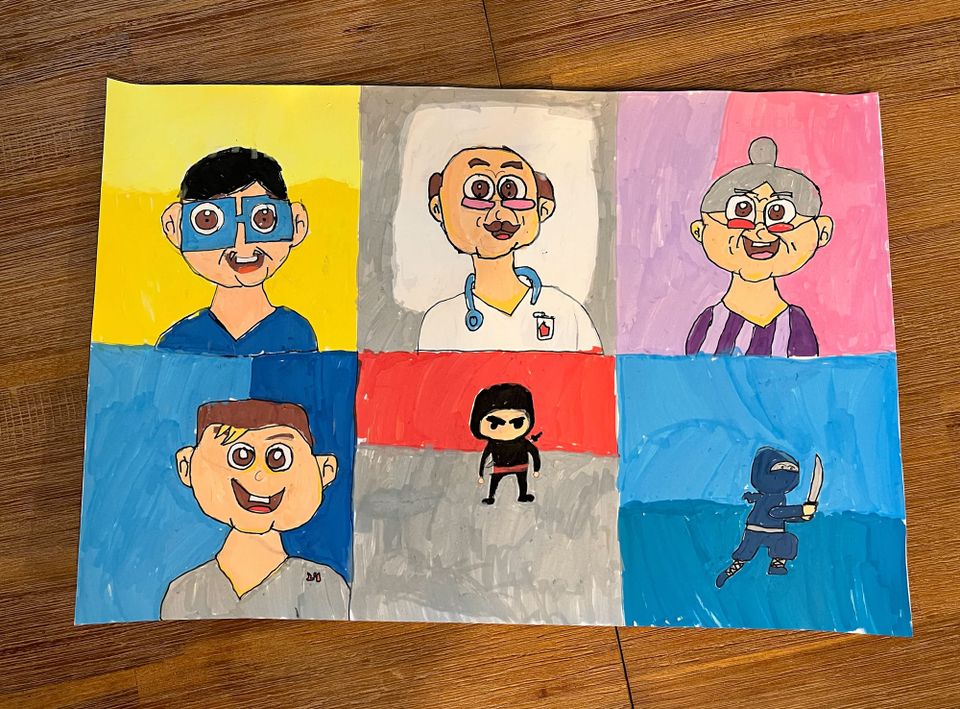
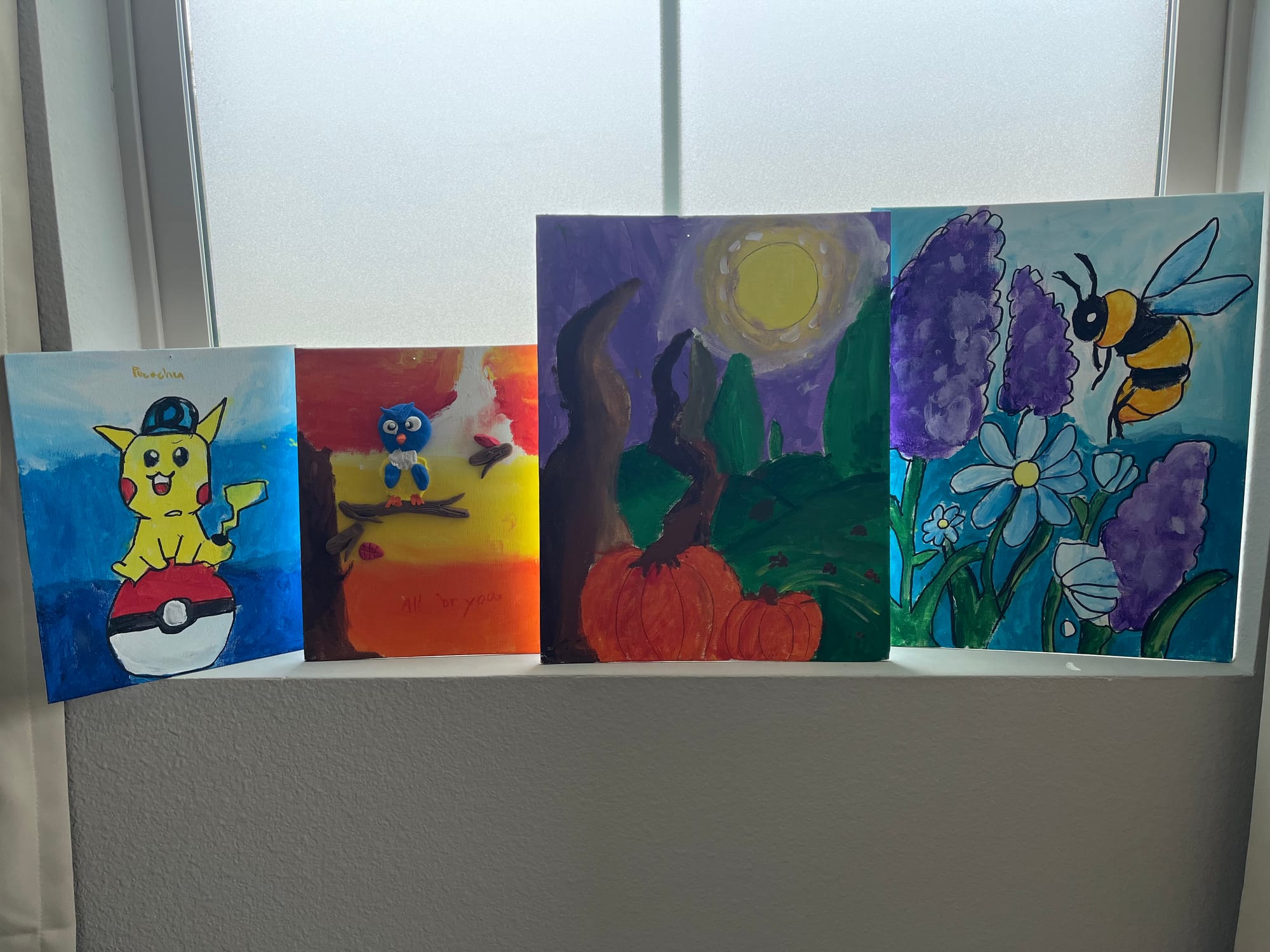
This year, he started art classes once a week. I wrote in the “What should we know about your child” section that he may need help focusing and listening.
After his first day, the art teacher said she couldn’t believe it was his first time doing art. That he was focused the entire time.
Today, we had our last parent-teacher conference with his charter school teacher. She said he was a joy to have in the class. She loved his blunt honesty, his enthusiasm and how helpful he was to the class. She said she could tell how hard he tries to do well.
I’m glad we didn’t stay at that school that couldn’t recognise my son’s unique gifts—his kindness, his generosity, his open-hearted affection—and who saw only his deficits.
And I wish we could all see the uniqueness in those who are just a little bit different.
"So what's been interesting in working with you, Tiffany, is that you're a very good editor. You are a good editor, and a lot of the time, it's more like talking to a colleague than a client, so I really have to be careful about where I push back. Like, there were tiny things that were judgment calls as far as the actual physical text, you really clean things up already. You have real skill as an editor."
In case anyone wants to hire me now 😂
Jokes aside, if you're in the market for an excellent nonfiction editor, Martha is the best. Tons of experience, super organised, detailed, and thorough. I've been working with her on various projects since 2022, and she has a wonderful intuition for what works for a manuscript/essay, where to go deeper & how to get me there.
00:15
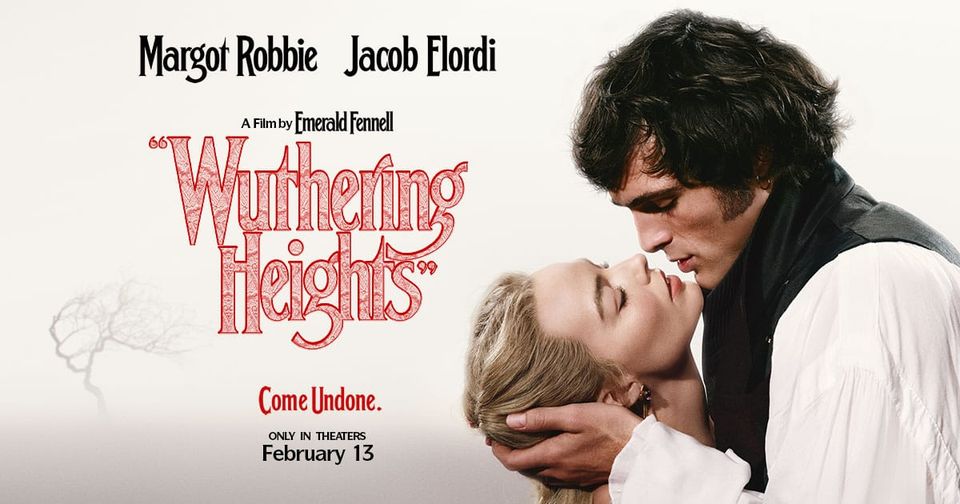
Why extra servants but no Hindley. Why does Joseph get to exist? Why Zillah? She's not even in the first generation.
I don’t understand.
00:27
Why does Nelly get to be Asian but Heathcliff didn’t get to be black!
Why is EDGAR brown but not HEATHCLIFF!
WHY! WHY!
(husband cackling next to me)
00:36
Atmosphere and soundtrack decent at least. It's a very aesthetic movie. Almost makes it worse, because THE POTENTIAL.
00:37
JOSEPH AND ZILLAH HERE JUST SO THEY CAN BANG? WTF YO
00:43
Can't believe they're making this a tragic thing with Cathy needing to marry for money. How dare they.
00:51
The costumes tho
1:05
What's with the eggs
They’ve made Isabella a joke. Good lord.
Husband just glanced at my look of disgust and asked, “What’s wrong??”
With a smirk.
1:08
"We must not get the mopes."
I shall use this from now on.
1:09
FUCKING ISABELLA GOOD LORD OH MY GOD
(husband cackling)
1:16
Heathcliff's anger is hollow because of how they've set it up. Very disappointing. Stripping Heathcliff of what made him so rageful to nothing but a rejected love is criminal.
1:27
The way they fucked up every character
1:29
Oh really Cathy? NOW your conscience says you can’t cheat on your husband? 😒
1:34
Husband kept wondering why Nelly’s in this movie at all when there’s no Lockwood, but I guess they put her in just to be a villain.
So rude.
1:35
Husband: What is this movie
Me: YOU WANTED TO WATCH IT
1:38
Husband: (laughing)
Me: (disgusted look)
Husband: AHAHA IT’S SO DUMB
1:43
Really? Gonna break up twice? Fucking ridiculous
1:49
There’s no buildup to Heathcliff’s unhinged behaviour just because of another rejection.
Makes no sense.
1:50
Isabella writing her letter to Nelly on Heathcliff's behalf is just—
For Cathy's attention
what the actual fuck
1:53
Cathy demanding to be called "Mrs. Heathcliff" is insane.
She DUMPED him. TWICE.
The absolute gall.
1:57
Husband: This is so boring.
...........
2:01
This movie did Nelly so dirty.
2:05
So dramatic but not in the way Wuthering Heights should have been dramatic.
Also, why is Edgar ok with Heathcliff all of a sudden? Make it make sense.
2:08
Not feeling these classic lines from Jacob Elordi, sorry.
END
We survived!
Husband: How did they make it so boring?
Me: How did they manage to ruin actually everything?
Conclusion: We didn’t expect it to be great, but at least interesting (per Husband), but it was shallow erotica dressed up in pretty aesthetics and fancy costumes.
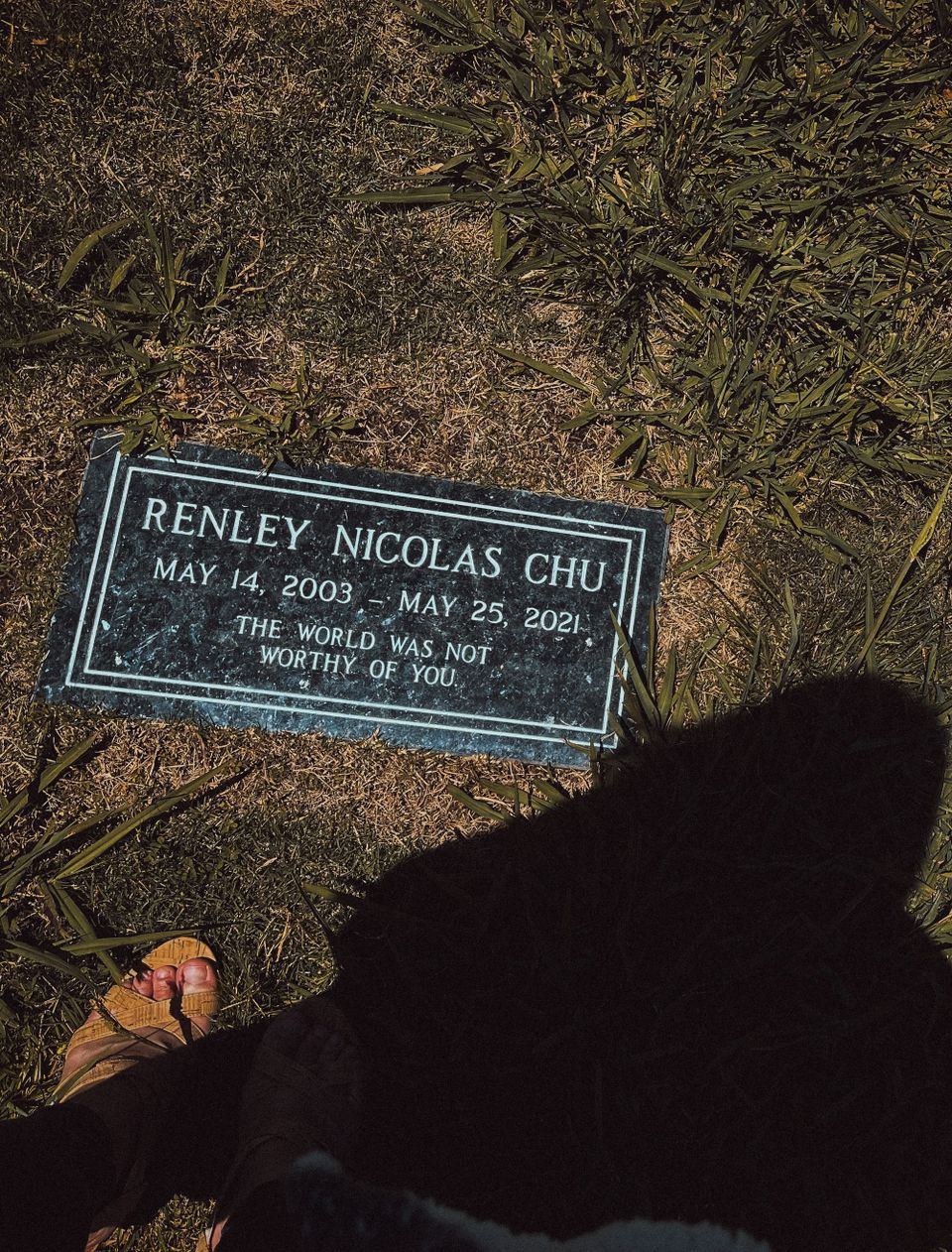
The memories would slam against me like the waves of an incoming tide, sweeping my body along to some strange new place—a place where I lived with the dead.
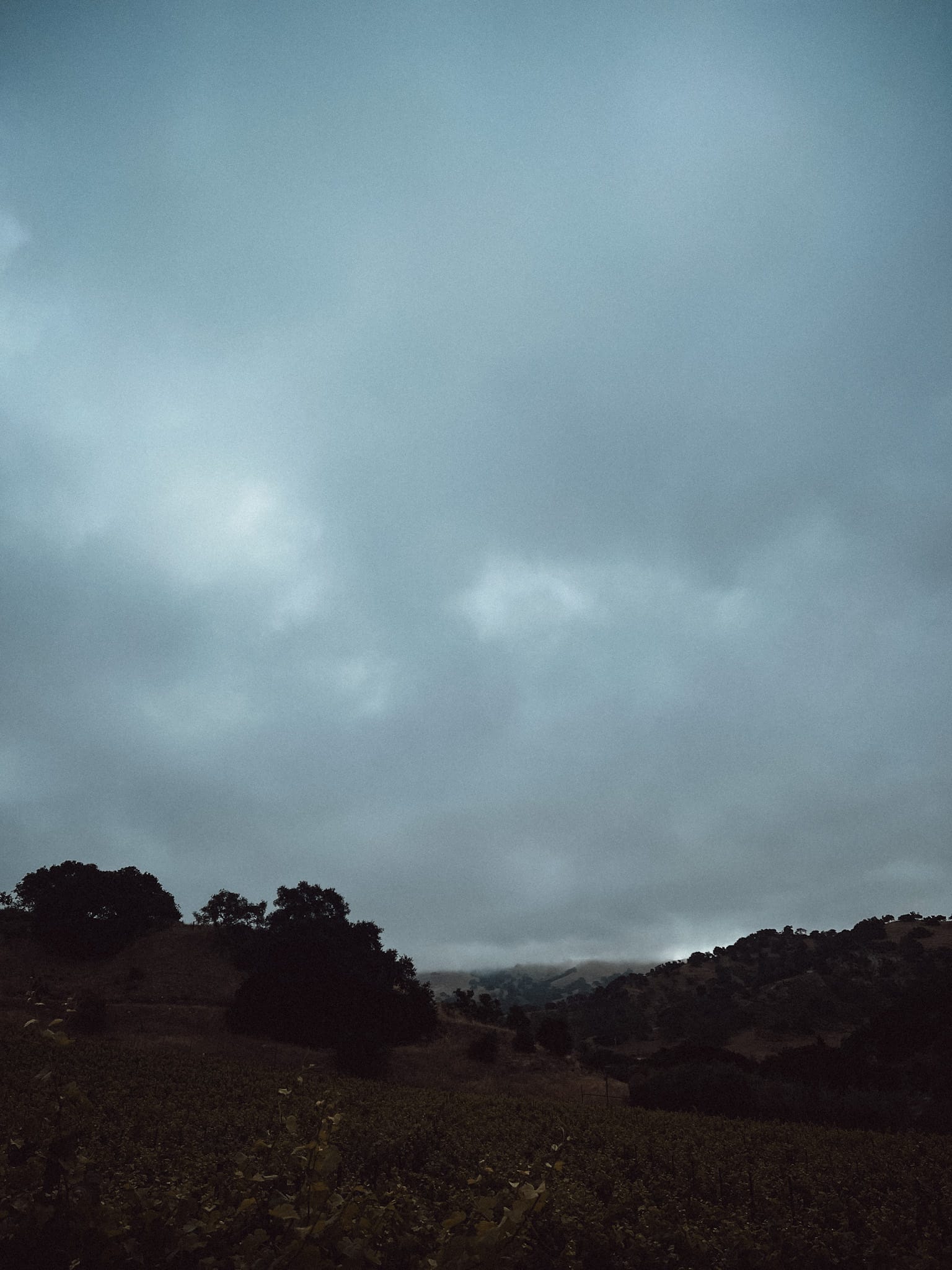
the creek that carried your ashes to freedom
let this be my glass bottle in the sea and hope it finds you wherever you are, because music was a sacred bridge you crossed to find me, and without you, I've struggled hear it again.
(the one closest to who we are, he said—a favourite)
Your memories, aren’t your destiny
If I looked you in the eye
And showed the broken things inside
(I won’t run away, I won’t run away)
If you saw my darkest parts
The wicked things inside my heart
(I won’t run away, I won’t run away)
(the one I sent him while on one of our walks, which became his favourite song)
You taught me the courage of stars before you left
How light carries on endlessly even after death
With shortness of breath you explained the infinite
How rare and beautiful it is to even exist
(the last song he sent me. "Pretty," he texted.)
And you let me in when I was at my worst
The moment when I heard you say my name
It's the first time in so long I'm not afraid
I'm not afraid
How you loved this song.
Maybe I could be your only prize
And maybe you would light it white
Even when I'm falling back
You'd still believe I tried
And maybe we could be a symphony
And maybe I could learn to play
You could write that story
While I just ride the wave
I sang this for you once after you died. Like a lot of things, it's now lost.
Those you've known and lost still walk behind you
All alone, their song still seems to find you
They call you as if you knew their longing
They whistle through the lonely wind
The long blue shadows falling
All alone, but still I hear their yearning
Through the dark, the moon, alone there, burning
The stars too, they tell of spring returning
And summer with another wind
That no one yet has known
For that time we listened to it together on the road to the mountains. When M said it was a dumb song, and we argued vehemently with him and continued to play it on repeat while E sang "Where are you now" over and over. And you typed, "Atlantis," and we laughed a lot. Like a family time we never got to have in person.
You were the shadow to my light
Did you feel us?
Another star
You fade away
Afraid our aim is out of sight
Wanna see us
Alight
Where are you now?
Was it all in my fantasy?
Where are you now?
Were you only imaginary?
Where are you now?
Ah, a song I found after you. You would have liked it. Can you sing now?
This bitter earth
And if my life is like the dust
Ooh, that hides
The glow of a rose
What good am I?
Heaven only knows
It reminded me a little of this one you sent me:
And we'll walk until
A new day will break
Till the hurt wears off
And the storm will fade
We will talk again
About the difference
And we both will see
That our love has grown
I suppose death leaves a lifetime of unanswered questions, but I suppose you did warn me you would ruin me, though it wasn't in the way you expected, and I did mean it when I said I would love you nevertheless. Because so you did, and so I do.
A scar I can't reverse
And the more it heals, the worse it hurts
Gave you every piece of me, no wonder it's missing
Don't know how to be so close to someone so distant
And all I gave you is gone
Tumbled like it was stone
Thought we built a dynasty that heaven couldn't shake
Thought we built a dynasty like nothing ever made
Thought we built a dynasty forever couldn't break up
And even though you know I'm generally a downer about Christian songs like this one, this was playing on the radio, and the bridge made me pull over while driving to a doctor's appointment and burst into tears. In the aftermath, this reminded me why I dislike these sorts of songs. I mean, the emotional manipulation.
Oh death, you have lost your sting
Oh grave, you have met my King
Oh fear, are you trembling?
We both know who wins
We both know who wins this fight
I love you. Come back.
forgot about this until I added a new one today, so thought i'd share a gliimpse of my less serious side
5/20/26
me: do you see my eye bags?
husband: it looks like your eyes got stung by a bug
11/30/24
husband: did you do work?
me: yep
husband: do you feel better?
me: lots
husband: you’re so weird. i don’t relate at all.
11/28/24
husband: you’re the queen of spite. locking me in your grudgery
8/17/24
husband: you’re like an old lady with your routines and your cross-stitch
8/10/24
honey: are ponies ponies or do they grow into horses?
6/30/24
me: (talking about a time we went to disneyland) it was that one year you guys were trying to keep me alive
honey: that’s every year
6/28/24
me: writing joanne and i say every month that the next month will be our hermit month, and then we always end up socialising too much, then say the NEXT month will be the hermit month. so sad we never get a hermit month
husband: uh you don’t even see anyone..
6/28/24
husband: (referring to my lotr post) so uplifting and positive
me: ew is it too positive. i should tone it down.
husband: what no. it’s like, normal-people-level.
5/28/24
me: (when the coffee’s out) I CANT LIVE LIKE THIS
e: mommy i’ll kill the soldiers with you and save you
me: what
5/6/24
E: is ren gege in heaven
husband: Yeah
E: awww what about his snacks and toys
2/26/24
m: (shows me a reel of a guy brushing highland cows)
me: my dream 😍
husband: really? you’re gonna go out there with your body falling apart and scoop up their poop?
1/28/24
me: gonna go write
husband: why tho
me: huh?
husband: it’s so much work
1/13/24
me: it’ll mess me up
husband: you say that like you’re not already messed up
12/20/23
daddy: i dropped tiffany on her head when she was a baby and i thought, “oh no, she could have been a harvard child but now she’ll only be ucla”
12/9/23
e: when i’m 20 i’m gonna be so high
11/20/23
(e’s comments during LOTR marathon)
“(gollum) needs a shirt”
“i love this movie. this is my favourite movie”
“why doesn’t (aragorn) say thank you (to elrond) for the sword?”
11/3/23
e: mommy, you’re the CUTEST mess
11/6/23
me: elliot what are you thankful for?
e: my brother ren
me: huh why?
e: because he’s special
10/20/23
husband: i can tell when you’re angry
me: how
husband: you go scary cold and have this death stare
10/13/23
me: (after scolding e about interrupting the teacher too much in class)
e: mommy i have a surprise for you (gives me a little spinner toy). do you like it?
me: (still grumpy) uh huh
e: remember mommy you have to take a deep breath when you’re mad
10/6/23
me: (coughs)
e: are you sick, mommy?
me: yep
e: you’re always sick
9/22/23
husband: let’s watch a fun movie
me: boring
husband: it’s about girls beating up boys
me: ooh
m: and lesbians
me: well why didn’t you say so
9/9/23
husband: my love you need to relax
me: but i feel like if i let my shoulders loosen my boobs will fall off
9/7/23
e: you have to buy this blue t-shirt
husband: it’s the tk shirt and you’re not in tk
e: but i want it
husband: but you can’t
e: if you don’t buy it for me i’m gonna cry
husband: ok cry
e: …
m: cry. come on, hurry up
8/25/23
e to e: you’re my baby sister. you’re my best friend. i love you forever
8/23/23
e: when i grow up i wanna be strong like endora阿姨 with big big arms
8/22/23
me: i REALLY need these boots
husband: why? you don’t even go out
8/20/23
me: what if i become a workaholic?
husband: you ARE a workaholic
8/17/23
e: (while kobi is begging him for food) i can’t give you this because your throat will owing and you will DIE
8/12/23
e: my dad’s name is “my love”
8/4/23
e: bye mommy i’m going to target to buy stuff!
6/30/23
e: i like summer school because there are real kids
me: so your other school had fake kids?
e: yeah
5/20/23
me: i’m fading
husband: you’ve only been awake for two hours
5/19/23
e: miss lorena and miss bingbong
husband: miss habiba?
me: it’s habiba? i thought it was bingbong this whole time
5/1/23
husband: i feel like your brain is like, TOO rational sometimes
4/29/23
e: (to nichol) you’re my wife. i want you.
4/13/23
e: i wanna go 洗 car
4/13/23
e: i’m gonna go see henry
me: who the duck is henry
e: henry! i like henry. my brother henry
me & husband: …it’s renley
e: no it’s henry
husband: renley
e: i can’t talk about this anymore
4/4/23
me: do you feel loved
husband: sometimes
me: why only sometimes!
husband: when you’re awake
me: ..how am i supposed to love you when i’m asleep
husband: exactly
3/28/23
husband: i really like how my car knows i’m near and unlocks for me. makes me feel known. and seen.
11/21/22
e: mommy, you’re my superhero
10/23/22
e: i’m your son?
me: yes
e: no way
10/23/22
me: e you’re adopted
e: ohhHHHHHhhh
(husband laughing in the background: “ohhh” like he knows)
me: your first mommy couldn’t take of you so that’s why we’re your mom and dad now
e: WHAT are you talking about
10/6/22
me: wanna come over for cake?
mom: oh ok for your husband?
me: no for our dog
mom: …
9/27/22
me: my love, look at those booties
husband: my love, can you please buy some underwear
9/26/22
e: (pretending to talk on the phone to an unknown person) wait wait don’t go yet. i need my ramen and coffee. ok bye. beepbeep beepbeep.
9/20/22
husband: jesus is here (pats his chest)
e: (pulls his shirt and looks under it) no he’s not
9/6/22
e: (looking at my profile photo of us three and ren) it’s me and daddy and mommy and ren 哥哥, my favourite people
8/2/22
me: my legs feel like they don’t wanna work
husband: MAYBE you should have eaten lunch
me: MAYBE you should stop bossing me around
husband: MAYBE you need to work on submitting
me: wow
7/30/22
E: 爸爸我的poopoo游泳了
7/23/22
husband: I’m just like your fingernail skin. You just wanna rip me off, play with me, then discard.
7/4/22
husband: Tesla looks like a bar of soap
7/1/22
E: mommy, you’re so not cute
6/21/22
Me: you’re a poo
E: i know! =D
6/18/22
Dad: (to mom) you’re supposed to eat cheese for calcium
Me: yeah!
Mom: yeah to you. Eat properly
Me: i’m young so it’s fine. You’re old so it’s more important to eat healthy
Mom: except your body is more shit than mine
6/18/22
E: I wanna be neutered
6/11/22
Me: I wanna bang
Husband: you’re so weak it’ll be like banging a floppy dead fish
6/10/22
E: 媽媽我的屁股生病了
6/1/22
Husband: my love, you’re so skinny you look like a drug addict
5/30/22
E: Kobi's’s my best friend. And mommy.
5/20/22
Endora: there are more balls you can eat
5/17/22
E: Spider-Man 會打架。我也要打架。爺爺奶奶說不要打架
5/16/22
E: (praying for dinner) thank you God because I like Hannah and I like Ren 哥哥 and I like Jeremiah. Amen.
5/14/22
Husband: should I get another keyboard
Me: Uh you have SO MANY. Do you really need so many of the same thing
Husband: I don’t judge you for your books
Me: what is there to judge
Husband: do you really need so many editions of the same book? They’re the same words!
5/1/22
E: Hannah, 我一直一直想妳
H: (silence)
E: Hannah? 我說我一直一直想妳
H: (silence)
(Moments later)
H: 爸爸我聽不到音樂
4/26/22
E: 我不想給別人看
Me: 看什麼
E: 看帽子
Me: huh why
E: 因為不可愛
4/25/22
Me: you look sleepy. 你還要睡嗎?
E: 我不要睡,我只是 grumpy
4/23/22
(On pirate night)
Husband: I’m a pirate
Me: yes you are
Husband: I stole your heart
Me: (bursts into hysterical laughter)
(When laughter subsides)
Husband: I raided your booty
Me: (laughs hysterically again)
4/23/22
Me: go shave
Husband: I see it’s back to being mean to me day. Poor me.
4/22/22
(Seeing Cinderella)
Me: look Elliot, 是公主
E: 不是我的公主
Me: 你的公主是誰
E: 我的公主是 Hannah
4/21/22
E: 我喜歡坐船,好多好吃的,還有toys,好多pizza
3/5/22
Me: Elliot, what do you wanna be when you grow up
E: I wanna be doctor
Me: doctor? Why?
E: then I can doctor you so you don’t get sick anymore
2/21/22
E: 哇你好漂亮!我想抱妳,妳好可愛 (runs out)爸爸,媽媽好可愛!
2/11/22
Husband: don’t die
Me: why would i die
Husband: i dunno i just worry
Me: how would i die? I’m so young and hardy
Husband: (snorts)
1/24/22
Me: 弘嶽 你爸爸叫什麼名字?
E: 叫叫叫朱朱朱爸爸
1/14/22
E: (out of nowhere) HELP HELP I KNOW JESUS I KNOW JESUS I KNOW JESUS
1/9/22
Me: I don’t love you anymore
Husband: I know
Me: what
Husband: you wouldn’t even love me if I was a walrus
1/2/22
Me: you’re so dumb. Why are you even an adult
Husband: it’s not by choice
Husband: (in the kitchen) goddammit
E: 媽媽,爸爸說 curse word 了
12/31/21
H: mommy call the doctor-
E: NO IM DADDY
12/17/21
Me: my love, you fulfill all my needs
Husband: except your need for a pussy
12/13/21
Me: you’re compassionate
Husband: no I’m not. Not anymore
Me: you are
Husband: nope. Orphans are on their own. I don’t care. (Instantly starts crying)
11/24/21
Husband: I’m underground. Like an ugly mole. Blind.
11/13/21
E: (after leaving Huntington) mama where’s the garden
Me: it went home
E: (starts crying)
11/11/21
Honey: I love balls. They taste good.
11/10/21
Honey: (while poking my butt) why is your butt so squishy? You need to exercise
10/30/21
Husband: look at (Hercules), he’s all grey
Me: just like me
Husband: yea what’s wrong with you
Me: ..I was half joking but ok
10/17/21
E: I want the squirt-squirt (repeats several times because nobody knows what he’s talking about)
Mom: oh the spray bottle
E: yea squirt-squirt
9/28/21
E: Daddy you’re like Scar. Mommy, you’re like baby (Simba).
9/24/21
E: legoland! Huzzah!
9/23/21
E: my mommy
Husband: mommy’s mine
E: MINE
Husband: mommy’s mine
E: MINE. MY MOMMY
E: 我想要跟媽媽睡覺。你不要過來
9/14/21
Husband: you’re my booty
Me: what
Husband: I’m a pirate
9/11/21
(In the middle of the night after E kept waking up crying)
H: (screaming) 不要哭了!(smacks E) 睡覺!
Me: H gets a cookie because she slept well. E doesn’t because he kept bothering everybody
(Later)
Me: H do you wanna share a little with 哥哥?
H: (pinches a tiny crumb off)
9/10/21
E: 去 Legoland 好開心
Husband: (while on the fairytale boat ride at legoland) my love look it’s you. It’s Grumpy.
9/9/21
Me: my love, am i your salmon
Husband: my what? You’re my everything so I guess you’re my salmon
E: 你是媽媽
H: 我不想吃媽媽啦
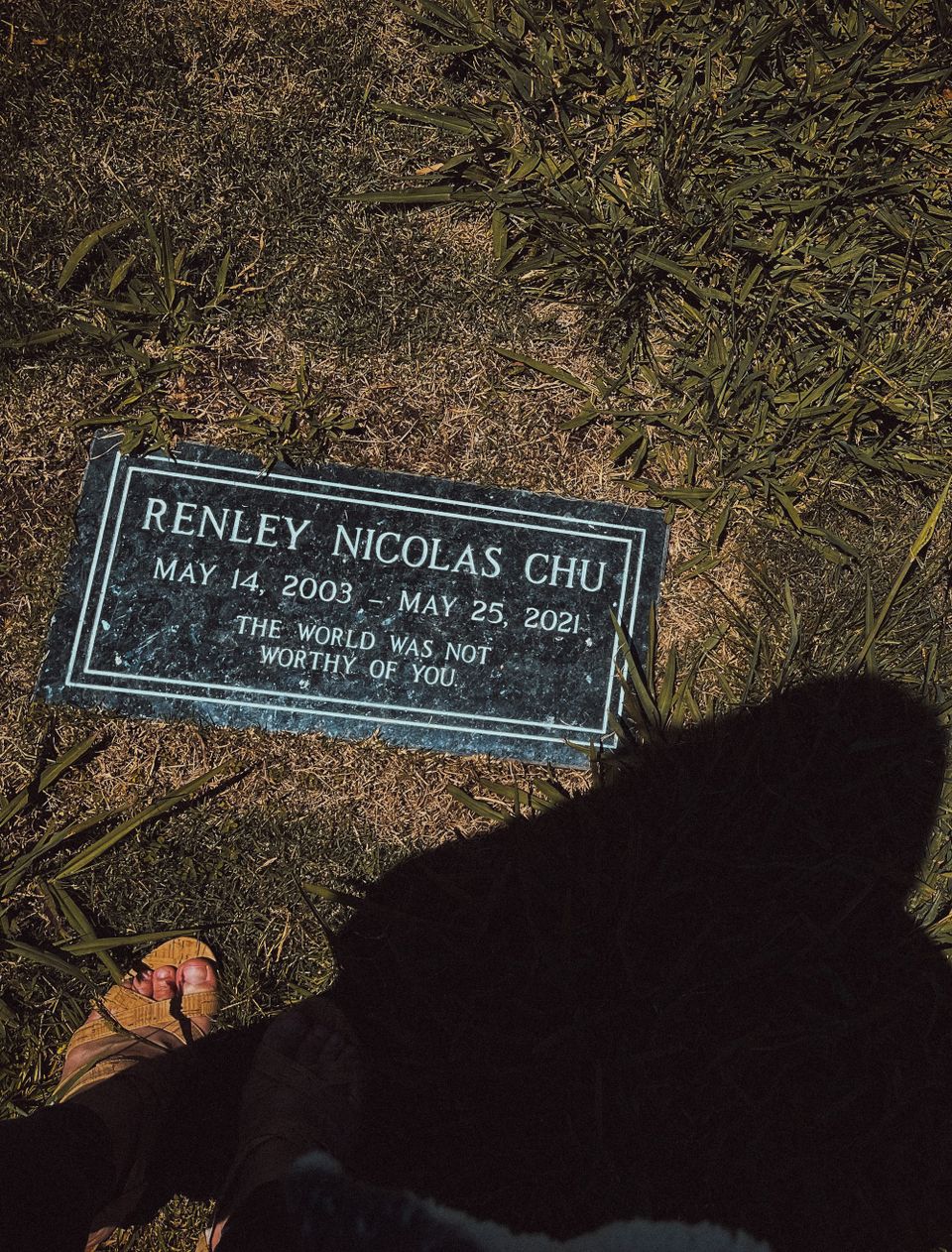
How is it that five years have passed, and your absence still grows and scoops out more of me as time goes on? I feel like I have less to give than ever before. I'm so tired, so incapable of giving to those I love the way I want, the way I used to be able to. I'm just so much, so much less.
To give with an open heart to all who needed or wanted—that was your gift, not mine.
Your openness and honesty gave me courage to show myself more, and I'm still wrestling with whether or not that's a good thing.
What if I cocooned myself again? How terrible would it really be? I was raised to be the strong one, and I always had been. To show weakness is such a vulnerable thing. So few have been allowed to see it. So few have ever seen me cry. I'm not pathetic. I won't be that pathetic thing I used to be. The high-maintenance one. The emotional one. It's been so long since people called me that in my adolescence, and I'm no longer that person.
I am controlled. I am put together. That's how they describe me now, and I fought with all my might for it.
I won't forget again how precious that vulnerability is, how you affirmed me for protecting it, how you protected it for me.
"Arwen, who gives her love to only a select few, as she should."
Thank you.
I miss you.
Subscribe to continue reading
Subscribe to continue reading
Subscribe to continue reading
Subscribe to continue reading
Subscribe to continue reading
Subscribe to continue reading
Subscribe to continue reading
Subscribe to continue reading
Subscribe to continue reading
Subscribe to continue reading
Subscribe to continue reading
review
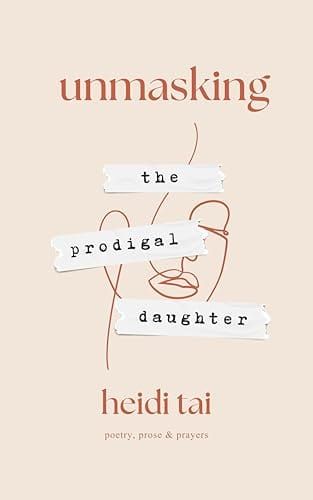
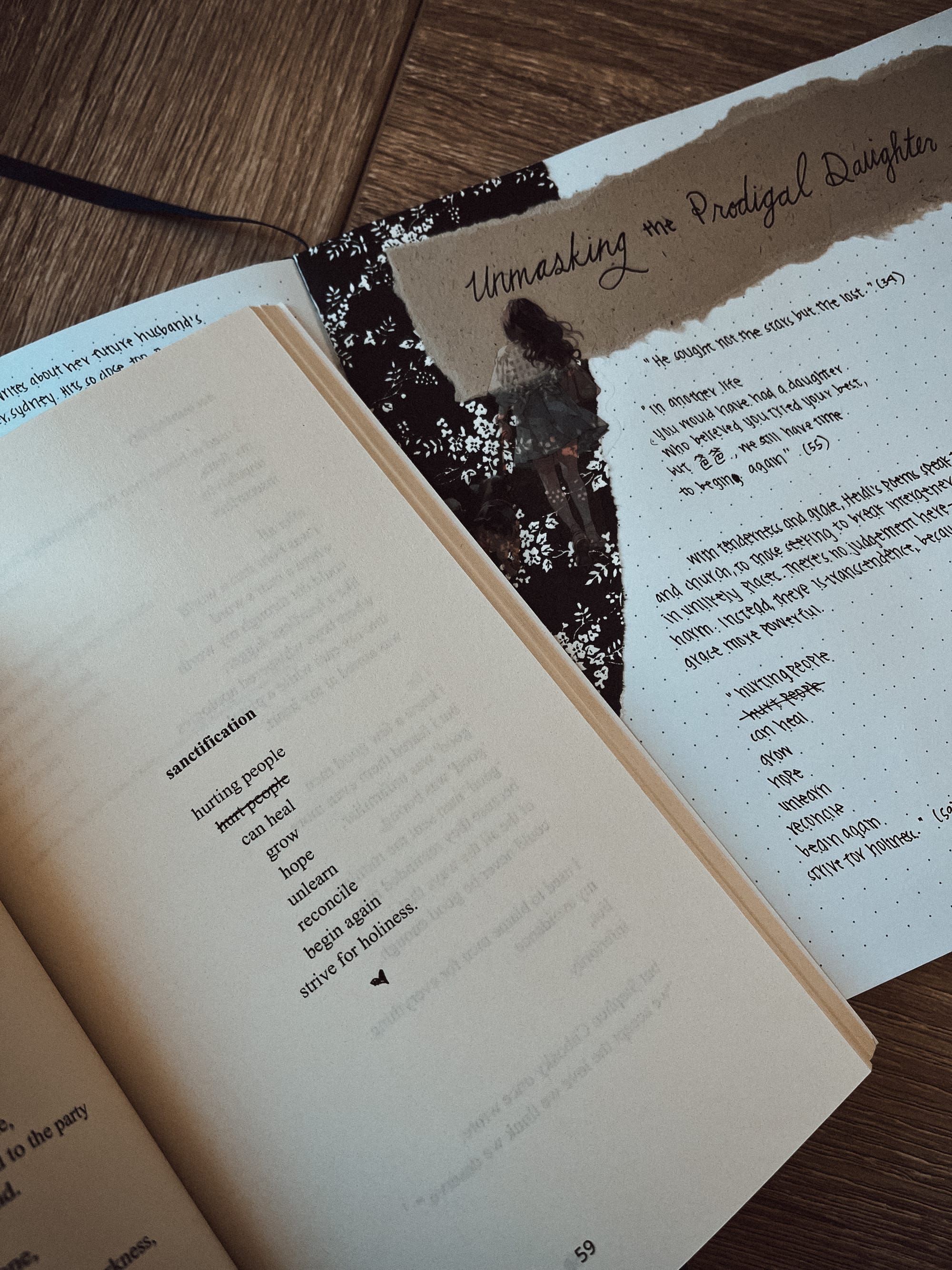
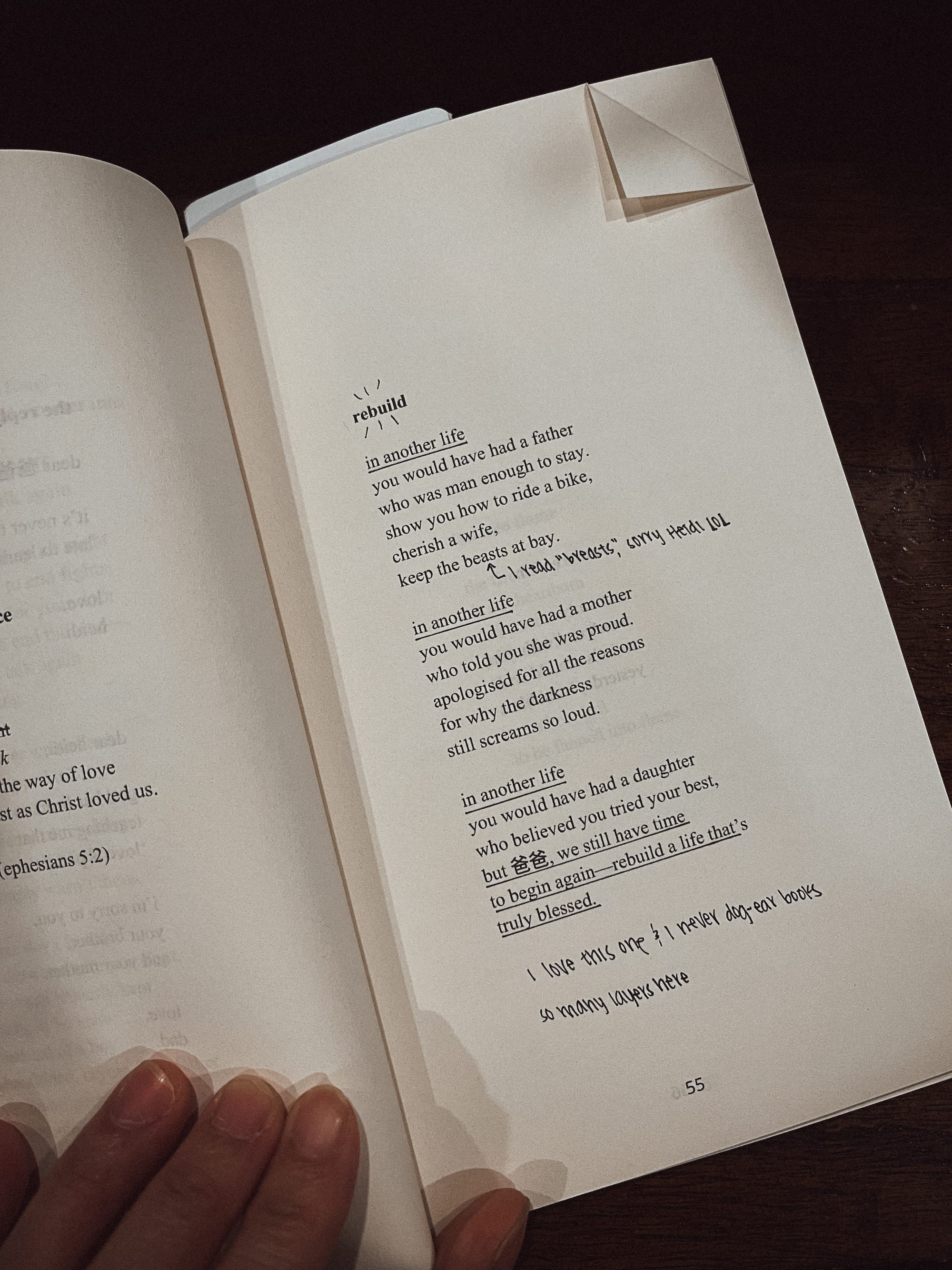
With tenderness and grace, Heidi's poems speak to those who have felt rejected—by parents and by the church—and to those seeking to break intergenerational cycles. She writes from the position of someone who has been a prodigal daughter herself. As a reader, that comes through clearly, as her writing is compassionate while incisive. There is no judgement here, only acceptance, but also no excusing of harm. The way she balances all this with such delicacy is truly skillful. I'm glad this book is in the world.
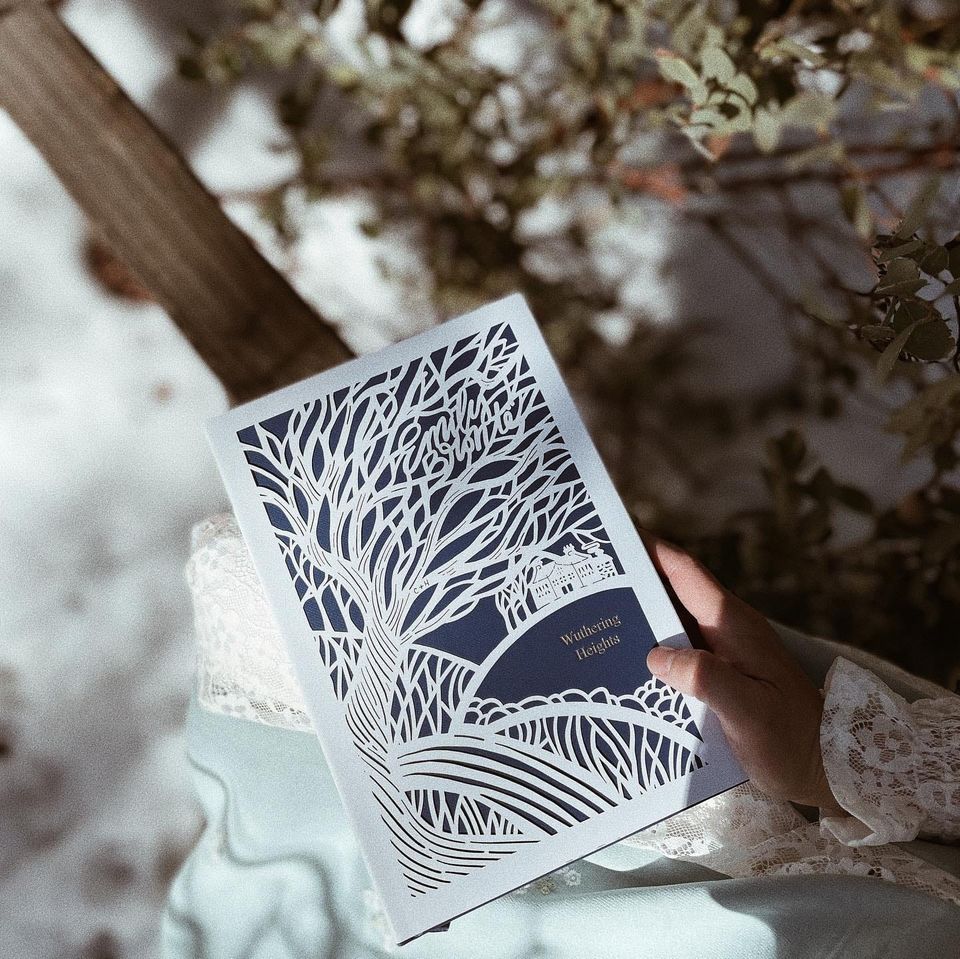
How can any review possibly do justice to so timeless a book? What could I possibly say that has not already been said? Wuthering Heights is the first book I remember loving. I don’t remember now why it so captured my senses even at such a young age when I read it in 5th grade. It is obsessive, codependent, and toxic. Let's not delude ourselves. Yet this obsession drives the book; Cathy and Heathcliff are like a cyclone, whipping everyone around them up into their frenzy without care for anyone else, wreaking destruction everywhere.
One of the aspects I really enjoy about Wuthering Heights is Emily’s description of the moors. Having grown up on the moor of Haworth, in a rather solitary upbringing, her love for its nature are seen clearly, yet she also does little to soften its harshness. And thus does she paint Heathcliff, that he, in a way, mirrors the moors. He is as harsh, and as merciless as the setting in which he is placed, further stripped of humanity by those around him. As far as we know, he could indeed have sprung from the earth itself. I love this book, not simply for the intense, insane love (for lack of a better word here) of Heathcliff and Cathy (which I both feel akin to, yet also repulsed by), but for the tragedy of Cathy, to have been born as wild as Heathcliff and the moor, yet to be forever torn between accepting her true nature and conforming to the expectations of society.
In contrast to hers and Heathcliff’s love, her daughter and Hareton’s relationship arises at a more gradual pace, as they grow from scornful enemies (as Heathcliff intended for them), to lovers standing upon a foundation of mutual respect and the desire to become better for each other. Perhaps not as thrilling, nor as captivating as, “He is more myself than I,” but far healthier—surer. That, I believe, is what finally broke Heathcliff. As the narrator repeatedly observes that Heathcliff sees Cathy in both her daughter and Hareton, to see them then love each other in spite of his best efforts to sow hatred, utterly defeats him.
This is one of those books I can read a thousand times and still find something new each time.
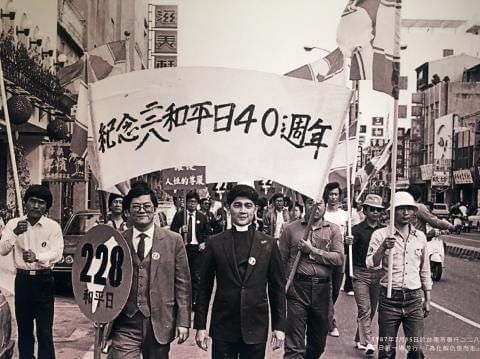
when the government massacred the Taiwanese for daring to speak out against it (the government that had taken over from China after losing to the communists).
It was a period of martial law of mass suppression, murder, and imprisonment for over 40 years. Taiwanese people were not allowed to speak Taiwanese. My parents said they had to hide radios and listen to them secretly.
Tens of thousand of people were killed by the government which covered it up and forbade anyone from even talking about it until the 90s. To this day, the exact death toll is unknown because of all the cover-up.
Let’s not repeat history.
Subscribe to continue reading
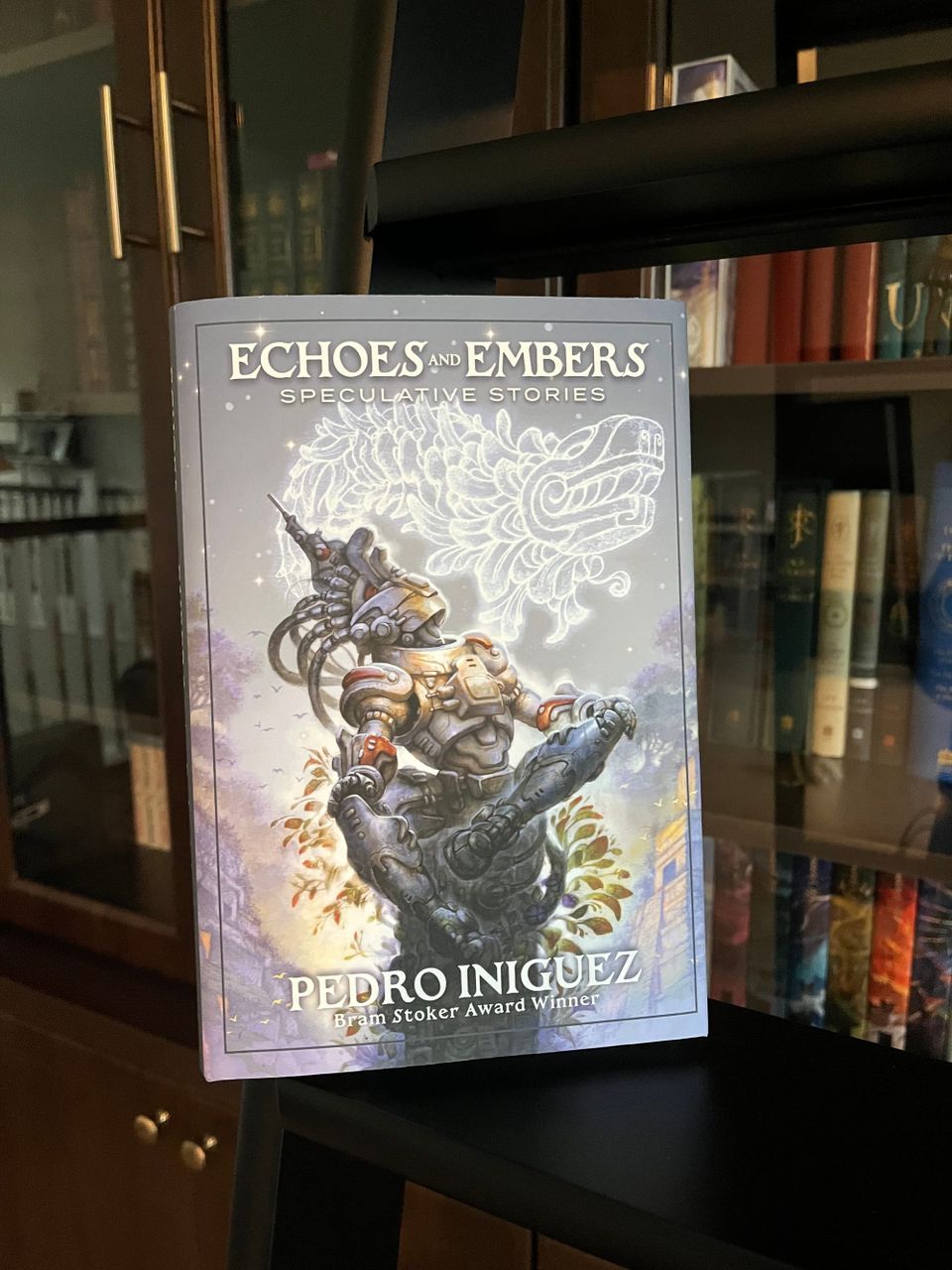
This definitely isn't a book I would normally pick up on my own, but I'm still glad I did. Pedro is such a force in the literary world, talented in so many ways (I just found out he also does archery??), and is an incredibly generous, kind, and supportive human being. How does someone like him exist in the world? I’m truly honoured to know him.
The second story in Pedro’s collection, “A Final Song for the Ages,” broke my heart a little, and I’m still thinking about it days later.
His story, "Do As I Do" was my favourite from the collection, though. It has everything I enjoy in a short story: a strong woman, puppies (lol), and heart. In a post-apocalyptic world, people long for more than survival, and the character(s) in this story learn trust and forge unlikely bonds. Also, never thought I would root for a robot, but there's always a first time..
Overall, this is a book that would appeal to readers who enjoy sci-fi, post-apocalyptic stories with lots of action, aliens, and humanity's fight for survival.
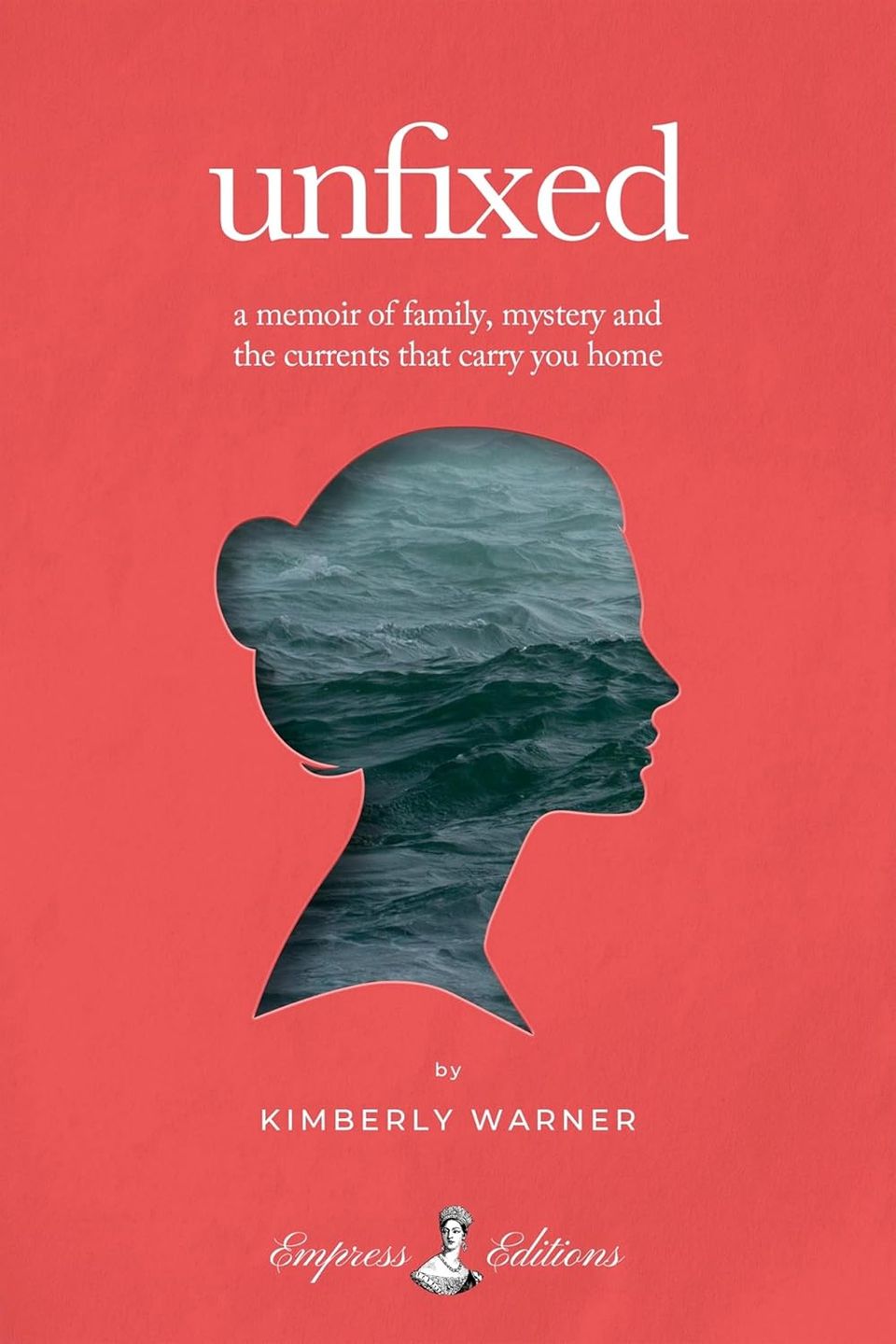
Started Kimberly Warner ’s memoir today, and thought I’d be reading it slowly, but I ended up being swept up in her beautiful writing and story.
I don’t often find myself nodding along as I read. Certain parts, though, were so relatable, I couldn’t help it. The delete button? Yes. The shrinking myself in response to the more chaotic members of my family? Yes. Not having a map for grief? Yes.
And ok, I’ve only finished part one so far, but Unfixed already has my heart. It holds so much of what I already know of Kimberly herself: tenderness, resilience, hope, acceptance—yes, even amidst pain.
Update (23 Feb 2026):
I finished Part II. This part hit really close to home for me in many ways. (SPOILER ALERT) At the end of chapter 10, Kimberly shares about volunteering her budding film-making skills for a grief support organisation. She writes about developing a theatre troupe, and a group of young adults who perform a skit about grief. In one part of the skit, the actors go, "Turn around if you'd give up everything you've learned since your person died, in order to have them back," and none of them turn. The idea being that in spite of the pain and heartache, grief made them better people.
I don't think I'm there yet. While I agree that in some ways, I'm probably better, overall, I don't know if I am. Of course, it's not so black-and-white, which is the point of the skit. But, I feel like I used to be softer.
In another part, Kimberly writes about her to-be husband's disabled daughter, Sydney:
"Parenting a child with intellectual disability, he's learned that life is messy, outcomes unpredictable, often unwanted."
And then, "I don't know how to get to her, and the absence of that knowing panics me." That line especially caused almost a visceral reaction. I've never heard anyone describe so clearly how it feels to try to connect with a child—my child—with a disability. Why it's so frustrating, but underneath that frustration, so utterly frightening.
I'm in awe.
Update (26 Feb 2026):
Complete. Review:
Kimberly's memoir, Unfixed, is an embrace, a hand holding you through a churning sea. And she herself embodies the kind of grace, resilience, and compassion that comes off every page.
The book is a story about what happens when a life shatters and you’re left with just the pieces lying around you—how you take these fragments and still create a whole life, a whole identity.
“…a midlife DNA test reveals that the man who raised her isn’t her biological father…” and “As she unravels the secrets hidden beneath her family’s story…A mysterious illness takes hold, leaving her adrift in dizziness…”
With tenderness and hope and absolutely beautiful writing, Kimberly traverses unknown waters of chronic illness and identity, and finds that wholeness isn’t about having it all together, or having a perfect resolution, but about embracing and being present.
Subscribe to continue reading
Subscribe to continue reading
Subscribe to continue reading
Subscribe to continue reading
Subscribe to continue reading
Subscribe to continue reading
Subscribe to continue reading
Subscribe to continue reading
Subscribe to continue reading
Subscribe to continue reading
Subscribe to continue reading
Subscribe to continue reading
Subscribe to continue reading
Subscribe to continue reading
Subscribe to continue reading
Subscribe to continue reading
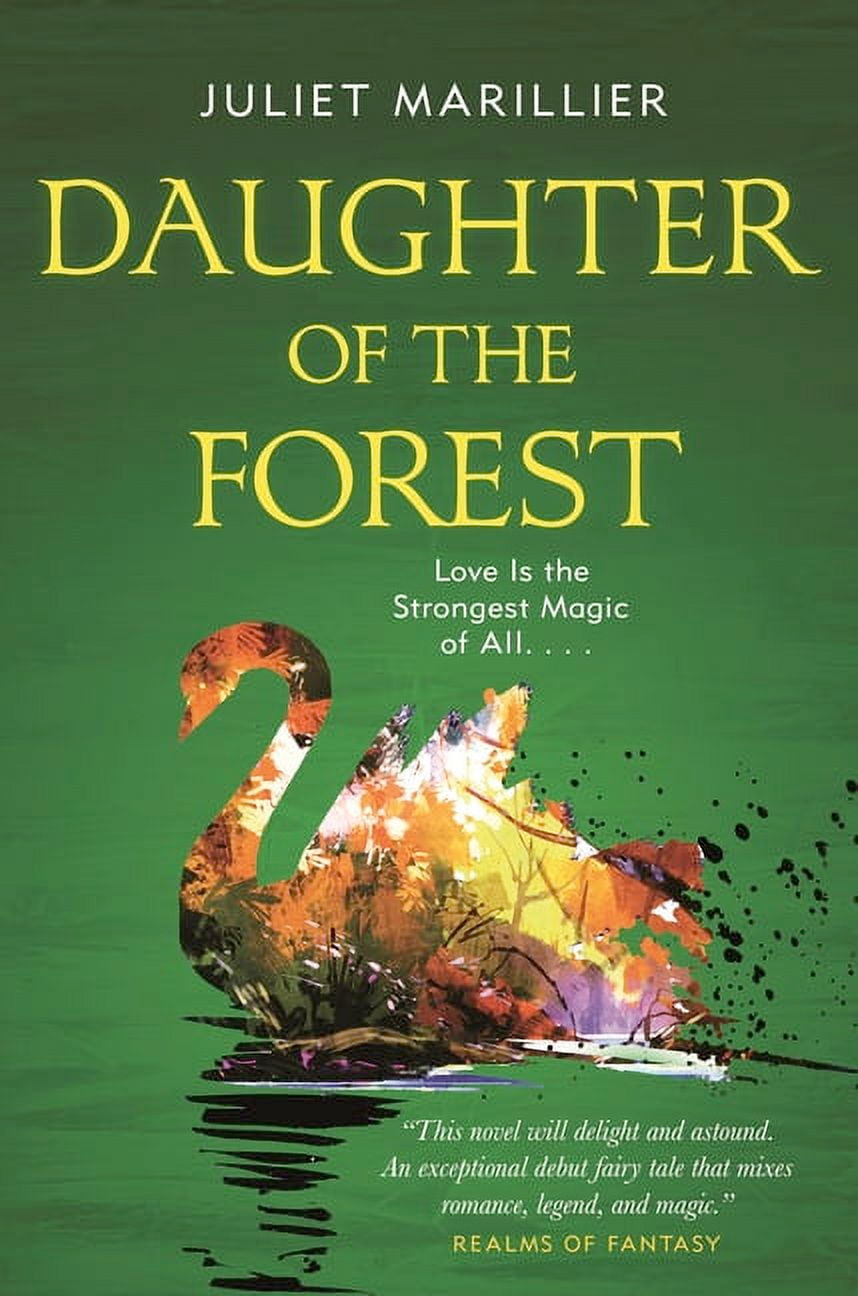
I've finally read this book. It was on my Goodreads "want to read" list for years before I later deleted everything and started over. I don't even remember how I first heard of it, but it would come up in the book world every now and then.
For some reason, I'd always thought it was a light YA romantic fantasy that wouldn't interest me much. The cover and tagline may have something to do with it. "Love is the strongest magic of all"? Please do better, whoever came up with that. While it has fantasy elements, I'd label it as adult historical fantasy, with more emphasis on mythology and Celtic pagan tradition. And like other fairy tale retellings (this one based on the Brothers Grimm's "The Six Swans,") I expected happy, light, simple.
Yes, there is a love story, but it's a very, very slow burn. Very slow. That's fine with me. In fact, the whole pacing of the book, though some might consider it slogging, was perfect for me. Marillier took her sweet time setting up Sorcha's world, her background, her relationships with her family, especially her six brothers, and the magic of the Fair Folk. It's deeply atmospheric with rich, descriptive passages, set against a backdrop of the conflicts between the British and the Irish. This is a book with a deep sense of place and a connection to the earth.
The book follows the tale of the six swans pretty predictably, but what I didn't expect (and what I appreciated) was its refusal to brush over effects of trauma and grief. No one in this book gets a pat, happy ending tied up neatly with a bow. In this, it follows the tradition of Tolkien's The Lord of the Rings, in which "love is now mingled with grief."
There is triumph, yes, but also much loss. The years Sorcha and her brothers were away and the pain they endured through them, her broken home when they return—all have lingering wounds that aren't mended, even after the curse is broken.
That, I think, is what will make this book linger in my heart and mind.
Subscribe to continue reading
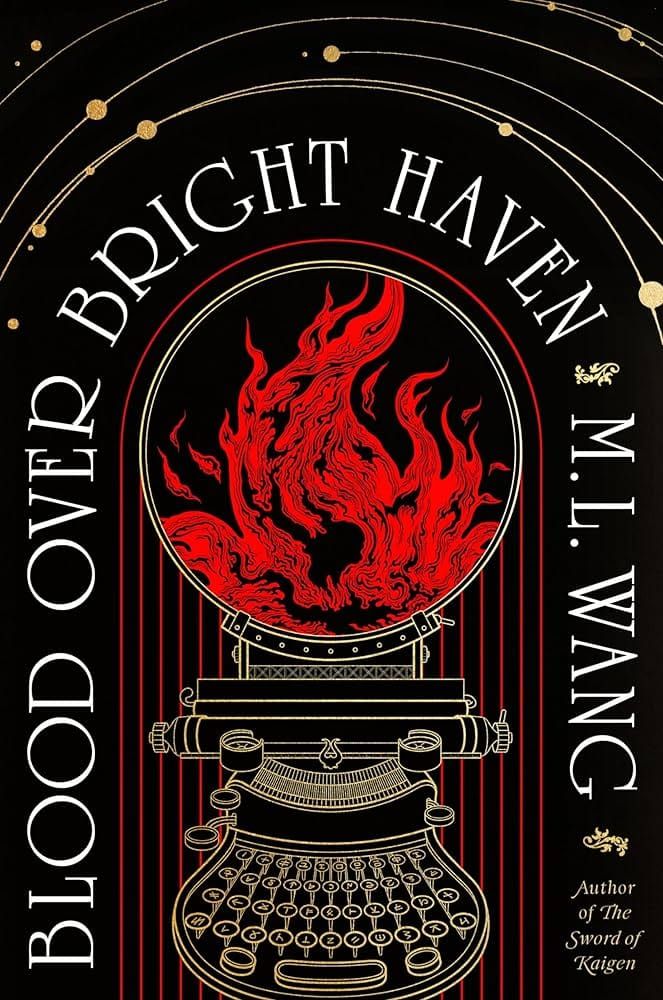
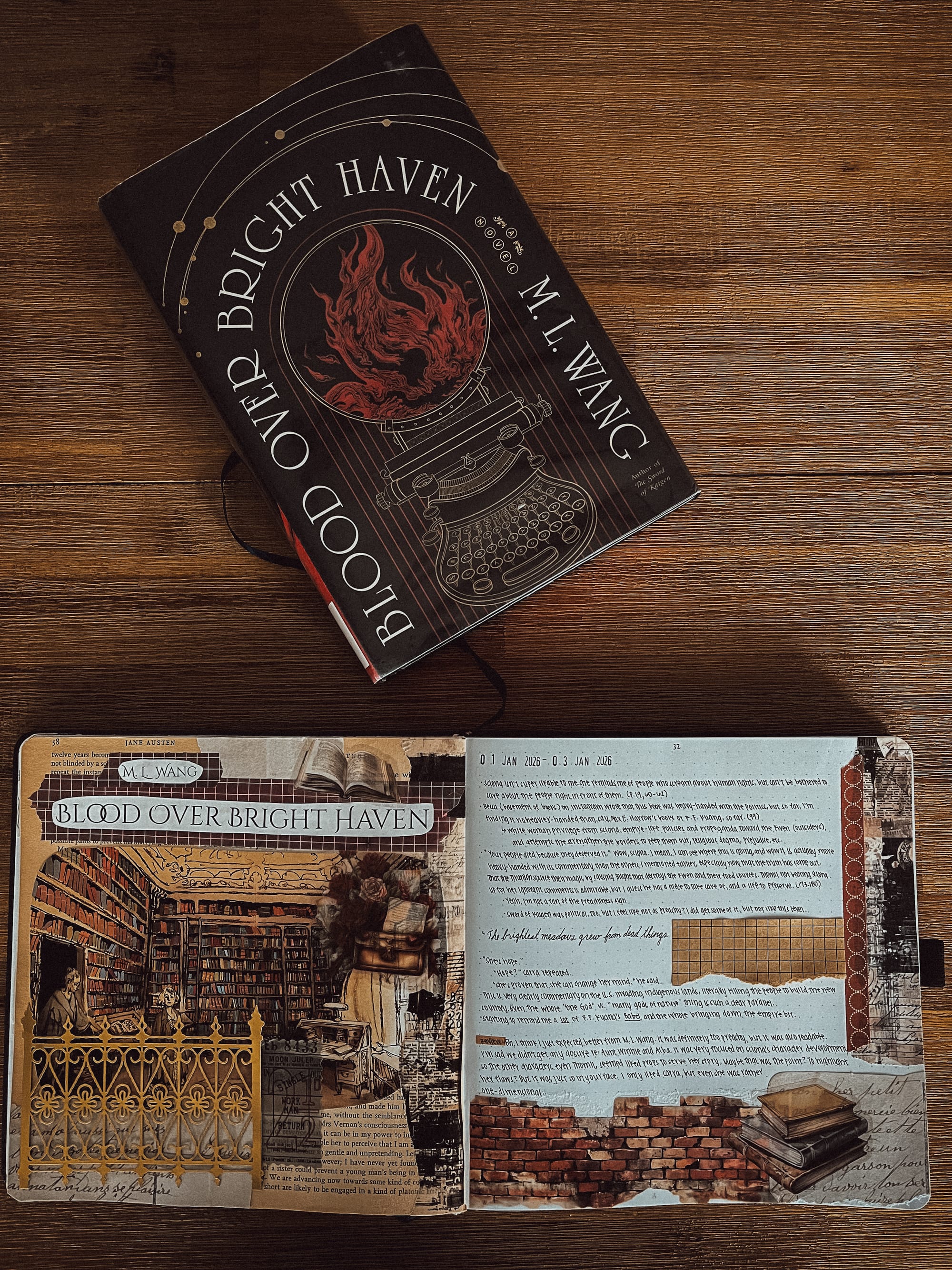
Eh. I think I just expected better from M.L. Wang after The Sword of Kaigen. This one was way too preachy. I have to give credit where it is due, however: it is a readable book, and not difficult to get through at all, nor boring.
(spoiler)
I'm sad we didn't get any closure with Aunt Winny and Alba.
(end of spoiler)
But that's exactly what I mean when I say it was just eh. Blood Over Bright Haven was excessively focused on the main character, Sciona, and her character development, that everyone else—including the secondary character, Thomil—just seemed like props to be used in service of her growth. Perhaps that was the point of the book? The one-dimensional characterisation of all the other characters wouldn't have taken me quite by surprise, except that in The Sword of Kaigen, the characters were much more thoroughly fleshed out.
Which makes me wonder if Wang intended to write the book this way all along.
Because the other thing is, she has a clear agenda in this book; it's extremely preachy to the point of being infuriating. The parallels between Tiran's oppression of the Kwen, and the U.S. of the indigenous and other minorities (and willful ignorance of the human costs to live in such luxury compared to the rest of the world), are obnoxiously blatant.
I deeply dislike when authors do this—treat readers like they can't understand their point unless they shove it down readers' throats, that is—it drives me mad. That's another reason why I didn't enjoy it as much.
However, if the point was to be preachy and drive her point across, keeping everyone except Sciona flat makes sense. Sciona is the one who must come to terms with her white privilege, face the atrocities she and her people have committed on other peoples, both knowingly and unknowingly, and have a reckoning with herself and all she has ever known.
By showing us the process, Wang puts on display how agonising it is, how it can literally bring someone to the brink of death—and yet, free them all the same.
I find this quote to sum up the overarching theme of the book well:
"She's hope."
"Hope?" Carra repeated.
"She's proven that she can change her mind," he said.
So, my personal enjoyment aside, perhaps in spite of what I dislike about Blood Over Bright Haven, it's not about that; it's about the hope of people in power being willing to change, and give justice to those they've harmed.
Subscribe to continue reading
Subscribe to continue reading