We do not always hit the water

Hello, I’m Tiffany, your resident town hermit. Welcome to my fellowship—a haven where you’re free to talk about taboo subjects you can’t anywhere else. Learn more about The Untangling here, or subscribe to never miss a post.
As an indie author, I don't have a publishing team behind me to help market my books, so I rely heavily on word of mouth and reviews to reach new readers. If you've read one or more of my books, please take a moment to leave a review here and/or here. It truly makes a huge difference. Thank you so much!
- Don't forget to enter the international giveaway for the special edition copy of A Girl Made of Time, just by signing up for the Kickstarter page and emailing me your screenshot.
- Free ebooks! Get your free ebooks here! Horror, sci-fi, fantasy, and YA. Check out this wide selection.

Dear Inklings,
Note: This essay deals with suicide and depression. If that's a difficult subject for you, please feel free to skip this issue, take care of yourself, and I'll see you next time. 🩵
Here's a printable PDF of the essay for those who prefer reading offline.
A short playlist to accompany your reading, if you'd like
In eighth grade, I jumped off the roof of my house from the second story in front of my mother.
I laughed.
She screamed.
I was unharmed, but not for long after my mother beat me for the stunt. I say “stunt,” but it was an honest mistake. You see, I’d been trying to fix the window screen, which had somehow popped out of place. My dumbass thought this would be better achieved from outside the house than in. When I’d affixed the screen, my hands blackened with the dust and dirt, an untimely wind slammed my bedroom door shut, and I also had not thought through how to get back in, now the window screen was back in place.
Of course, the only way back into the house was off the roof.
And though my mother’s scream echoed in my ears as I jumped, for a moment I felt like I was flying.
The myth of Mazu is one I learned only recently. The goddess Mazu 媽祖 is one of Taiwan’s most popular deities. Unlike others, Mazu is said to have been a real human girl named Lin Mo—a prophetess and healer who could read the weather and moods of the sea.
One fateful day, a typhoon swept in while Lin Mo’s father and brothers were fishing off the coast. The storm capsized their boat. Fearful for their lives, the girl ran to the beach and fell into a trance that allowed her to project her spirit over the waters to find her family. She was able to guide her brothers safely to shore, but because Lin Mo’s mother didn’t realise what Lin Mo was trying to do, she shook her daughter awake before Lin Mo could find her father.
Grief overwhelmed Lin Mo at her father's death until she climbed to the top of a cliff and leapt into the ocean. But for her selflessness, she did not hit the water; she transformed into a beam of light and ascended to heaven. There, she became the goddess Mazu, ending the storm. She would be worshiped from then on for her protection of seafaring folk.
Jumping has been a pervasive thread in my life ever since my aunt—my mom’s youngest sister—killed herself by leaping off a building when I was perhaps five or six years old. She herself left behind a son younger than I was. She did it while my grandmother watched. Sometimes, I can imagine my grandma screaming for her daughter, watching the trajectory of her fall, and wonder at the horror of witnessing its conclusion.
My aunt was the specter haunting my mother’s family my entire life. Growing up, I was given snippets here and there, but she was spoken of with a hush and a fear.
And we all know that’s the worst way to handle a secret around curious children.
A little less well known about Mazu is her proclivity for rescuing those in need, thus also earning her the name, 靈惠夫人, meaning “Lady of Light and Kindness,” or even, 阿媽: “Mother” or “Grandmother”—a goddess of mercy. Some believe that even after achieving divinity, Mazu did not ascend to heaven, but chose to remain on earth until all created beings achieved enlightenment. She wished to help all beings escape the cycle of suffering, protecting them, soothing them.
I came across Mazu’s story while searching for Taiwanese myths and folklore. Grief and despair are long-standing companions of mine. They’ve been part of my family for generations, you might say. Yet Mazu’s informal name of “Mother,” tugged at an ever-present ache I don’t like to acknowledge.
For a mother that might protect me.
Yet if she was such a mother, why is my aunt dead and my cousin motherless?
As I write this, I recall sitting on the sofa, my mom and dad on either side of me—the space of a body between us—and my mother randomly saying, “I’m so depressed I could jump off a roof.”
And there it was: the specter.
In my family, the threat of suicide showed itself in slammed garage doors and cars speeding off into the night, shrieks of, “I’ll just die in front of you (and then you’ll be sorry),” used to keep me in line. Terror compelled me to apologise for things I didn’t understand, offenses I didn’t know I'd made, slights that were never explained.
Now I know those statements were part of a pattern of speech—learned behaviour, because my grandmother often said the same things to her children.
It makes me wonder: did my aunt also?
The question lingers unspoken, makes me think of the way our mother tongue is not always language, but also the words we inherit, gestures that pass from hand to hand like heirlooms no one asked for.
What if there is a certain silence in repetitious cries for help until no one hears them anymore? And what if, by the time I entered my own Dark Night of the Soul, my mother had already learned not to listen too carefully to a daughter who sounded like a ghost she already knew?
I know so little about my dead aunt, I hesitate to write anything at all. Two of my aunts don’t speak of her to me at all. My grandma rarely did. My mom talked about the time my aunt turned the volume of the TV all the way up. When my mom asked her to lower it so she could study, my aunt broke a mug and scratched my mom’s face with the shard.
My favourite aunt—my dead aunt’s twin—told me the most about her: her desperate need for love, the way she manipulated others to gain it, the many, many threats to kill herself, until the family both feared it and somehow stopped taking it so seriously. She told me about her twin calling her out of important work meetings with these threats—which turned out to be tests of the extent of her loyalty; and of watching her twin take her boyfriends to stores and picking out the most expensive items—to test whether they loved her enough to pay for them. My favourite aunt told me that her own boyfriend's family forced him to break up with her after her twin's suicide—because they could not be associated with such stain.
I see only the aftermath: my grandmother who neglected all her other daughters who still lived for the sake of the one who died…the resentment and jealousy that lingered for decades because of it.
At times, when I was in my worst depressive states, my mom would look at me with a strange expression. I always wondered if she thought of her sister in those moments, wondered if she feared me, wondered if she heard me.
Lifelong depression made me wary of motherhood for myself. Yet when my husband became passionate about orphan care and launched us into the foster-adoption world, I couldn’t turn away, and we adopted our first son when I was 29. The following year, we would begin the process of adopting our second son, Renley.
Choosing motherhood was a leap of faith not unlike the one I took off the roof in eighth grade. What kind of mother would I be? I took every step I could think of to break the pattern I’d grown up witnessing: extensive therapy being one, but also a fierce desire for openness and honesty in our own household. Sometimes, people will comment that my children are too young to be told about certain things, yet I remember being more aware than adults believed me to be when I was even younger than my eight-year-old is.
When she was still the human girl, Lin Mo, Mazu was said to be mute. Thus, she was known as “Silent Girl.” Perhaps her birth into poverty, inability to speak, and experience with grief gave her unusual compassion. It reminded me about Ren's muteness, yes. But I also thought of my aunt, spoken of only in hushed fragments, her whole self reduced to a silence my family maintained for decades. Perhaps that is its own kind of muteness: not the absence of words, but the absence of anyone willing to hold them.
The night my son, Ren, died, I drove to Coronado bridge in the middle of the night and stood against the rail. I listened to the black waters swirl and crash beneath me, the sound all the more deafening for the quietness of the hour. It would have been nothing to step over the ledge, to jump. No one was there at such a late hour. No one could have stopped me.
But I was still a mother, and to my son, I had made certain promises.
“Publish our anthology and my memoir,” he’d written, but most of all, “Live, please live.”
And Mazu, called “Mother” and “Grandmother,” a protector of life, showed compassion toward me as I stood above her domain that night, stepped back into my car, and drove home to my husband and child who still lived.
With Love,

Some sources:

My upcoming short story collection features stories about motherhood and mental health struggles. Sign up here to be notified when it launches.
About Me: Tiffany Chu is a Taiwanese American writer based in San Diego. Her essays and short stories have been published by San Diego Writers, Inc., Chicago Story Press, and Renewal Missions. She writes about evergreen themes of grief, belonging, and what it means to be human. She's been writing this publication, The Untangling, since 2023. Order my books here or here.

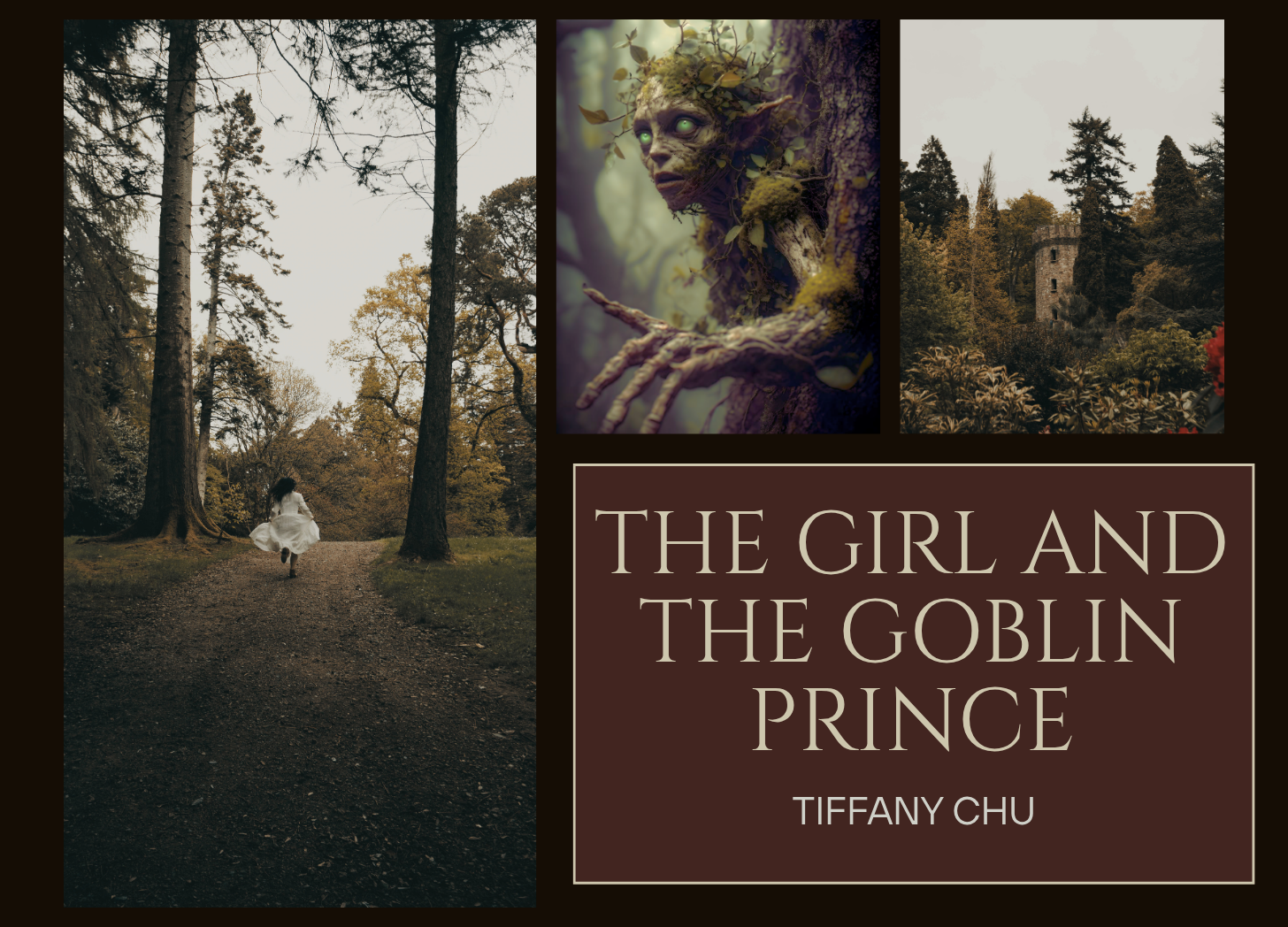
A new novelette is coming, and you will be the first to read it! I will release this in four installments. The first episode is dropping this Thursday.
A forgotten island. A hundred-year silence. A girl who swam ashore looking for answers and found a goblin prince who needed the same ones.
The Girl and the Goblin Prince is a fairy tale about abandoned children—the ones left behind, and the ones who stayed. It's about the mothers who walked into mist and never came back, and what we do with the shape they leave in us.
For readers who want enchantment and ache in equal measure.
As a subscriber, you are automatically opted in to the fiction section, but as always, feel free to opt out by going to your account on the homepage and updating your subscription.
This will be free to read for all Inklings until the ebook is published to retailers. 🩵
No spam, no sharing to third party. Only you and me.




Member discussion